This module is an ideal starting point for anyone interested in learning about BRT. It covers the basics of BRT, including its definition, key features and its essential components for creating inclusive, accessible and resilient systems. You will learn more about the resources developed based on real-world experiences and the best practices of cities with successful BRT systems. The themes within this module spotlight the importance of BRT planning and operations for everyday users of the system to help adapt to climate change and new advancements in technology.
Goals of Module 2:
Learn the basic elements of BRT;
Learn how to make BRT systems that tackle climate change through resilience and sustainable solutions;
Explore case studies that improve accessibility for all, with an emphasis on the disadvantages of users like women, caregivers, people with disabilities and children.
Lesson 1: How to Make a BRT System User-Friendly and Inclusive
An inclusive BRT system should prioritize access and inclusion in its design and operations. The transport systems of today need to also think about designing for the most vulnerable groups in a community, and the benefits it offers everyone. In this section, you will explore some intersectional topics around behavioral science and mobility and gender-responsive design approaches that reflect user needs.
For sustainable transport systems policy makers need to account for diverse mobility patterns and needs among different genders and gender non-conforming communities. This webinar showcases ways in which cities can promote and implement urban mobility strategies that are sensitive and responsive to various aspects of gender. It will also discuss how the impacts of climate change on cities and transport systems disproportionately affect women.
Women use public transport at a greater rate than men, and so their representation in mobility planning is crucial to break down the barriers that limits their ability to travel. In this webinar, experts discuss ways to make city planning more inclusive of gender with perspectives from three countries.
Urban mobility is not experienced equally by all people. Several aspects associated with gender-based transport reveal the difficulties faced by women in transit, especially Black and low-income women, who are further marginalized. . This webinar provides learnings and recommendations for a gender-sensitive urban public transport system. The experts discuss ways to build transport systems that are responsive, inclusive, safe and welcoming for all women, especially Black and low-income women.
Public transport is the vital connection between people’s homes and the rest of the city, especially when traveling with young children. Critical to achieving a 10-minute neighborhood is having good quality mobility options, beginning with walking and cycling. This video helps address mobility needs of caregivers and young children through convenient, comfortable, frequent, high-capacity public transport.
Quality public transport is essential in bridging mobility needs for babies, toddlers and their caregivers, and in complementing other sustainable travel modes like walking and cycling. This webinar is focused on public transport solutions for caregivers and their young children, offering interpretations in Portuguese and English. The session includes discussions on the impact of accessible transport on caregivers’ mobility, with case studies from Istanbul, Turkey and Recife, Brazil.
Children’s experiences from ages 0 to 6 can significantly influence their development. Caregivers, responsible for a child’s daily activities, can impact children’s lives through their well-being and interactions. The infographic highlights how a child-friendly bus system should cater to caregivers’ unique mobility patterns, such as off-peak travel and “trip chaining”, while ensuring safe, accessible, and integrated transport options for vulnerable children.
As cities experience rapid urbanization, disconnected neighborhoods and inadequate public transport infrastructure is often a result. Increased reliance on personal vehicles due to insufficient public transport options contributes to congestion and pollution. This webinar highlights ways to integrate urban mobility projects to improve public transport, safety, and urban regeneration. It discusses successful project implementation strategies, stakeholder collaboration, and innovative design elements that prioritize user experience and sustainability in public transport infrastructure.
Peshawar’s Zu Peshawar BRT system, the region’s first Gold BRT, has drastically improved urban mobility with dedicated bicycle lanes, a bikeshare system, and inclusive planning. This webinar delves into the intricate journey of planning, designing, and implementing the new BRT system. Speakers showcase the equitable and cost-effective strategies that have created efficient, affordable, and accessible mobility for more residents than ever, as well as outcomes that other cities around the world can find inspiration from.
Persons with disabilities make up nearly 15 percent of the global population, and more than half of all people with disabilities live in towns and cities. This webinar explores accessible transit-oriented development and sustainable urban mobility through the lens of people with disabilities and offers a set of recommendations to promote responsive actions. It also provides potential solutions and recommendations for decision-makers interested in improving all aspects of sustainable mobility and for those living with disabilities. Our cities will work better for all communities if they are planned and designed with the needs of diverse people and abilities in mind.
Urban women are actively seeking safer and more comfortable ways to engage with their cities. This has inspired collaborative initiatives such as “Women & the City,” where urban planners and women residents came together to reimagine and design safer urban environments. The video demonstrates the importance of engaging with community members by showing that involving those directly impacted by urban design decisions can lead to more inclusive and effective solutions.
Lesson 2: How to make BRT clean and environmentally friendly
Electric buses have enormous potential to improve urban transport systems. The rapid growth of battery-electric buses signals increasing interest in this technology to reduce greenhouse gas emissions and improve quality of life. In this webinar. In this webinar, presenters discuss current efforts of cities to deploy and scale battery electric buses and microbuses, share national and local policies, identify different financing tools, and provide lessons for creating a meaningful roadmap for BEBs.
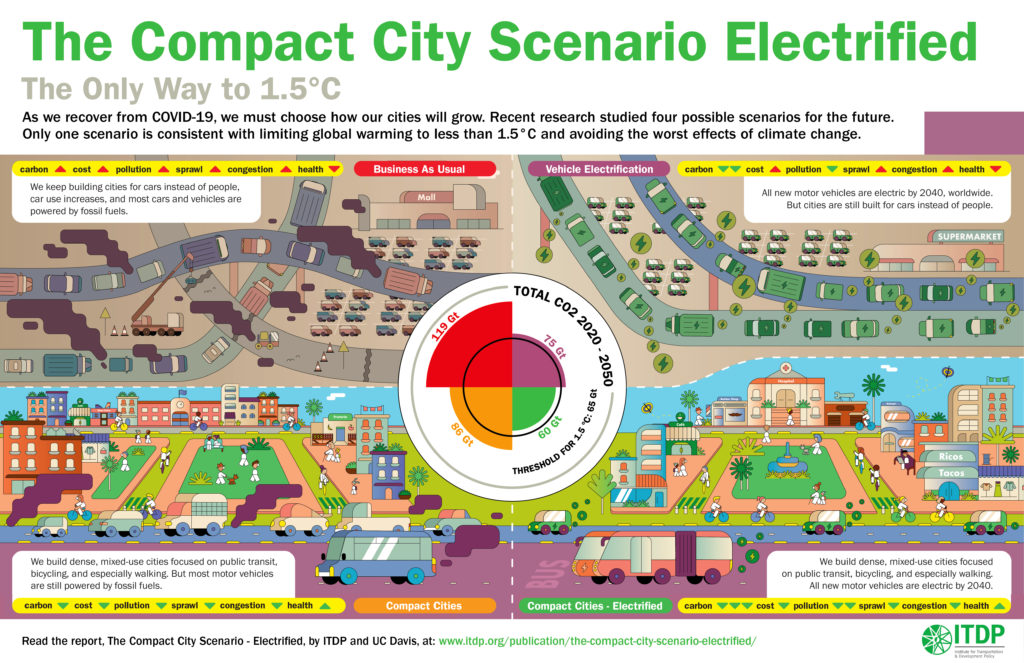
To meet the goals of the Paris Climate Agreement and limit global warming to less than 1.5°C, a comprehensive strategy involving both urban planning and electric vehicle investment is essential. The “Compact City Scenario Electrified” infographic compares different urban growth models. It can be seen that, through evaluation of these four different scenarios, only compact, mixed-use cities focused on public transit, bicycling, and walking combined with vehicle electrification by 2040can help limit global warming to below 1.5°C.
Cities have been adopting e-buses in many countries around the world, many of which are committed to advancing the global goal of deploying 100,000 electric buses. Yet, there are many challenges that cities face, from procurement to technology to financing, that prevent them from scaling up beyond a pilot. In this webinar speakers from the City of Jakarta, Indonesia, and the City of Salvador, Brazil discuss how they grappled with different challenges of their e-bus work, share their lessons learned, and provide other tips for scaling electric fleets.
Addressing the climate crisis in the urban transport sector requires accelerated activity to ensure cities develop in compact patterns with less dependency on private vehicles and that fossil fuels are eliminated from the sector with a move to electrification. This session explores priority actions to make critical progress for these complementary strategies. Our panelists discuss lessons learned about electrification and compact cities, and what we should be thinking about for the next five years including the projects, services, and policies needed; the funding and financing to support those measures; and the strategic alliances that help create political support for everything.
The electrification of a city’s bus fleet offers significant lessons in reducing greenhouse gas emissions while enhancing public transport. This blogpost highlights successful transitions in cities like Jakarta, Indonesia, Kampala, Uganda, Monterrey, Mexico, Pune, India, and Rio de Janeiro, Brazil. It also shares insights from feasibility studies, pilot programs, and financial strategies, which other cities can adopt to scale e-buses effectively. Key takeaways include the importance of tailored planning, capacity building, financial modeling, and integrating equity considerations, demonstrating how e-buses can lead to greener, more inclusive urban transport.
This blog post draws on examples from Africa to highlight why comprehensive urban transport reforms are crucial to advancing electrification. It shares the challenges that African cities are facing and discusses solutions to overcome them, such as operator fees to be “per kilometer operated”, making it possible to incentivize bus companies to offer safe, quality services and follow their assigned schedules.
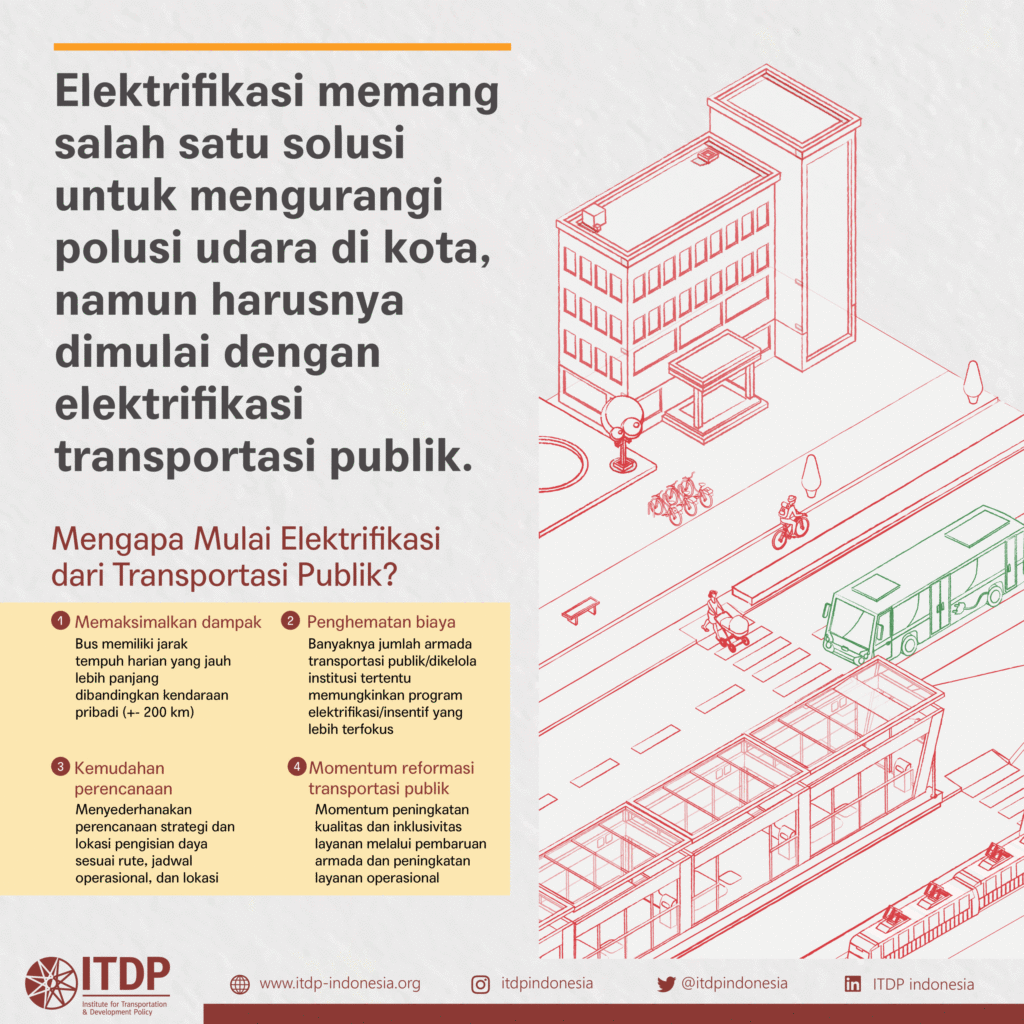
The electrification of public transport systems can significantly reduce urban air pollution and is economically beneficial due to lower operational and maintenance costs. The impact of electrification in large cities like Jakarta, Indonesia can be learned from the infographic. Complete electrification of the public transport fleet in Jakarta by 2030 could yield considerable socio-economic benefits valued at approximately 4.2 trillion Indonesian Rupiah. It highlights international efforts, particularly in Shenzhen, China, and Santiago, Chile, where similar initiatives have successfully reduced pollution and enhanced energy sustainability.
Lesson 3: How to Better Integrate BRT with the Urban Environment and Other Modes
Integrating micromobility with public transport offers significant benefits, including increased ridership for public transit and the promotion of sustainable transport options. This section goes into the potential for BRT to extend beyond its stations, vehicles, and corridors, and compound its environmental, social, and economic benefits to serve a greater transport network of non-motorized transit, while also encouraging effective traffic demand management and transit-oriented development.
This webinar explores the fundamentals of designing non-motorized transport access. Drawing on case studies from BRT systems around the world, the webinar discusses pedestrian crossings, sidewalks, universal access, cycle tracks, and cycle parking.
(2:57-30:00) Pedestrian and cycle access: This section goes through a series of case studies to explain the concepts of platform-level boarding, universal access, footpath design, cycling integration, payment integration, integration to other systems and land use.
During the COVID-19 pandemic, cities quickly adapted to changes in travel demands by introducing pop-up cycle lanes and flexible bikeshare access, highlighting micromobility’s importance. Now, as cities aim to expand public transport access, micromobility has a role to play in improving connections. This webinar discusses strategies to cultivate multimodal integration. Drawing from ITDP’s Maximizing Micromobility (2021) report, the session highlights actionable steps that cities can take to enhance the integration of micro-mobility with public transport systems. The case studies of Chennai, India and Jakarta, Indonesia will be explored, showcasing successful examples where physical and informational integration were leveraged to connect bikeshare with public transport.
Micromobility refers to small, lightweight devices that: Typically operate at speeds below 25 km/h (15 mph), can be human-powered or electric, can be shared or personally owned and are ideal for trips up to 10 km. Micromobility options like bicycles and e-scooters provides essential first-and-last-mile solutions, enhancing public transport connectivity and accessibility. This infographic outlines how integrating micromobility with public transport benefits cities, operators, and communities. It provides strategies for cities to encourage such integration, improving operational efficiency, multimodal trip convenience, and overall urban mobility.
Jakarta, Indonesia overcame several challenges in integrating various transport modes, including uncontrolled urbanization, inadequate infrastructure, intermittent public investment, safety concerns, and construction disruptions. In this webinar, speakers discuss how Jakarta set an example by implementing a comprehensive and inclusive approach to urban mobility, including BRT lines, expanded cycling infrastructure, and improved public transport facilities. It also highlights how collaboration with stakeholders, including civil society and international organizations, was crucial for successful execution and sustainability.
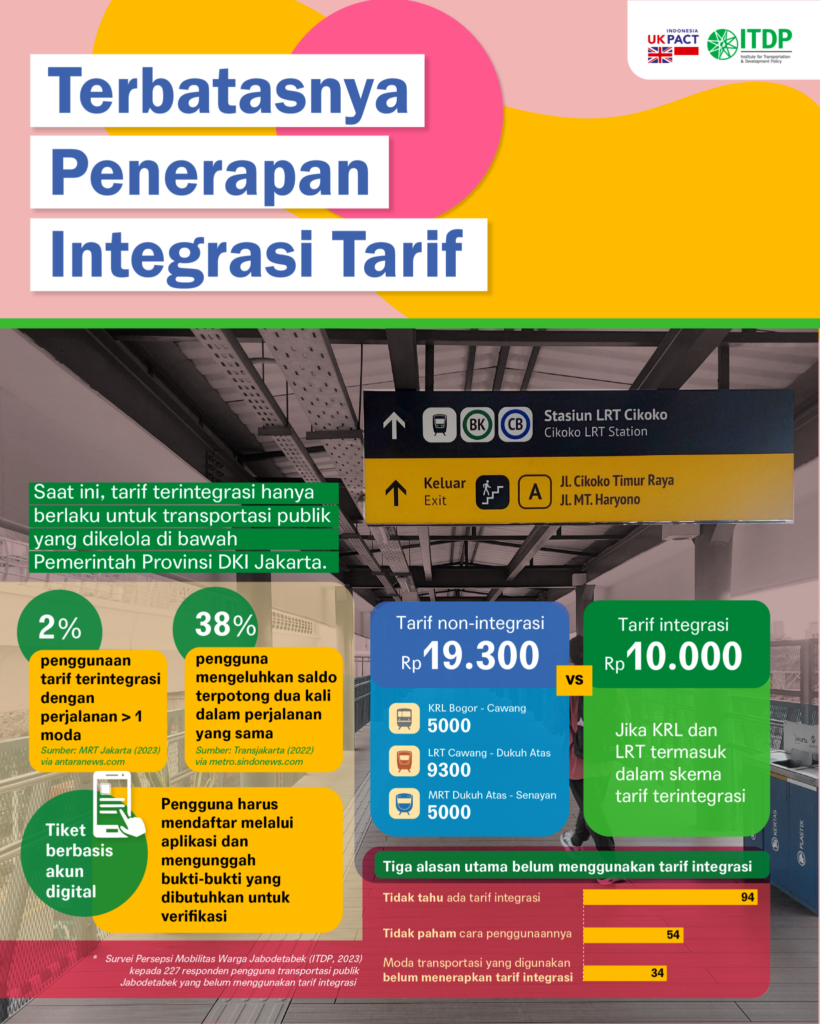
Integrated planning and management can potentially transform public transport networks into a more efficient and user-friendly system. This infographic highlights ways to enhance service efficiency, tariff integration, and subsidy distribution across different modes of transport. This can help make public transport a more attractive option, thereby increasing usage rates and reducing overall traffic congestion.
Lesson 4: How to Plan BRT With User Engagement and Communications in Mind
Building a communications strategy is key to engaging the public with a BRT project, supporting customers on ways to use the system, and marketing the project to a wide array of potential users.
An effective communications strategy is extremely necessary for engaging the public with a BRT project, educating customers on how to use the system, and marketing the project to a wide array of potential users. This webinar sheds light on how strategies can be crafted to address the concerns of specific stakeholders through a multitude of communications and media formats.
(0:00-5:09) Introduction: This section explores the communications cycle and the initial questions that need to be addressed when developing a communications strategy.
(5:09-34:00) Strategic Planning for Communications: This section dives into stakeholders and target group analysis, and offers recommendations to engage with stakeholders.
(34:00-53:40) The Case for Marketing and Customer Service: This segment focuses on key aspects such as designing appropriate maps, the essential role of system staff, and the significance of digital life information, providing valuable recommendations and insights in these areas.
Both public transport and public art, when brought together strategically, can make public transport better, spread joy, increase community engagement and make people happier. ITDP, while working in the Boston, USA region to improve public transport and bus priority over the past 10 years, found that the first thing that needed to be done was to build political will and community engagement while elevating the role of public transport. This webinar explains how art, branding, design and public transport together can reclaim dignity and purpose in the public.
Greater Boston, USA experienced significant public transport difficulties over the past decade, prompting necessary reforms and creative approaches to system adaptation. This webinar explores how tactical public transport interventions, including pop-up dedicated bus lanes, all door boarding pilots, and level boarding, have led to free fare trials and permanent bus lanes that have helped keep momentum alive for bus transformations.
Public transport should provide reliable, convenient, safe, and dignified access to people’s lives. To accomplish this, community collaboration is needed to overcome biases and inequities in transport planning. In this session examples from the Boston, USA region highlights the role of community engagement and grassroots groups in developing equitable and resilient public transport systems.
To obtain an official certificate for the completion of the learning material, fill out the knowledge check questionnaire here.
If you would like to include the certificate credentials on your LinkedIn profile, please follow these steps:
Use THIS LINK to auto populate the certificate details on your LinkedIn.
Manually enter the Credential ID based on the ID that appears on the certificate you were emailed.
Manually update the Issue date based on when you were emailed the certificate.
Edit additional details as necessary.
Save your certification.
We are excited to keep you informed about our latest resourcesrelated to BRT, public transport, and beyond. If you have any questions or need further information, please donot hesitate to reach out to us at [email protected] or join our mailing list here. We look forward to staying connected with you.
Subscribe
Sign up for updates on our projects, events and publications.
We use cookies for analytics and to improve our site. You agree to the use of our cookies by closing this message box or continuing to use our site. To find out more, see our updated Privacy Policy. Accept
Privacy & Cookies Policy
Privacy Overview
This website uses cookies to improve your experience while you navigate through the website. Out of these, the cookies that are categorized as necessary are stored on your browser as they are essential for the working of basic functionalities of the website. We also use third-party cookies that help us analyze and understand how you use this website. These cookies will be stored in your browser only with your consent. You also have the option to opt-out of these cookies. But opting out of some of these cookies may affect your browsing experience.
Necessary cookies are absolutely essential for the website to function properly. This category only includes cookies that ensures basic functionalities and security features of the website. These cookies do not store any personal information.
Any cookies that may not be particularly necessary for the website to function and is used specifically to collect user personal data via analytics, ads, other embedded contents are termed as non-necessary cookies. It is mandatory to procure user consent prior to running these cookies on your website.