
October 12, 2026
The ITDP Index: Key Resources for Sustainable, Electric Public Transport
The ITDP Index is a promotional series highlighting recent resources and knowledge products from our teams worldwide, centered on ITDP’s strategic vision to build well-managed, well-funded, zero-emission public transport systems for all.
Below is a collection of research, webinars, and infographics on planning, financing, and deploying sustainable, electric public transport across ITDP’s key regions, covering everything from business models to technology selection.
Because most of the world’s public transport systems rely on bus fleets, these resources emphasize the importance of advancing bus electrification in order to achieve social, economic, and climate goals. The global transition to electric mobility is not only a technical issue; it is a question of how all cities plan, finance, procure, and manage public transport for the long term.
The Index Series will continue to spotlight ITDP’s growing body of work across our key issue areas. By continuing to share learnings and knowledge from around the world, ITDP aims to help more decisionmakers and practitioners identify pathways toward cleaner, more reliable, and more financially sustainable urban mobility.
GLOBAL RESOURCES
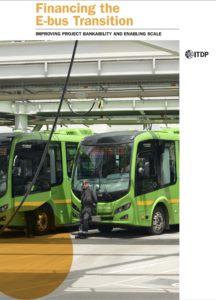
Financing the E-Bus Transition: Improving Project Bankability and Enabling Scale (2026)
E-buses can make cities more livable by improving air quality, reducing emissions and noise, and lowering operating costs over time. E-buses are also cheaper to operate over time and can significantly reduce demand for fuel imports, freeing up foreign currency reserves. This is a critical moment for governments to leverage public and private sector support to implement high-quality bus systems that deliver livability goals. This report helps governments, especially those with limited resources, understand how to make these systems more financially viable and attractive to investors. It explains business models, financing tools, and risk-sharing approaches that can support bankability and successful project implementation. Download the “Unlocking Investment for Scalable and Sustainable E-bus Systems” infographic →
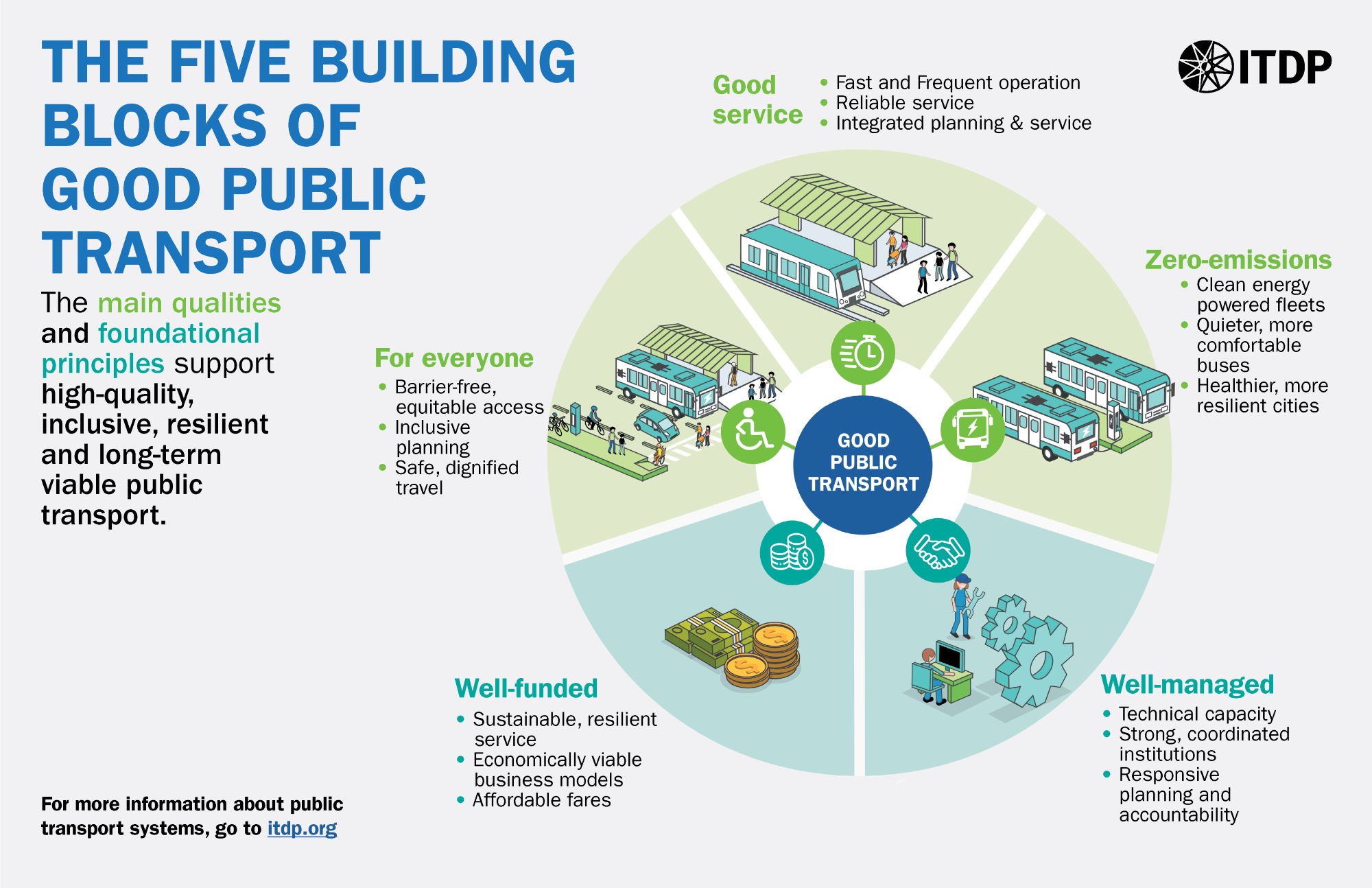
Building Better Public Transport Systems: Public Transport Principles (2026)
This publication presents a shared framework to guide governments, planners, and advocates in designing public transport systems that deliver good service, with zero-emissions vehicles for everyone, grounded in well-managed institutions and well-funded operations. These five principles (good service; zero-emissions; well-funded; well-managed; for everyone) define what makes public transport services effective, equitable, and transformative, and how cities can achieve them. View the webinar “Building Better Public Transport Networks for All” →
Advancing E-Buses: A Guide to Batteries and Charging (2025)
Selecting battery and charging technology is key for decisionmakers and transport planners taking first steps toward bus electrification, often starting with a pilot project and then transitioning a fleet. This report provides an overview of technology options and the key considerations for each, serving as a practical guide for governments and planners as e-bus deployment continues to grow. View the “Why Charging and Implementation Matter” webinar and download the “Five Essential Steps for E-Bus Deployment” infographic →
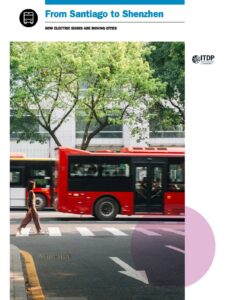 From Santiago to Shenzhen: How Electric Buses are Moving Cities (2021)
Many global cities, from Shenzhen, China, to Santiago, Chile, have already successfully increased and deployed e-buses in their bus fleets. This report focuses on battery-electric buses (BEBs) and offers a broad study of electrifying public bus systems to help planners and transport agencies decide on BEBs to reduce transport emissions over the next decade and beyond. View the “Developing A Roadmap to Scale” and “Contracting and Procurement” webinars and download the “Electric Buses are Moving Cities” infographic →
AFRICA REGION
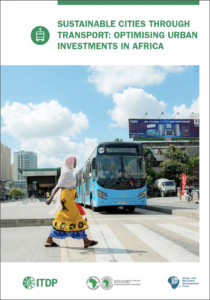
Sustainable Cities Through Transport: Optimizing Urban Investments in Africa (2025)
This report examines pathways to address pressing transport issues in African cities by prioritizing rapid transit, walking, and cycling, and offers a vision for inclusive, low-carbon urban mobility. The report outlines four investment scenarios: Business-as-Usual (BAU), Electrification, High Shift, and High Shift + Electrification. Improving financing for sustainable transport in Africa is critical to achieving these outcomes. To support large-scale growth in BRT, cycle networks, pedestrian infrastructure, and electrification, governments must collectively leverage public funds, private sector participation, and development finance.
A Guide to Bus Sector Modernization (2021)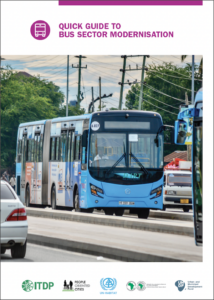
This guide is intended for African governments that want to take more responsibility for public transport services in their cities, particularly where bus systems are currently informal and unregulated. This guide’s pillars for public transport regulation and business planning are based on experts’ experience with bus and BRT systems in both the developed and developing world. The guide suggests building blocks for creating a competitive market in which multiple bus companies can provide high-quality transport services across African cities.
EAST AND SOUTHEAST ASIA
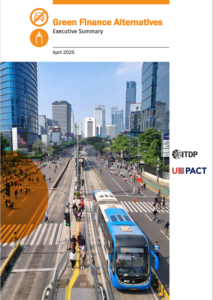
General Scheme of Financing and Funding for Low-Carbon Transport in Indonesia (2026)
This report examines the financial mechanisms available to support the development of low-carbon transport in Indonesia. It maps potential funding sources, financing instruments, and institutional arrangements that can help cities and transport agencies finance public transport infrastructure, vehicle electrification, and other emissions-reducing measures. It also highlights the importance of combining public funding with alternative capital sources, including development finance and private-sector investment, considering the high upfront costs of transitioning to clean mobility.
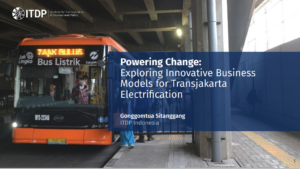 Powering Change: Exploring Innovative Business Models for Transjakarta Electrification (2023)
The presentation explores financing and business models in support of Transjakarta’s goal of fully electrifying its bus fleet by 2030. It highlights key challenges and barriers, including high upfront costs, limited government support, and risks concentrated among operators. It also evaluates alternative business models, including fleet leasing, concessional financing, public-private partnerships, and blended finance, and provides key recommendations.
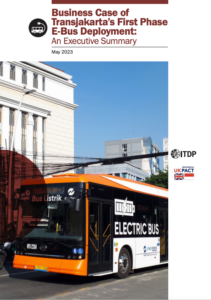
Business Case of Transjakarta’s First Phase E-bus Deployment (2023)
This study examines how Jakarta can overcome the regulatory, financial, and technical barriers to scaling e-buses within the Transjakarta system. It also offers a regulatory framework and a ‘Final Business Case’ for improving access to financing, while assessing alternative business models, structures, and contractual approaches for e-bus procurement and operations. Together, these recommendations provide Transjakarta and the Jakarta government with a foundation to accelerate fleet electrification by 2030. The study also integrates Gender Equality and Social Inclusion (GESI) considerations into electrification planning and implementation, recognizing that the transition to electric public transport should improve accessibility and responsiveness for all users. Download the related “Building a Regulatory and Financial Basis for Transjakarta First Phase E-bus Deployment” report →
This presentation examines how Indonesian cities can address the higher upfront costs of transitioning from diesel to e-buses. The study reviews existing funding and financing mechanisms used by Transjakarta and Indonesia’s Buy the Service program, assesses the financing gap between diesel and e-buses, and draws on international examples to identify approaches Indonesian cities could adapt. It also outlines funding sources and financing options for e-bus programs, focusing on sustainable financial structures that can support procurement, operations, and expansion.
Operationalizing E-bus Fleets: Lessons Learned From China (2020)
This presentation highlights lessons from China’s rapid adoption of electric buses through 2020, emphasizing strong government support, coordinated planning, and financial incentives. It further underscores the importance of integrating vehicle procurement with charging infrastructure, grid capacity, and operations to scale e-bus fleets. In particular, cities like Shenzhen (which now hosts the world’s largest e-bus fleet in operation) show how innovative financing and outsourcing can cut upfront costs and reduce operational risk.
SOUTH ASIA
Accelerating Clean Mobility through India’s ZEV Opportunity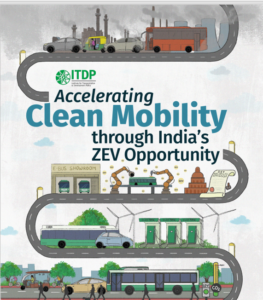 (2025)
While buses move millions of people in India daily, only a small fraction are electric. This publication dives into India’s e-bus journey and what is holding back progress. It also outlines urgent steps to accelerate growth by explaining why deployment gaps persist and highlighting challenges like limited manufacturing capacity, inconsistent procurement, and over-reliance on short-term incentives. Through engaging data, expert perspectives, and real-world stories, it introduces Zero Emission Vehicle (ZEV) availability standards, a globally proven policy tool that can transform India’s ecosystem.
The Road Ahead for Private Electric Buses in India: The Case of Non-urban Routes (2024)
Private stage carriage bus operators across India move 150 million people daily. Most operate in the non-urban sector, providing critical, affordable public transport links across regions. However, rising fuel prices significantly threaten their current business. This issue brief finds that non-urban e-buses are more profitable than diesel buses over the fleet lifespan, but highlights high financing costs as a major deterrent to e-bus adoption. It offers several recommendations to advance electrification for India’s private bus sector, even outside major cities.
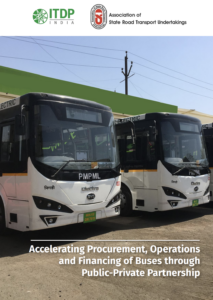
Accelerating Procurement and Operations of Buses through Public-Private Partnerships In India (2023)
This report results from ITDP India’s 2023 collaborative workshops with the country’s Association of State Road Transport Undertakings (ASRTU). It shows how Public-Private Partnerships (PPPs) can transform State Transport Undertakings by improving service quality, financial viability, and operational efficiency, while expanding e-bus fleets and transforming transport systems. View the related “Accelerating Procurement and Operations of Buses through Public-Private Partnership” webinar →
E-Bus Basics: A Guide for a Transition to Electric Buses in India (2023)
This illustrated guidebook provides foundational information to plan for, procure, and operate e-buses and accelerate the transition across India. Not only does electrification contribute to reducing pollution on our streets, but it also offers a lower cost per kilometer, better fuel/energy efficiency, and improved quality of service. This guide can inform interested policymakers, planners, advocates, and stakeholders.
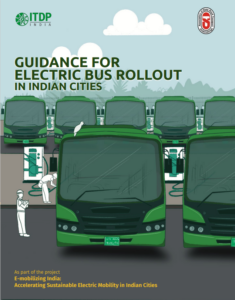
Guidance for Electric Bus Rollout in Indian Cities (2022)
This report provides State Transport Undertakings in India with guidance on planning, financing, operating, and monitoring electric bus deployments, including an overview of global financial models for bus procurement and financing. It also examines e-bus adoption and operational experience across Indian cities and internationally, and covers key aspects of e-bus, battery, and charging technologies, along with strategies for effective charging infrastructure deployment. View the related “Status of Electric Buses in India” report →
LATIN AND SOUTH AMERICA
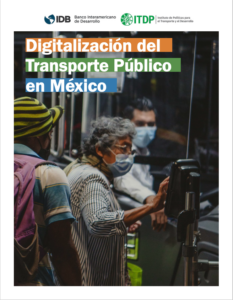 The Use of Technology in Public Transportation: Lessons and Opportunities in Mexico (2025)
This study examines how digitalization is transforming public transport in Mexico’s major cities: Mexico City, Guadalajara, Mérida, and Monterrey. It identifies how tools such as data systems, integrated payment platforms, fleet-management technologies, and mobility-management centers can improve planning, operations, service quality, and passenger experience. The study also highlights advances across the four cities and identifies opportunities for innovative financing and digital technologies to improve public transport. View the “From Data to Planning: Toward a Fast and Reliable Methodology for Mobility Investments” webinar →
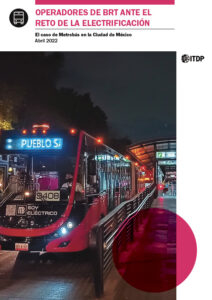 BRT Operators Facing the Challenge of Electrification: The Case of Metrobus in Mexico City (2023)
While e-buses may already be a technologically and economically viable option in many cities, electrifying routes still presents challenges for authorities and companies in the sector. This study of Mexico City’s Metrobus system presents possible institutional and contractual solutions to overcome these barriers and accelerate electrification with support from operating companies.
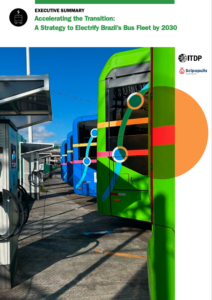 Accelerating the Transition: Strategies to Electrify the Brazilian Bus Fleet by 2030 (2025)
This study outlines a targeted strategy to accelerate bus fleet electrification across Brazil’s largest metropolitan regions. Analyzing 18 public transport systems across the country’s 21 largest metropolitan regions, the study finds that 14,000+ diesel buses currently in operation could be replaced with electric models without major changes to existing routes, fleet size, or operations. By prioritizing older and more polluting vehicles, the proposed transition could avoid an estimated 24.6% of emissions from the systems analyzed. The study also recommends strengthening transport data and governance, charging infrastructure, and public procurement across levels of government to create greater scale and predictability for fleets. View the “Management of the public fleet of electric buses” webinar →
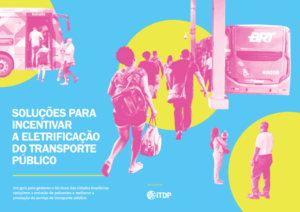 Solutions to Encourage the Electrification of Public Transport (2024)
This guide provides Brazilian cities with practical measures to accelerate the electrification of public bus fleets while improving the quality and sustainability of public transport. Developed for city managers and technical staff, the guide focuses on three main areas: strengthening the regulatory and contractual environment; reducing the upfront costs of e-buses and charging infrastructure; and increasing public and stakeholder engagement. It frames fleet electrification as an important response to air pollution and climate change and offers cities a framework for addressing the institutional, financial, and social barriers to e-bus adoption.
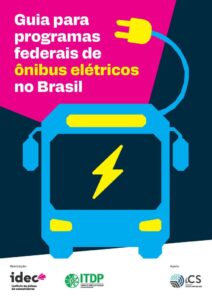 Guide to Federal Electric Bus Programs in Brazil (2024)
This publication aims to support Federal Government decision-makers and clarify the landscape for local managers promoting federal electric bus programs in Brazil. The guide proposes recommendations to strengthen electric mobility in Brazil, highlighting the importance of transitioning to electric public vehicles to reduce emissions, improve energy efficiency, and promote sustainability in the transport sector. It also suggests measures to improve charging infrastructure, implement tax incentives, and provide financing to accelerate the transition.
Stay tuned for more resources from our Index!