
March 24, 2026
How Much Are Multilateral Development Banks Investing in Sustainable Transport?
Development finance, provided by multilateral development banks (MDBs), has played a key catalyzing role in shaping transport infrastructure in low- and middle-income countries for decades.
Read more about ITDP’s vision for scaling funding for sustainable public transport projects.
These investments influence how people and goods move every day, from urban public transport systems and cycling networks to national highways, ports, and freight corridors. Because the transport sector is a major contributor to greenhouse gas emissions and air pollution, MDBs have increasingly recognized the need to prioritize investments that support cleaner, safer, and more equitable mobility systems.
To this end, in 2012, eight MDBs made a major public commitment to provide $175 billion USD in loans and grants for sustainable transport in developing countries through 2022, as part of the Rio+20 Voluntary Commitments on Sustainable Transport. ITDP was also a champion of this investment initiative as part of our leading role in the SLOCAT Partnership. In the intervening years, MDBs and many regional and national banks have made related commitments tied to climate finance, emissions reductions, and inclusive development, reinforcing the expectation that transport investments need to align with broader sustainability goals.
Assessing Investment Progress
To understand how MDB financing for urban passenger transport has evolved over the past decade, and how much of this financing supports sustainable mobility in particular, ITDP analyzed MDB transport investments from 2013 through 2024. The objective was not only to assess progress towards stated commitments, but also to examine whether MDB investment trends are meaningfully shifting cities toward transport systems that reduce emissions and improve access and equity. The analysis draws data from the OECD DAC Creditor Reporting System, which tracks international financing flows across sectors and donors.
We focused specifically on MDB-supported public-sector transport investments between 2013 and 2024, the most recent year for which data was available. A Python script and keyword searches were used to identify all urban passenger transport projects in the OECD DAC database. The script removed any project that contained a term from an exclusion keyword list to filter out rural or regional transport, aviation, maritime, freight and logistics, tourism, and other non-passenger or non-urban projects. From this set, the script then identifies sustainable urban transport projects using an inclusion keyword list that includes transit, electrification, cycling, travel demand management, and other relevant sustainable terms.
Several assumptions and limitations should be noted. A project is counted as ‘sustainable’ if any of the inclusion terms appear in the project title or description. We treat any project with a sustainable component as a ‘sustainable project’, even when other components may not be sustainable, which means our estimates may overstate the true share of sustainable investments. In addition, keyword-based classification cannot fully capture differences in project quality or implementation outcomes.
Reach out to [email protected] for the full data set used to make this assessment.
Trends Uncovered
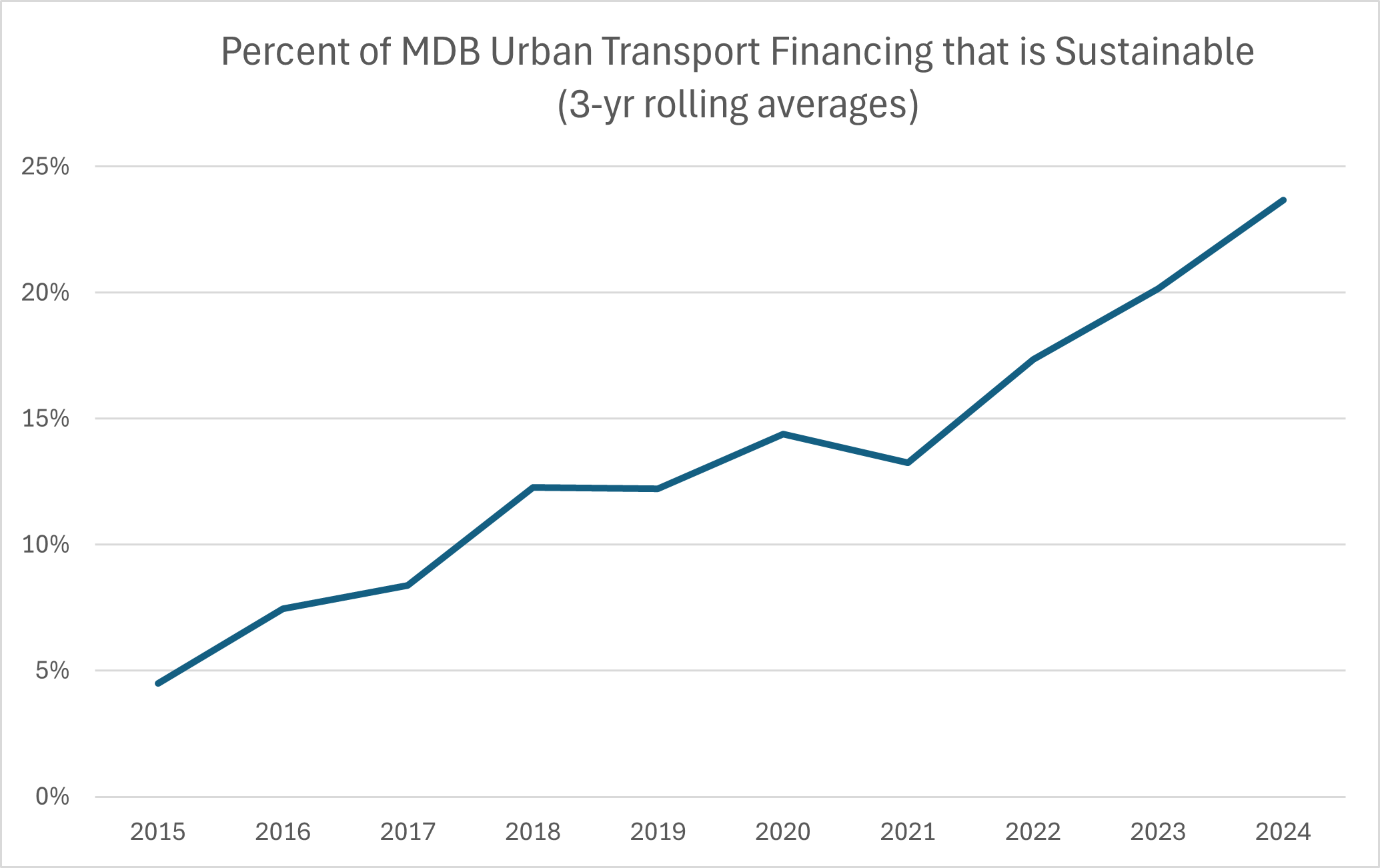
The central finding of this analysis is that, while sustainable urban transport still accounts for a minority of MDB-supported urban transport projects, its share has grown substantially over the past decade. From 2013 to 2024, MDBs financed hundreds of urban passenger transport projects each year. Though the overall number of sustainable projects financed declined over time, average project size (as in the total amount of funds lent) did increase.
Sustainable projects consistently account for only a small share of the total number of transport projects financed, between 4% and 8%. When measured by the amount lent rather than project count, sustainable transport then becomes a significantly larger component of MDB urban transport portfolios. Using three-year rolling averages to smooth year-to-year volatility, the share of sustainable transport in urban transport financing increased from less than 5% to nearly 24% by 2024.
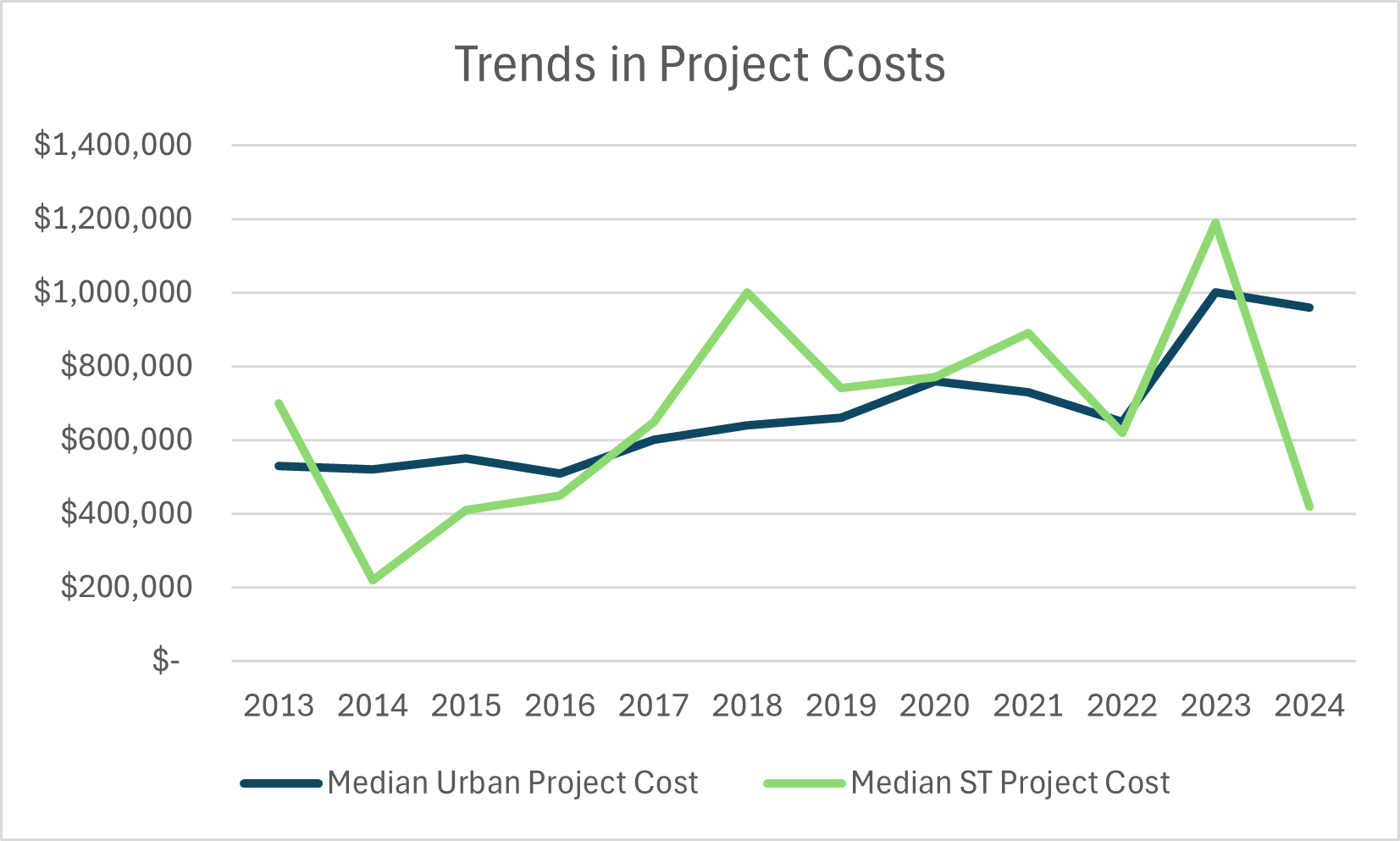
This increase in the amount of funds lent is driven largely by countries proposing more large, capital-intensive mass transit projects for financing. Among the top-funded sustainable urban transport projects in recent years, metro and urban rail systems have dominated. Such projects include multi-phase metro expansions in Cairo, Egypt; new transit lines built in Bangalore, India; and urban rail modernization projects across multiple cities, with individual project financing commitments often exceeding USD 100 million.
Bus rapid transit (BRT) investments also appear among the top-funded sustainable projects, including Dakar, Senegal’s notable e-BRT which launched in 2024. However, BRT projects typically also have lower financing requirements than metro systems. Compared with earlier years, when sustainable projects rarely ranked among the largest urban transport investments, these projects now make up some of the largest ones financed by MDBs.
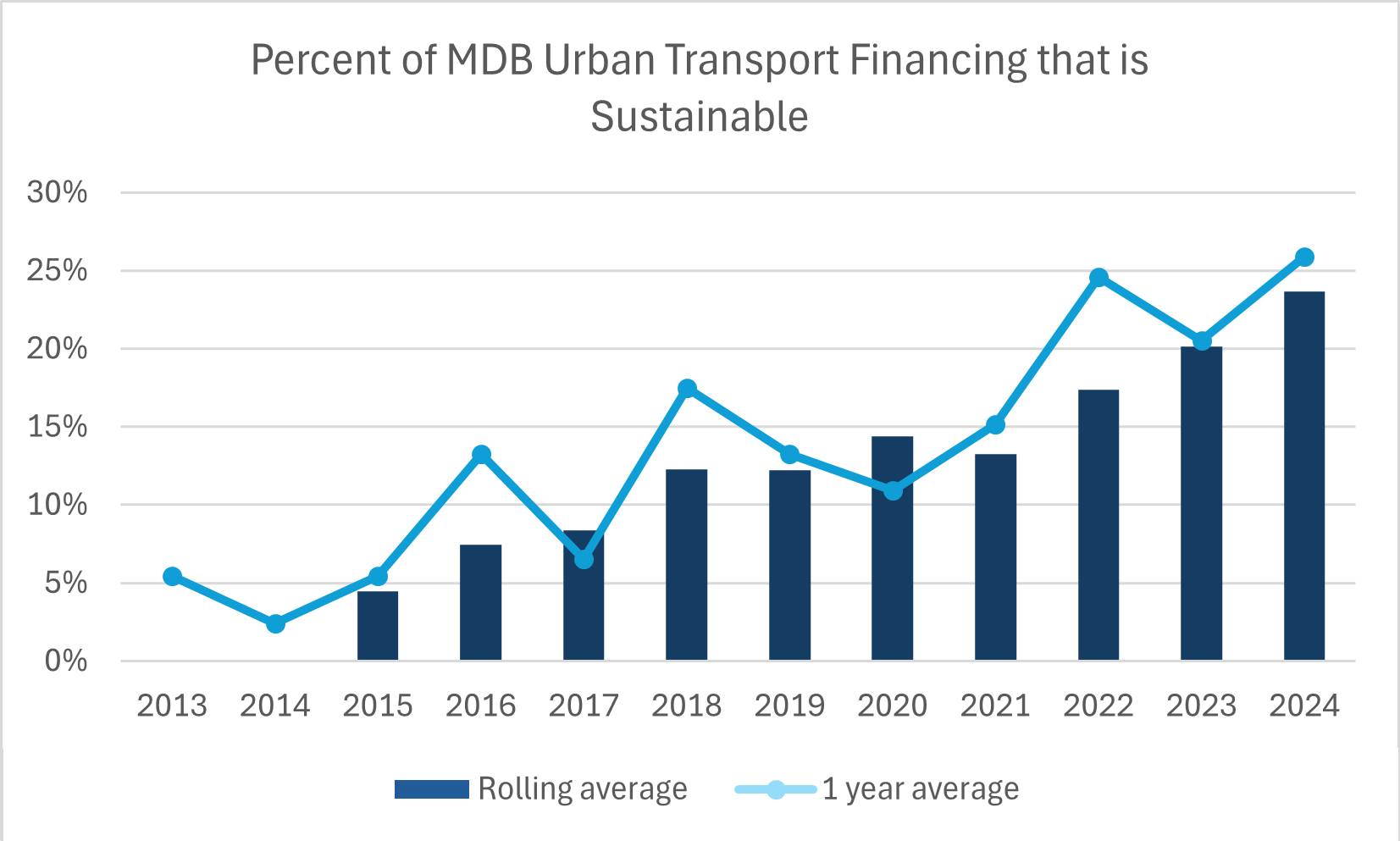
Overall, the data points present an optimistic picture. MDB financing for sustainable urban mobility is becoming a larger share of the transport portfolio, even though sustainable projects make up less than a quarter of all urban transport money lent from MDBs. In other words, 75% of MDB financing for urban transport still supports non-sustainable projects like highways, toll roads, and flyovers.
This suggests that while progress is being made, the pace of change will need to accelerate further to meet the world’s urgent climate, air quality, and equity goals. While MDBs play an important role in enabling long-term financing and technical support, they should not be solely responsible for implementing the sustainable transport transition. National and subnational governments must also deliver measures to sustain funding and adopt more policy frameworks that prioritize clean and efficient urban passenger transport everywhere.
ITDP is committed to collaborating with our partners at MDBs and governments to advocate for sustainable transport investments, strengthen policy environments, and ensure that more projects can succeed and scale.