
February 04, 2026
What the Solar Sector Taught Me About Scaling Bus Electrification
A version of this article was originally published in the No. 37 issue of the Sustainable Transport Magazine.
 Monica is co-founder of One Earth Partners, where she is now leading an effort to assess the global impacts of USAID’s withdrawal from climate and environment programming and to chart a potential path forward.
She previously spent fifteen years at USAID, where she directed major climate portfolios and established the agency’s Green Cities Division, launching urban programs focused on transport decarbonization, renewable energy, and climate resilience.
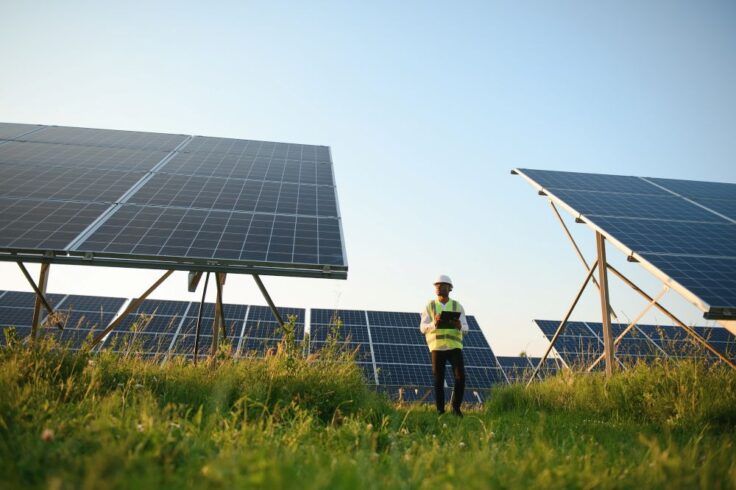
Around 2010, solar module prices dropped 80 percent. This was a game changer for the sector. In many countries, it opened the doors to massive new solar investment. But in other places — primarily low and middle-income countries (LMICs) — the drop in prices was not enough. Even with cheaper technology, the concerns were substantial: perceived political risks, financing challenges, and questions about technical reliability. Around this time, I began my long tenure at USAID and saw firsthand that the plummeting cost of solar did not automatically reach emerging markets. Ministers of renewable energy still told me that solar was too expensive. Utility executives were worried about reliability. Investors feared they would not get paid back.
The list of fears went on and on, despite the desperate need for cheap and clean electricity everywhere. Then, in 2014, I began working on our first solar auction — a competitive process where governments or utilities announce how much power (in megawatts) they want built, and private developers win the contract by bidding the lowest price to deliver it (similar to an eBay auction, but in reverse). We specifically provided support to utilities and governments to plan for, design, and run their auctions, evaluate bids, and close deals.
We had clear signs that, even when the economics for a technology solution looked good on paper, hands-on support was still essential to make it work in practice. In South Africa, with a diverse array of technical support, multiple rounds of renewable energy auctions were conducted, which propelled solar prices to fall 80% from where they started. Over time, more auction programs were launched in LMICs through steady and collaborative technical assistance. The result was fairer access to cheap renewables, which was good for people, utilities, and national budgets.
Learn more about ITDP’s strategic vision to fully electrify transport systems in our key regions.
A Similar Pattern is Playing Out with Electric Buses
This experience illustrates something crucial: even when technology gets cheaper, that is only half the battle. The real work is in helping countries actually utilize and deploy it. By 2030, Bloomberg New Energy Finance estimates that 65% of total bus sales will be electric. However, as with solar, we know that adoption will not happen equally across countries. Growth will be slowest in some of the places where urban populations are growing fastest — and where air pollution is deadliest. Nearly 95% of air pollution deaths occur in LMICs. Growth is slow for predictable reasons. Transport planning may not be robust or long-term. Institutions may not be well-resourced. Officials may not have experience in negotiating successful public-private partnerships. The result is that governments often do not have enough policy drivers in place to enable technology investment.
We know that the economics of e-buses depend on many factors: specific route planning, charging infrastructure, or the efficiency of the overall transit system of which they are a part. It also depends on many political processes: government budgets, regional coordination (e.g., can enough transit agencies pool their resources and buy buses together at a volume discount?), and the relationships across diffuse informal transport operators. The point is that the specific tactics matter. We cannot afford to lose technological opportunities because of human and institutional barriers. The solar auction example demonstrates that these barriers can be moved with the proper support: hands-on expert technical assistance that is embedded and delivered over time, backed by funding that is patient, risk-tolerant, and flexible. This allows partners to build the specific skills they need to better govern the transport sector in the long-term.
The Funding Landscape Has Changed
There is one dynamic that dramatically changes the story for transportation as compared to solar, and that is where we are now in the global funding landscape. Official Development Assistance (ODA) — the foreign aid that wealthy countries provide to support development — has been the foundation for international development work for decades. It has often provided exactly the kind of necessary technical assistance and expertise that underpins infrastructure investments. But since 2023, and with the loss of over 90% of USAID’s programming as of January 2025, the aid from the top 17 donor countries has fallen 23 percent. Even further cuts are expected over time, according to social impact consultancy SEEK Development.
In sectors like transport and energy, this loss could mean significantly less technical support to institutions and organizations trying to deliver equitable, affordable, clean, and safe mobility systems. As we look ahead, it is still unclear how the priorities or strategies of other funders may change to adapt to this volatile landscape. What we do know is that the multi-billion-dollar gap left by this loss of global development aid will not be filled wholesale. We also do not know exactly how this will cascade and impact future progress in LMICs — such as the scaling of more e-bus fleets — but it may very well mean that collective infrastructure and technology investments will face greater barriers.

What We Are Leaving On the Table
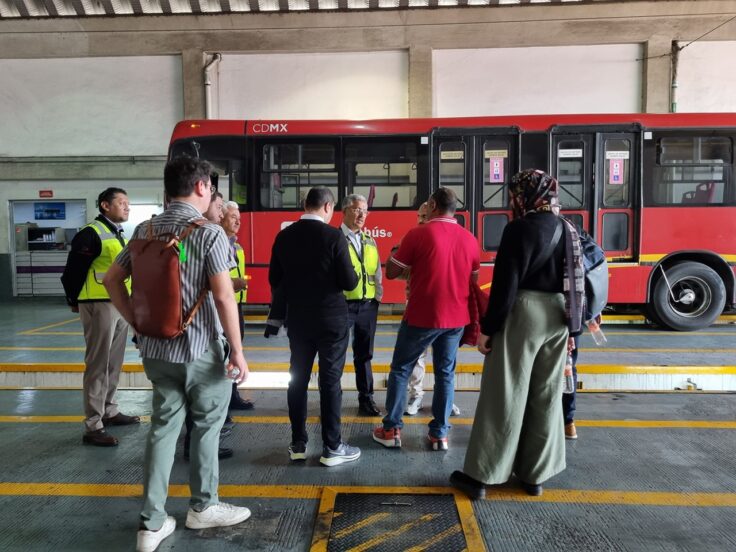
In USAID’s final years, we expanded our support for sustainable transport projects, largely in partnership with ITDP. Our work in Mexico, Tanzania, and Kenya focused specifically on making infrastructure and technological innovation work on-the-ground. To do this, we needed partners like ITDP with a long-standing international presence and deep technical expertise. The goal was to work with local governments on practical challenges — bringing informal transport operators into a formal system that could work better for everyone; improving the financial viability of bus rapid transit by strengthening broader transport networks; and creating new contract structures to improve cost efficiency in the public sector.
We saw an opportunity in the transport sector to make relatively small investments that would have system-wide payoffs. These modest investments are often catalytic — they can be the key to whether much larger infrastructure investments succeed or fail. The opportunity then remains for others looking to make patient and strategic investments that can punch far above their weight. The solar sector example shows us what is possible when we invest not just in the technology itself, but in the people and institutions that make the technology actually work. The transport sector could be next — if we invest where it truly matters. E-buses are an increasingly viable transport solution.
The question is whether funders, and ultimately governments and decision-makers, will provide the type of real support that cities need so that public transport systems can effectively serve the millions who rely on them the most.