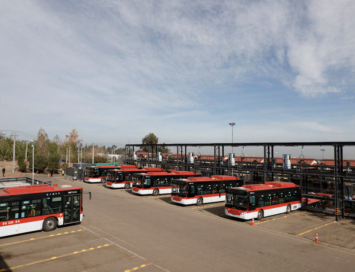

Bus electrification leverages existing transport networks to massively reduce pollution, while streamlining operations and improving service.

Low- and middle-income countries suffer disproportionately from transport-generated pollution and poor air quality. This is due, in part, to the unfettered use of old, inefficient vehicles — both in private and public transport — as well as a lack of reliable zero-emission alternatives such as cycling and walking.

It is increasingly clear that electrification will play a major role in significantly reducing greenhouse gas (GHG) emissions and particulate matter from the transport sector. This is critical not only as a climate and health solution, but as a means of energy security and economic growth. While much of the focus and investment in transport electrification has been on private vehicles, electric buses offer significant benefits to cities:

  • Low foreign currency burden: Public transport electrification can significantly reduce fuel imports and reduce the outflow of foreign currency, increasing economic stability and growth.
  • Higher ridership: E-buses are typically air-conditioned, accessible for riders with disabilities, and equipped with GPS and digital fare payment technology, improving comfort, access, and safety, and encouraging higher bus ridership.
  • Efficient, cost-saving operations: E-buses are typically equipped with advanced operational management tools which enable real-time location tracking and digital fare collection. These tools improve operations, enabling better integration and offering greater reliability for riders.
  • Informal transport improvement: Bus electrification can be an entry point to improve regulation and integration of informal transport, which provides the majority of transport services in many low- and middle-income countries.

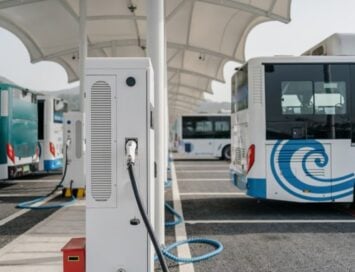
However, high upfront costs for e-buses have limited scaling beyond pilot phases in many cities. Transitioning to electric buses is not just about fleet replacement — it requires new business models and regulatory frameworks that enable coordinated investment in buses, batteries, charging infrastructure, depots, operations, and maintenance.
Read more about ITDP’s 2030 Strategy target to Fully Electrify Transport Systems.

Subscribe

Sign up for updates on our projects, events and publications.

SIGN UP