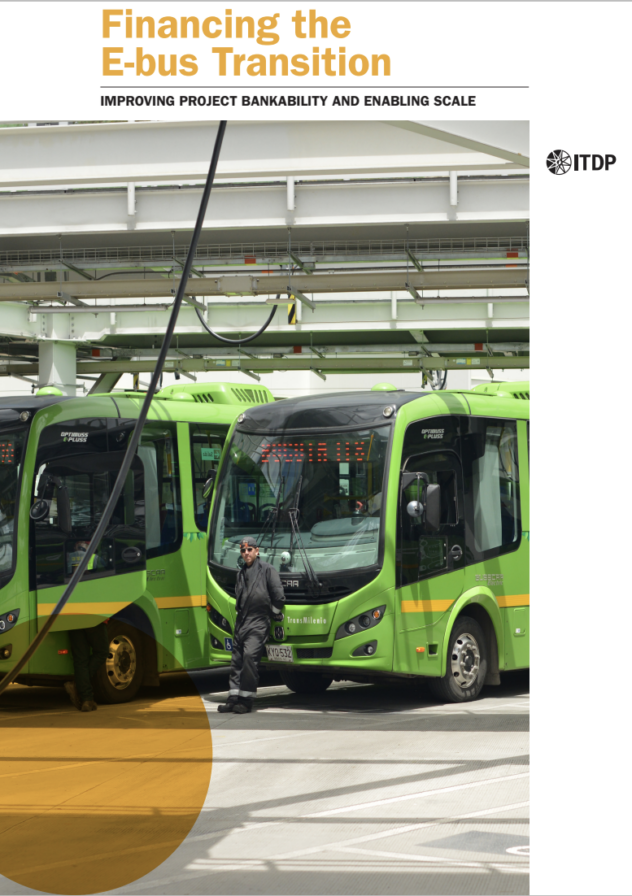
Financing the E-Bus Transition: Improving Project Bankability and Enabling Scale
About
Electric buses can make cities more livable by improving air quality, reducing emissions and noise, and lowering operating costs over time. E-buses also cost cities less to operate over time than diesel buses and can significantly reduce demand for fuel imports and draw on foreign currency reserves. Yet adoption has been slow because of the high upfront costs of buses and charging infrastructure, along with uncertainty about financing models and responsibilities.
Unlike conventional fleets, e-bus systems require investments in batteries, charging networks, and digital management systems, making electrification a broader transformation in how public transport is financed, managed, and operated. Ensuring a future of well-funded, zero-emission public transport based around bus electrification is also a key component of ITDP’s strategic vision.
Despite growing investor interest in zero-emission mobility, much climate finance still favors private vehicle electrification, leaving a significant funding gap for public transport. However, declining technology costs, new business models, and policy priorities around energy security, industrial development, and job creation are making e-bus projects increasingly attractive to private investors. Policymakers who prioritize transport electrification to reduce fuel imports and support industrial development and domestic manufacturing provide strong signals to the private sector.
This is a critical moment for governments to leverage public and private sector support to implement high-quality e-bus systems that deliver livability goals. This report helps governments, especially those with limited resources, understand how to make e-bus systems more financially viable and attractive to investors. It explains business models, financing tools, and risk-sharing approaches that can support bankability and successful project implementation.
This guidance can help policymakers expand well-managed, zero-emission public transport systems everywhere. As climate and other investors increasingly see zero-emission mobility as a major opportunity for innovation, governments that successfully harness investment interest in bus electrification can accelerate e-bus deployment and scale up pilots to maximize air quality, access, and economic impacts.
Learn More
- Continue Reading on the ITDP Blog →
- Access more e-bus and financing resources from the ITDP Index →
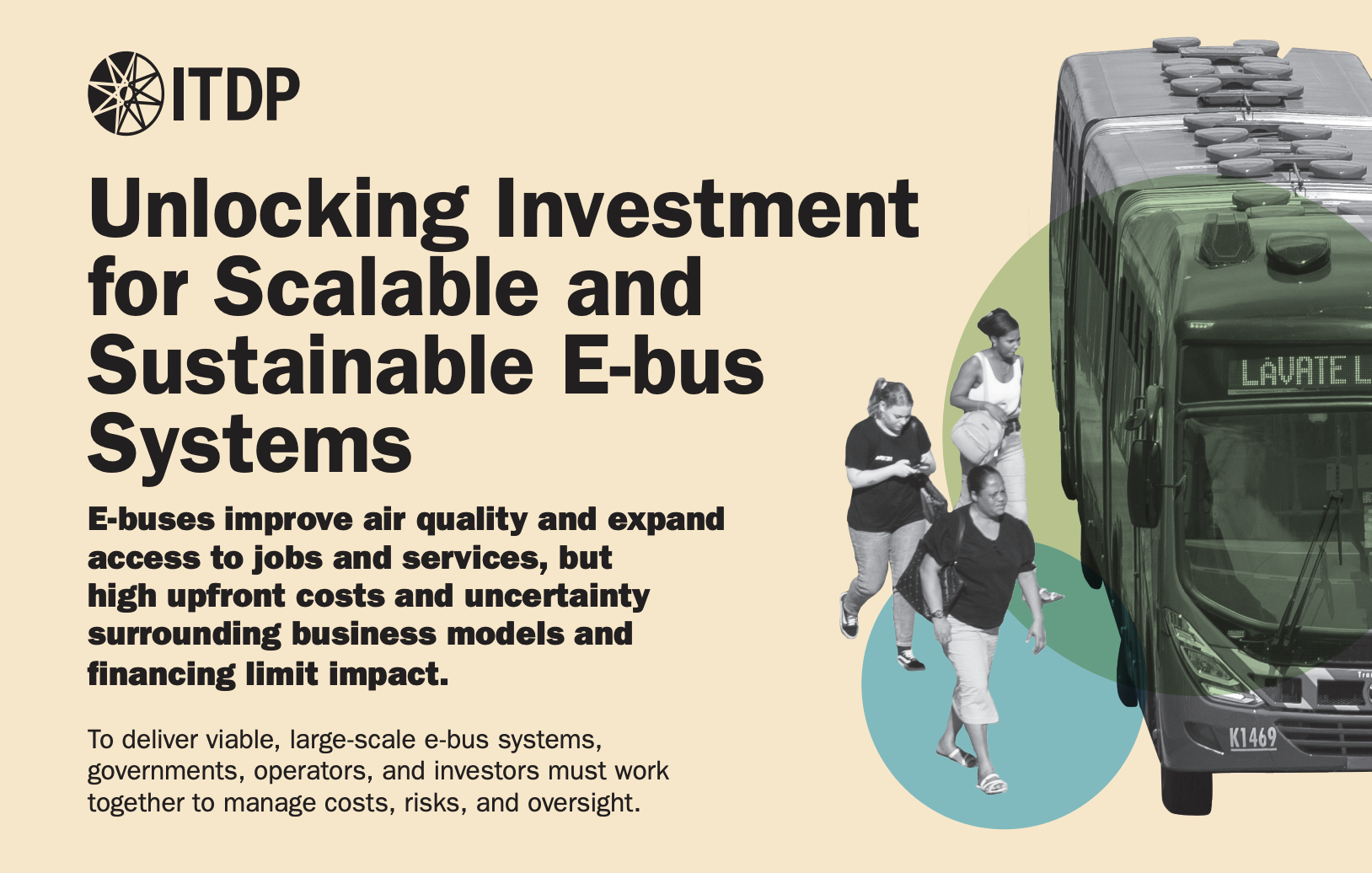
- Download the “Unlocking Investment for Scalable and Sustainable E-bus Systems” infographic →
- View the “Ambition to Action: Financing the Electric Bus Transition” webinar →
- Download the “Advancing E-Buses: Guide to Charging and Batteries” report →
- Download the “Building Better Public Transport Systems” report →
- Read about the CyclingMAX tool for assessing the value of cycling infrastructure →
- Learn about ITDP Indonesia’s “Business Case for Transjakarta’s E-bus Deployment” →
- Learn more about ITDP’s 2030 Strategic Plan →
Download ↓