
June 16, 2026
The 2026 World Cup is a Chance to Spotlight Safer Streets and Better Transport
As millions of people converge in cities across Mexico, the U.S., and Canada for the 2026 FIFA World Cup, another challenge will play out across North America.
How to move these millions of residents and visitors safely, efficiently, and sustainably throughout these host cities presents a major challenge and opportunity. The tournament, jointly hosted by these three nations, is one of the largest sporting events in history. With millions of visitors traveling among stadiums, hotels, airports, and public spaces, the World Cup is a unique opportunity to spotlight improvements in urban transport systems.
Major international events often leave behind iconic stadiums and unforgettable moments. Yet their most enduring legacy can be something far more valuable if developed strategically: investments in public transport and safer mobility infrastructure that continue to benefit residents for years after the final match. For the more than a dozen host cities across North America, the World Cup matches arrive at a pivotal moment. Urban populations in these countries are growing, congestion is worsening, traffic accidents are increasing, and transport remains one of the largest sources of greenhouse gas emissions.
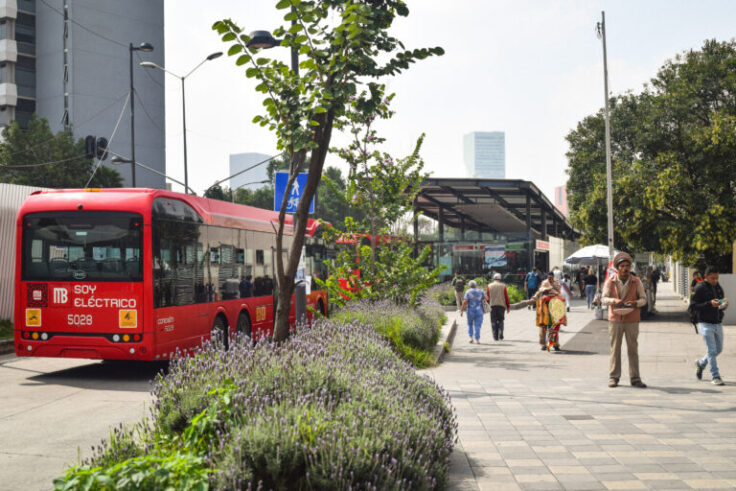
Learn more about ITDP’s vision for increasing ridership on electric public transport worldwide.
As a result, cities are facing mounting pressure to improve mobility options while reducing dependence on private vehicles and fossil fuels. This is where better public transport — and particularly electric, well-funded, and well-managed public transport — must play a central role. Moving millions of urban residents and visitors alike by relying on large, polluting vehicles is neither practical, cost-efficient, nor sustainable for such dense areas and in-demand events.
High-capacity public transport systems, including bus rapid transit (BRT), commuter rail, and public bus fleets, can move far more people affordably and efficiently while also reducing congestion, improving air quality, and mitigating emissions. Every investment in electric transit made during and following the World Cup can help cities meet long-term climate, public health, and mobility goals. Major international events have historically served as catalysts for increased public transport and infrastructure investment, from the Olympics in Barcelona to the World Expo in Shanghai.
The World Cup presents a similar opportunity to highlight crucial mobility interventions that might otherwise take many more years to advance. This can include everything from safer and more complete streets and public spaces to more transit-oriented development that prioritizes connections to integrated public transport. Rather than viewing such investments as temporary event-related expenditures, cities should see them as building blocks for a cleaner, safer, and more equitable future.
Mexico, in particular, is expected to welcome millions to the host cities of Guadalajara, Mexico City, and Monterrey, generating countless trips concentrated around stadiums, transport hubs, and public gathering spaces. Recognizing both the opportunities and risks associated with this surge in travel demand, ITDP Mexico joined key partners earlier in 2026 to commit to advancing road safety and sustainable mobility during and after the tournament.
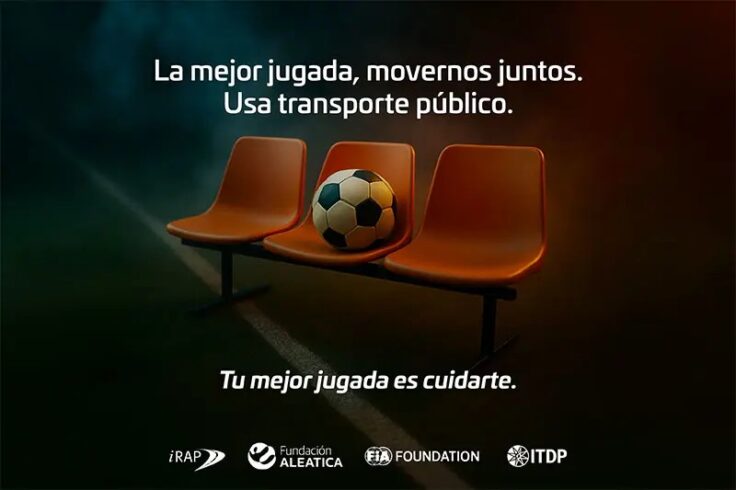
Through the “Tu Mejor Jugada es Cuidarte” (“Your Best Move Is to Take Care of Yourself”) campaign, the Aleatica Foundation, FIA Foundation, ITDP Mexico, and iRAP are working alongside government agencies and civil society partners to promote safer travel choices and protect road users with the Cup as a backdrop. The campaign encourages football fans and residents alike to choose safer and more sustainable modes of travel, including electric buses, walking, and cycling. It also addresses high-risk behaviors such as speeding and impaired driving through public awareness efforts visible on billboards, at transit stops, along high-traffic corridors, and across digital platforms.
Beyond public communications, the effort is helping strengthen long-term mobility planning. ITDP Mexico and the partners are further undertaking road safety assessments in the three host cities to identify opportunities to improve infrastructure and reduce crash risks, while also supporting them in developing mobility plans that prioritize public transport, safer pedestrian access, and improved cycling networks. Together, these efforts aim to create a longer legacy of safer and more sustainable streets.
Notably, success should not be measured solely by how quickly fans reach stadiums during the Cup. The true impact of the events on urban mobility will be seen in whether it leaves cities and policymakers with an understanding of the crucial role of well-managed and well-funded public transport, now and into the future. Public funding and policies developed for the tournament should ultimately create long-term value for all residents, particularly in communities that rely most on public infrastructure, even after the global spotlight fades.
The legacy of this World Cup and future events of this scale should be what they leave behind for their host cities, including better public transport and safer streets for everyone.