
June 02, 2026
Electrifying Ethiopia’s Transport: How Financing and Policy Can Lead to Scale
A version of this article was originally published in the No. 37 issue of the Sustainable Transport Magazine.
By Eng. Derrick Ogonji, ITDP Africa
Ethiopia’s streets tell a story of change. Rapid urbanization, rising motorization, and increasing congestion in cities have exacerbated air pollution, deepened dependence on fossil fuels, and restricted access to mobility. To better balance economic growth with environmental sustainability, the country’s transport sector, as a major contributor to greenhouse gas emissions, needs urgent transformation. The electrification of public transport has become one of Ethiopia’s most powerful strategies for achieving this.
By replacing diesel bus fleets with electric buses, the country can begin to reduce emissions, improve public health, cut costly fossil fuel imports, and strengthen economic resilience. Today, Addis Ababa operates Africa’s largest e-bus fleet, positioning Ethiopia as a regional leader in the transition to clean mobility. The city’s long-term strategy envisions the development of 15 bus rapid transit (BRT) corridors, complemented by electric feeder buses, to provide high-capacity and low-emission transport services across all major thoroughfares. This vision reflects deliberate national- and city-level actions bolstered by sustainable mobility policies, strong leadership, and strategic partnerships.
ITDP Africa continues to work closely with the national Ministry of Transport and Logistics (MoTL) and the Addis Ababa Transport Bureau (AATB) to design frameworks, business models, and operational strategies to sustain and scale electric public transport nationwide. These efforts align with ITDP’s overall aim of increasing public transport ridership, fully electrifying systems, and securing financing at scale for such systems. Ethiopia’s experience demonstrates how these strategies, when integrated into national mobility planning, can turn policy into real change.
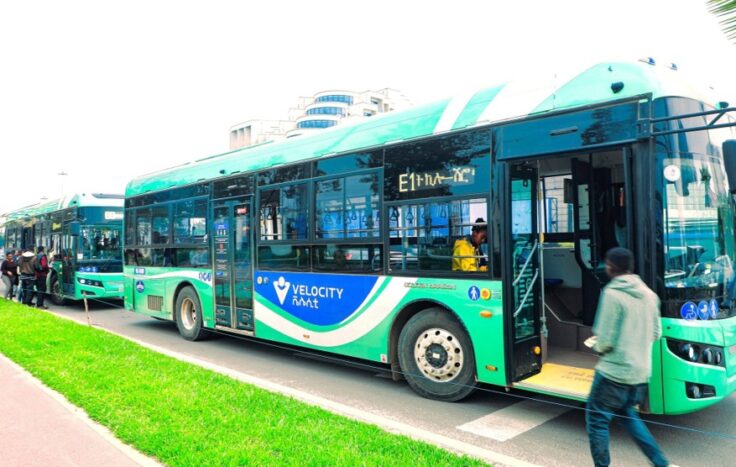
In a landmark move, Ethiopia became the first country to ban the import of gasoline and diesel-powered vehicles in 2024.
A Milestone in Transport Policy
At the heart of Ethiopia’s electrification progress lies one of the boldest national policies seen globally: a ban on importing internal combustion engine (ICE) vehicles. In January 2024, Ethiopia became the first country in the world to prohibit the importation of gasoline and diesel-powered cars. Initially applied to fully built ICE units, the ban was extended in 2025 to cover ‘semi-knocked-down’ and ‘completely knocked-down’ units (vehicles that are shipped in parts), helping close loopholes that allowed local assembly.
This moratorium on fossil-fueled vehicle imports was not just symbolic; it served to reorient the nation’s transport sector entirely toward electric vehicles (EVs). The policy also aims to reduce foreign exchange pressure from costly fuel imports by harnessing Ethiopia’s local energy sources. It further signals to manufacturers that the future lies in EVs and boosts long-term investor certainty that the policy environment will support clean mobility in the long run. The results since 2024 have been dramatic. According to the Ministry of Transport and Logistics, national EV stocks tripled, rising from roughly 4,600 in early 2023 to over 14,000 by early 2025. In 2024, EVs accounted for more than 60% of new vehicle registrations, making Ethiopia one of the fastest-growing EV markets in the world. Updated forecasts by the Ministry now anticipate nearly 500,000 EVs on Ethiopia’s roads by 2030.
Fiscal measures are further boosting this electric-forward approach. EVs are currently exempt from value-added tax, excise tax, and surtax, making them considerably more affordable to consumers. In addition, customs duties are structured to incentivize local assembly. Fully-built imported EVs are subject to a 15% customs duty, while ‘semi-knocked down’ units are taxed at 5% on average. Locally assembled EVs, on the other hand, are fully exempt from these duties, enabling job growth in the sector. Together, these measures have made electric mobility an increasingly attractive and viable choice for Ethiopian consumers and governments alike.
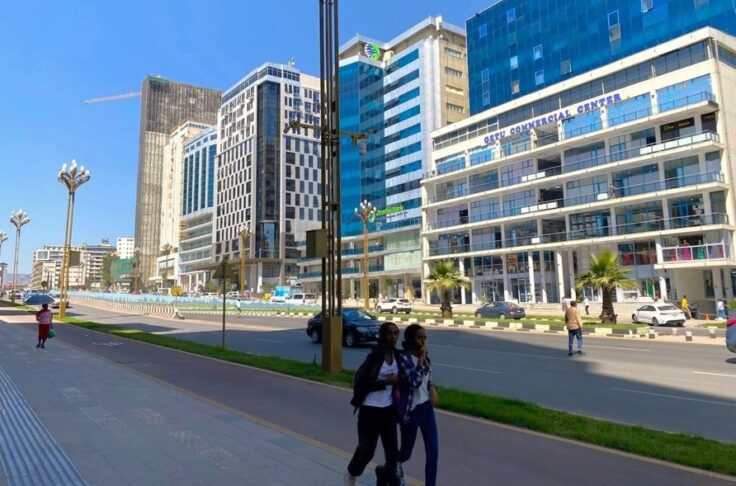
Investing in Electric Public Transport
Public transport, particularly e-buses, plays a pivotal role in Ethiopia’s electrification journey. With over 110 e-buses in operation, Addis Ababa’s public transport system is being significantly transformed. These e-buses serve key corridors, integrating seamlessly with a light rail system and conventional bus services. The growing electric fleet enhances the city’s multimodal network, providing better access to dense neighborhoods and business districts. Commuters now experience shorter waiting times, quieter rides, and smoother trips, while the reduction in emissions is a big step towards Ethiopia’s climate targets. The development of bus charging depots, increasingly integrated with the country’s renewable energy grid, demonstrates the feasibility of supporting clean buses with clean energy on a larger scale.
These achievements thus far have positioned Ethiopia as a global model for e-bus deployment. However, sustaining and scaling this transition will require more innovative financing mechanisms. So far, e-bus operations have been underpinned by government-led procurement, with the planned involvement of commercial banks and private investors. Yet, this design is not sustainable, given that e-buses cost three times more upfront than their diesel counterparts, and most vehicles and chargers are still imported, which leaves procurement vulnerable to market fluctuations. In addition, public transport fare revenue alone cannot cover operating costs and long-term debt obligations for operators.
ITDP Africa’s research has helped underscore pathways for financing reform. For instance, leasing models that can enable financial institutions or asset companies to own e-buses and lease them to operators can spread the costs over time. Blended finance could combine concessional loans, climate finance, and commercial capital to reduce risks for local financiers. Public-private partnerships could unlock investment into charging depots, with utilities and private developers sharing costs and benefits. Instruments such as green bonds and climate funds are also tools to mobilize long-term capital while ensuring domestic ownership of the electric transition. If these models align with the government’s ICE import policy and fiscal incentives, Ethiopia can shift towards a system where public funds help to further catalyze private capital.
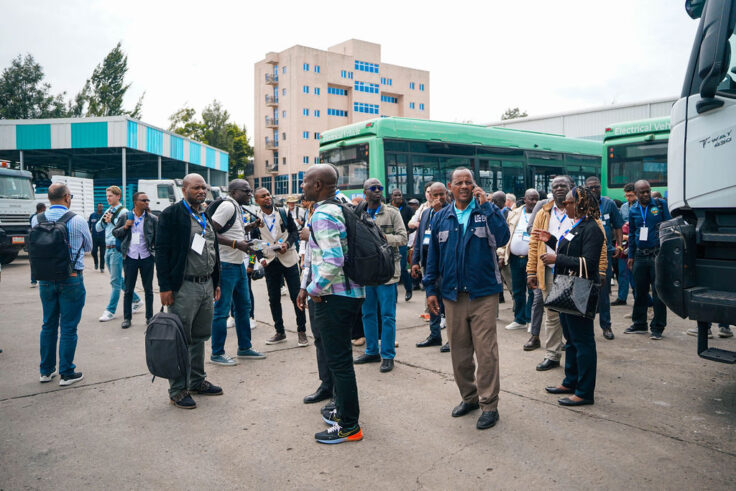
Recognizing the Barriers and Opportunities
Despite progress, several barriers remain. Procurement bottlenecks continue to hinder e-bus expansion, with lengthy contracting procedures and reliance on foreign suppliers causing delays. Operational challenges also persist. Local technicians lack training for advanced battery systems, spare parts remain scarce, and downtime risks affect reliability. Charging infrastructure is still limited, concentrated in a few depots.Although Ethiopia’s grid is predominantly renewable, constraints on reliability and distribution raise questions about future capacity.
Financial risks compound these challenges — currency volatility inflates procurement costs, repayment streams remain uncertain, and Ethiopia lacks a dedicated national electric mobility fund. Institutional coordination between transport authorities, utilities, and financial institutions remains weak, slowing planning and investment. Addressing these gaps is crucial for scaling e-bus implementation beyond Addis Ababa. Nonetheless, opportunities are also evident. In the short-term, Ethiopia can focus on mapping out fleet requirements in cities, streamlining procurement, developing charging hubs, and training more operators and technicians.
In the medium-term, the priority will be to establish sustainable financing frameworks that attract the private capital needed to scale much larger e-bus fleets in Addis Ababa and secondary cities. In the long-term, a sustainable urban future extends beyond buses. Ethiopia needs to focus on building out public transport that is also well-integrated with transit-oriented and non-motorized infrastructure and aligned with the commitments in the national Climate Resilient Green Economy strategy. The ICE import policy is a big first step for this strategy by making electrification a viable path forward. Ethiopia’s example demonstrates that policy, when combined with financing and innovation, can lead to real transformation.
Addis Ababa’s e-bus fleet shows us that African cities can lead the way in clean transport with the right mix of political will, institutional commitment, and resources. The ICE import policy has significantly reframed Ethiopia’s trajectory, pushing both public and private stakeholders to commit to a more climate friendly and energy secure future. Yet, policy alone cannot do all the work. Continued success will depend on more effective procurement reforms, layered financing models, and inclusive planning that strikes a balance between long-term affordability and sustainability for urban transport.
If Ethiopia can maintain its trajectory, it will not only meet its climate and development goals, but also create a blueprint for cities across the continent.