

Our 2030 strategy focuses on three results aimed at achieving fully electrified transport systems in our key geographies and cities:
The transition to electric vehicles is critical for the world to reduce its reliance on fossil fuels, mitigate the impacts of climate change, and significantly improve air quality in cities, resulting in health benefits for all. In line with ITDP’s focus on sustainable and equitable mobility, we prioritize electrifying buses and two- and three-wheeled vehicles. But achieving a fast transition also requires robust urban charging infrastructure, ensuring more convenient and accessible charging options.
Bus electrification is among the most scalable and practical strategies, as it impacts the most significant number of commuters and residents while leveraging existing transportation networks. Demonstration projects are essential for testing the feasibility of e-bus operations; fortunately, many have already been completed in ITDP’s primary geographies.
These projects can help address perceived challenges, such as charging infrastructure and fleet integration, while also demonstrating benefits, including reduced emissions and noise, improved operations, and enhanced air quality. Robust procurement processes, grounded in innovative contracting and business models, are needed to help streamline the transition and create market certainty.
High upfront costs for e-buses, combined with lower operating costs, mean that fleet transitions will also require innovative financing mechanisms and complementary policies in the future. Supportive strategies, such as metro area electrification plans, must include roadmaps with a clear vision for 100% public bus electrification. These long-term frameworks for e-bus implementation are foundational for every city.
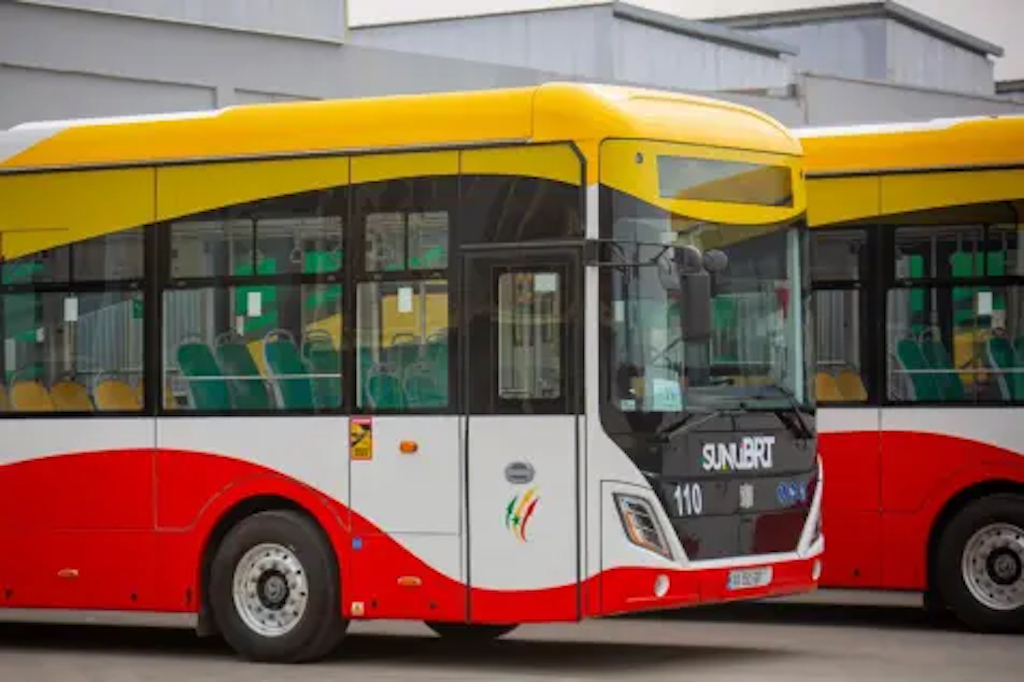
An estimated 700,000 e-buses are operational globally, and this number is poised to grow. ITDP and our partners worldwide continue to collaborate with governments to successfully implement the transition to electric buses.
In the Africa region, the city of Dakar, Senegal notably launched its landmark 18-kilometer fully electric BRT system in 2024. The ‘eBRT’ system is expected to carry 300,000 passengers daily with an initial fleet of over 120 articulated electric buses. ITDP Africa provided early technical and planning support to decison-makers and the e-BRT implementing agency, CETUD. ITDP Africa also prepared the system’s first feasibility study, held planning workshops, and contributed to the design process.
In Mexico City, ITDP Mexico has been providing technical assistance to the local government in the development of electrification plans that include the city’s BRT, trolleybus, and cable car networks. The city’s transport authority, Metrobús, has one of the largest fleets of e-buses in Latin America and has set a target to fully electrify its fleet over the next decade.
In East Asia, ITDP China has been working with the large city of Jinan, China on its electric Trolleybus Demonstration Project since 2016. By 2024, Jinan had successfully debuted six trolleybus lines and over 80 kilometers of BRT corridors, procuring more than 350 trolleybuses and 800 standard e-buses for operation.
Accelerating the transition to electric two- and three-wheelers is essential, especially in LMICs, where fossil-fuel-powered versions of these vehicles are a dominant and growing mode of affordable transportation. They offer significant emission savings, particularly in regions with increasing rates of motorization. Their popularity stems from their convenience, low purchasing and operating costs, and adaptability for both passenger and freight use in dense areas.
ITDP advocates for electrification as a catalyst for transitioning to lower-speed vehicles, such as e-bikes, to prioritize safety for vehicle users as well as pedestrians and cyclists. ITDP supports e-bike vehicles that are both slower and lighter than other two-wheelers, like mopeds and motorcycles, and that can be used in typical bicycle lanes.
Electric bikes and electric two- and three-wheelers can often replace short vehicle trips, thereby significantly reducing emissions and traffic congestion. However, many governments have yet to clearly define regulations for these vehicles, enforce requirements for quality standards, or state where and how riders should operate. This clarity and awareness are crucial for users, manufacturers, and retailers alike, particularly in light of growing concerns about road safety, battery quality, and charging practices.
Their growing popularity also presents opportunities for manufacturing and economic development in an emerging sector, which can ultimately help create jobs, reduce congestion, and make cities more accessible.
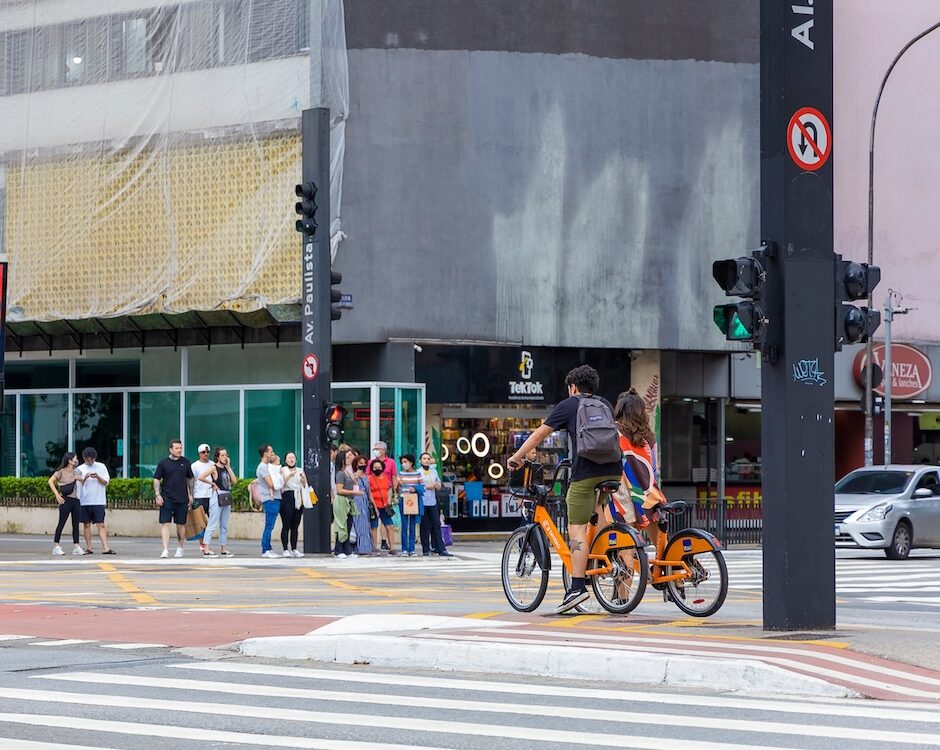
By promoting e-bikes and electric two-wheelers as viable alternatives to cars, they can play a significant part in reducing emissions in Brazil’s cities. Lightweight e-bikes are experiencing a surge in usage for goods and services delivery in dense districts in cities like São Paulo and Rio de Janeiro. ITDP Brazil has worked closely with the local government to assess the potential impacts of e-bikes and similar electric two-wheelers within their low-emission zone (LEZ) pilot areas.
The city of Rio de Janeiro has a significant number of delivery services operated on e-bikes, particularly using the city’s bikeshare system. Within its LEZ, which launched in 2022, a substantial proportion of trips for delivery activities are made on e-bikes, indicating a surge in demand. To stay ahead of this growth and ensure safe and strategic regulations, ITDP Brazil has conducted assessments of street infrastructure, road safety, costs, and charging facilities to support Rio de Janeiro in developing more e-bike-friendly policies.
To successfully transition to e-buses and other vehicles, high-capacity chargers and strategically placed charging hubs are necessary to support longer routes and higher energy demands. Charging infrastructure is crucial for expanding electric mobility, as it enables diverse transport modes to transition to electric power seamlessly. For lighter vehicles, such as two-wheelers and cars, accessible charging stations reduce range anxiety and facilitate widespread adoption, particularly in urban areas.
Lessons from ITDP projects in Brazil, India, and China highlight the importance and feasibility of integrating e-bus elements with charging infrastructure to achieve scalable and sustainable outcomes that improve air quality and reduce emissions. Infrastructure planning requires considerations of land use, as finite space and restrictions in cities can pose a challenge for the placement of bus charging depots.
Such challenges require more comprehensive urban planning, including the selection of sites and the design of infrastructure with a proper spatial footprint. Improving strategies for land use and parking reform, both of which are core to ITDP’s programs, is fundamental to redistributing urban space for the strategic integration of e-bus charging in an urban context.
For large-scale e-bus transitions, it is also necessary to evaluate the energy sources that feed the process, the necessary power infrastructure, and the capacity of the local electricity grid. Addressing and understanding our energy grids’ dependence on fossil fuels for power generation and the impacts of fleets on local energy consumption is a crucial component for a long-term transition.
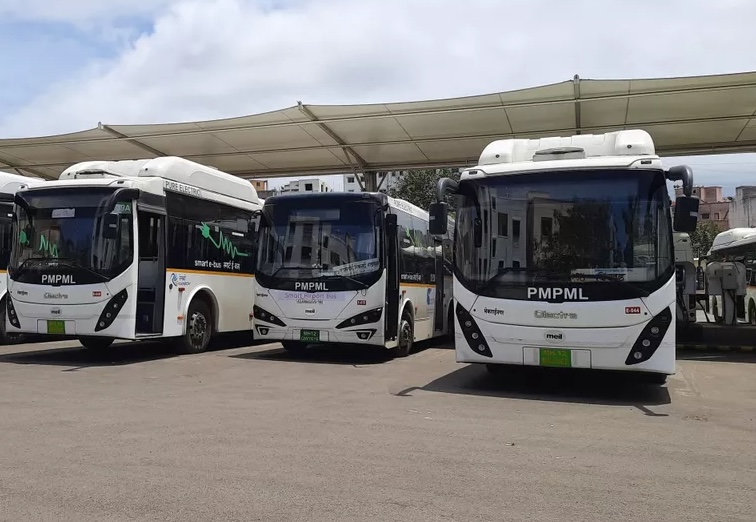
The Pune Mahanagar Parivahan Mahamandal Limited (PMPML) agency operates over 2,200 buses across the Indian cities of Pune and Pimpri-Chinchwad and plans to add over 550 e-buses in the next few years. ITDP India has been working closely with PMPML to develop and assess the feasibility of charging infrastructure and sites across the municipality, supporting the expansion of its electric fleet.
Due to the availability of space for bus parking and charging stations, bus depot sites were selected along strategic routes to ensure a comprehensive service and operational plan that will increase the use of electric vehicles. ITDP India has also collaborated with PMPML to conduct assessments of overall e-bus operations, including long-term charging roadmaps for hundreds of new buses in the future.