

Our primary 2030 objective is focused on massively increasing public transport ridership in our key geographies and cities through essential and complementary areas that target:
Public transport is at the core of ITDP’s work around the world and remains the bedrock of our strategy. By 2030, our goal is to enhance frequent and rapid public transport services with expanded coverage to increase ridership, all of which is facilitated by walking and cycling in transit-oriented cities and complemented by measures to restrict private vehicle use. Public transport is crucial for improving climate and air quality, as it shifts trips away from private cars, lowers GHG emissions, and reduces air pollutants that contribute to urban health issues.
ITDP will build on its historic legacy of promoting and implementing bus rapid transit (BRT). This high-capacity bus-based transit system delivers fast, reliable, high-quality, safe, and cost-effective services at a relatively low cost. ITDP’s approach extends beyond BRT to prioritize and increase all accessible, frequent, and rapid bus services, including integration with rail-based public transport. Key elements of our public transport strategy include:
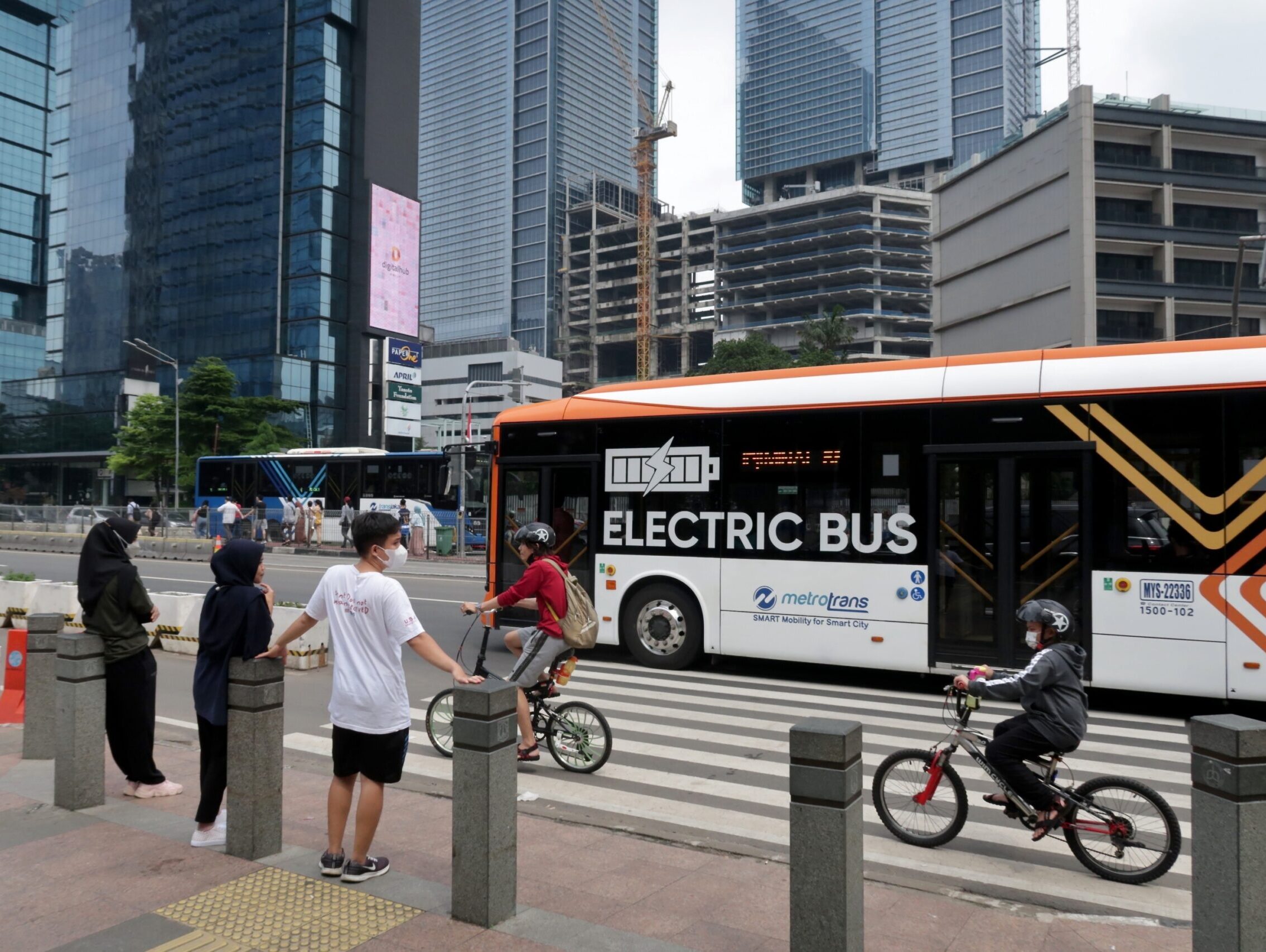
To date, Transjakarta is the longest BRT in the world, spanning over 240 kilometers and serving up to a million riders daily in Indonesia’s largest city. ITDP Indonesia has collaborated with the Provincial Government of DKI Jakarta since 2000, providing transport officials with technical expertise, direct advocacy, and policy guidance to support key Transjakarta projects.
This has included a focus on transit-oriented development plans to enhance pedestrian and cyclist access to BRT stations, as well as pilots of new accessibility measures for people with disabilities. These efforts led Transjakarta to a record 1.2 million daily riders in 2022, marking a nearly 300% increase in users since the 2020 pandemic. ITDP continues to support Transjakarta and the government in their bold goal of electrifying 100% of their system by 2030, providing technical and research support for ongoing business and operational planning.
In addition, ITDP Indonesia has been providing technical support for the system’s electrification strategies, exploring financing scenarios, and presenting regulatory frameworks. Gender inclusion and access for people with disabilities are also a cornerstone of ITDP’s work with the agency.
ITDP began as a cycling advocacy group over 40 years ago, sending bicycles to war-torn Nicaragua in the 1980s and later advocating for the recognition of cycling and walking as official modes of transport by the World Bank. Today, cycling and walking remain firmly rooted in ITDP’s DNA.
By 2030, we aim to increase the number of protected and connected cycling and walking paths to promote safe usage and facilitate better access to other sustainable modes and destinations. Multimodal trips are those where people can use multiple modes of travel to reach their destination. Developing affordable, accessible, and intuitive connections between walking and cycling networks and public transport systems is crucial to a future of sustainable mobility.
To foster safer, more livable urban environments, ITDP reimagines streets to prioritize active mobility through the introduction of wide, shaded sidewalks, physically protected bicycle facilities, and secure, at-grade pedestrian crossings. Key elements of our cycling and walking strategy include:
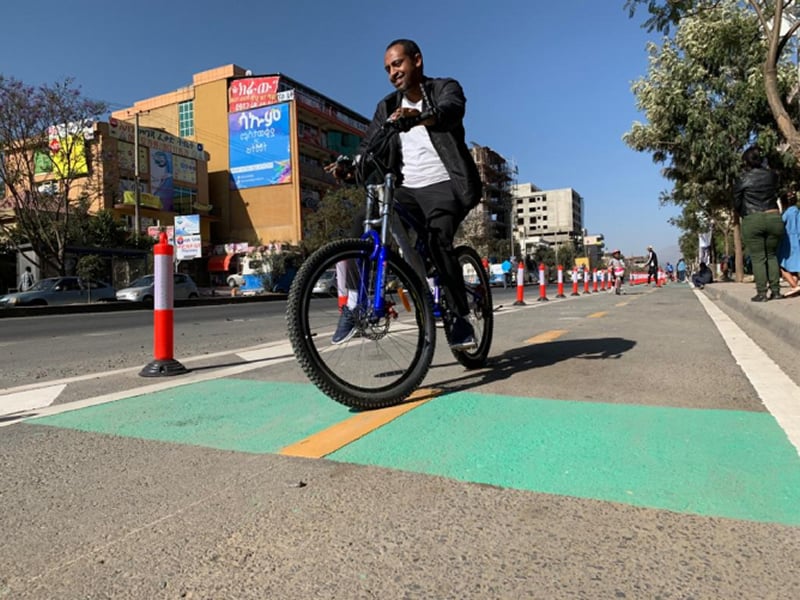
African cities face many challenges in providing safe walking and cycling infrastructure. Improved walking and cycling environments, integrated with public transport and rapid transit systems, will enable more people to choose connected and lower-emission trips. For several cities and countries in the region, ITDP Africa has successfully developed street design guidelines to help facilitate urban environments built around walking and cycling, as well as strategic connections to public transport hubs.
In 2024, the Urban Street Design Manual, which ITDP helped create for Ethiopia, was notably adopted by the national government. The recommendations in the manuals seek to inform policy and infrastructure designs that prioritize sustainable modes of transport across cities in Ethiopia. In particular, the framework emphasizes strategies to re-allocate the city’s street space to walking, cycling, and public transport systems over private vehicles and highways.
To successfully shift trips out of private, polluting vehicles and onto clean public transport, cycling, and walking, cities must proactively discourage vehicle use through travel demand management (TDM) measures.
Parking reform is one strategy gaining momentum worldwide as a key lever to reallocate valuable city space, reduce driving demand, lower GHG emissions, and enhance livability. The goal of parking reform is not to eliminate parking, but to ensure that valuable urban space is used as efficiently as possible.
Cities around the world are also increasingly employing Zero and Low Emission Areas as strategies to combine multiple mobility measures, aiming to reduce polluting vehicle use in designated areas, and serve as catalysts for broader impacts across cities.
By 2030, ITDP aims to achieve widespread adoption of these dual TDM strategies, resulting in fewer trips taken by polluting cars and a significant reduction in vehicle kilometers traveled (VKT).
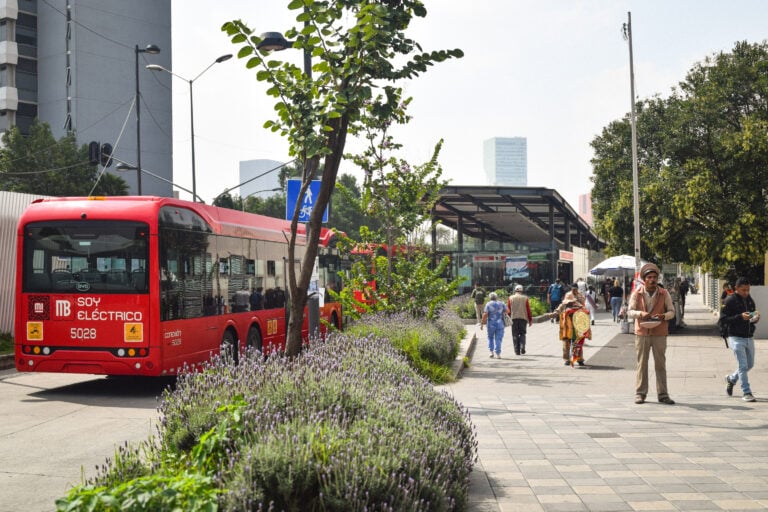
ITDP Mexico has been at the forefront of advocating for changes to parking regulations in Mexico City for more than a decade. Through cooperation with the Ministry of Urban Development and Housing, ITDP Mexico developed proposals to enhance parking management, reduce traffic demand, and optimize street space, which contributed to citywide policy reforms. The city’s removal of minimum parking requirements and enforcement of maximums are estimated to result in up to 17,000 cars removed from city streets annually between 2017 and 2030.
In China’s capital of Beijing, ITDP China has been working with the Municipal Commission of Transport and other agencies to propose reforms for on- and off-street parking management. This has included the overturning of parking minimums and the implementation of parking maximums for non-residential parking lots in dense districts. This also led to the conversion of nearly 28,000 parking spaces into shared ones that significantly reduced the need for new developments in residential areas.