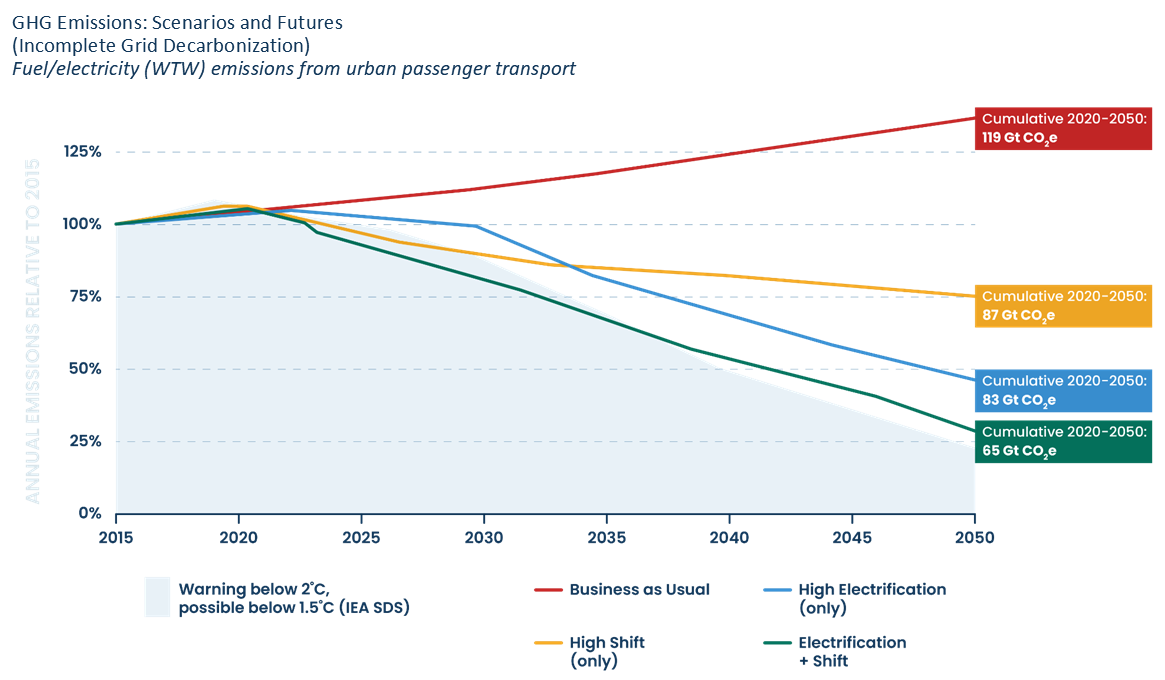
By 2030, ITDP aims to transform urban mobility in cities worldwide, adopting and implementing a vision where clean, sustainable modes are the norm. This global transformation could result in nearly 60 cumulative gigatons of GHG savings by 2050, improved social equity, and safer and healthier environments.
Not only do cities need to enhance and expand their public transport networks to become the primary mode of transportation for all residents, but they also need to do so with zero-emission electric buses, connected to protected cycling and walking infrastructure, and anchored by compact city development.
Governments can then invest in better transport systems thanks to robust financial policy frameworks embedded at the national level and increased volumes of international development finance designed to support transport decarbonization projects, particularly in low- to middle-income countries.
ITDP’s vision illustrates a holistic approach to transportation is required to meet our goals—embracing the need to shift trips out of vehicles towards public transport, cycling, and walking, while also ensuring that the remaining vehicles are clean and electric. This approach to urban mobility is the only way we can achieve our climate and air quality targets.
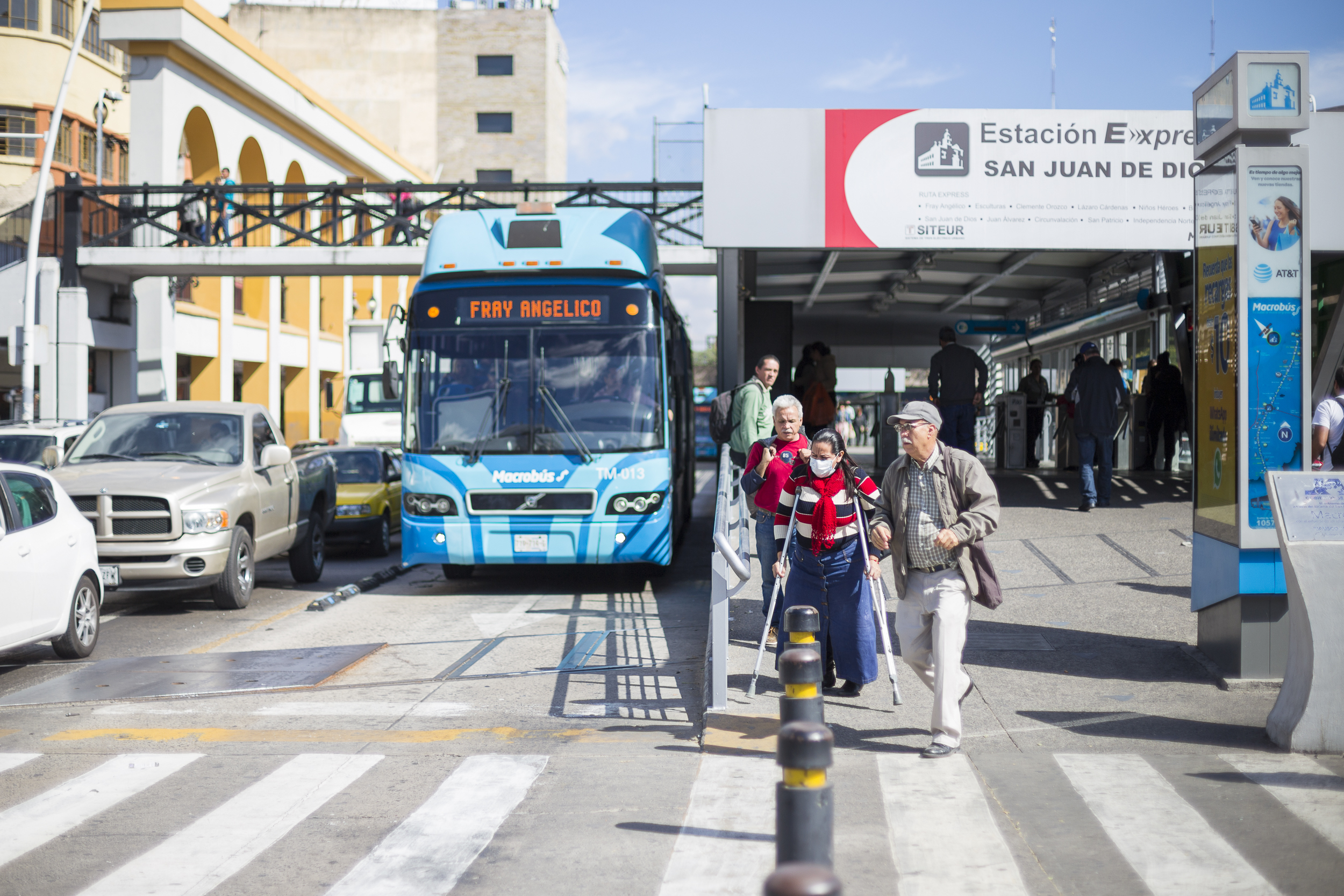
ITDP also remains steadfast in our commitment to equity and social progress. This means creating inclusive transport systems designed to: meet the needs of the most vulnerable groups, including children, people with disabilities, and older adults; that value the perspectives of women and caregivers; and that are made safe and secure for everyone.
Finally, we must ensure that our transport systems are resilient and designed to withstand increased catastrophic weather events and other unexpected shocks, recognizing that public transport, cycling, and walking often serve as critical lifelines during crises.