

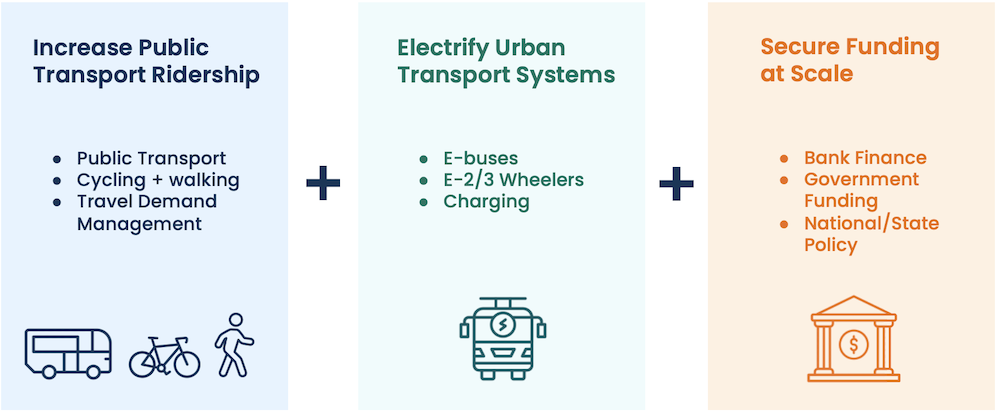
ITDP’s 2030 strategy is organized around three connected objectives that can be summarized together as:
After careful deliberation amongst our team, partners, and stakeholders, we are convinced that this strategy will not only deliver on our collective goals but also focus attention on public transport as the cornerstone of progress in our sector. Our 2030 strategy is also designed with speed and scale in mind. Given the urgency of our climate imperative, we must rapidly scale up our efforts to reach more places more quickly. This is why we are prioritizing finance and national policy more deliberately in this new strategy.
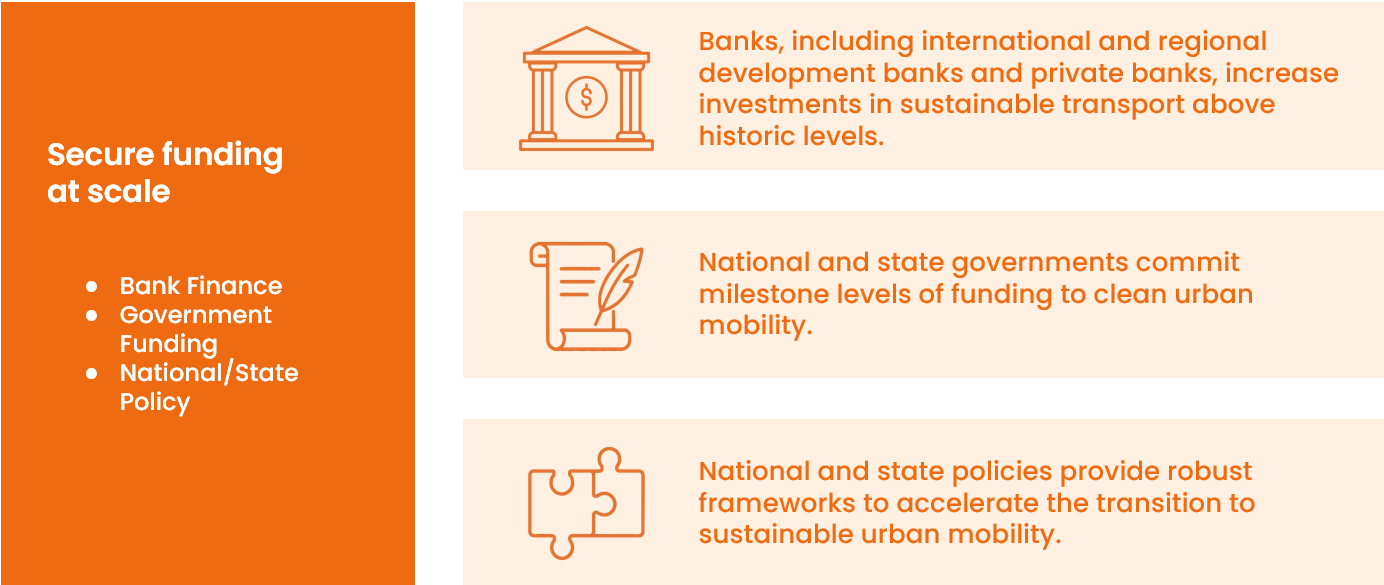
Global data shows a chronic underinvestment in sustainable transport, especially in low- and middle-income countries (LMICs) in the Global South. According to the Cities Climate Finance Leadership Alliance, investments in transit, cycling, and walking account for only 10% of finance financial flows for transport, while 54% supports private vehicles. Cities require access to reliable resources from their national and state governments, as well as development banks and agencies, to develop and enhance their transportation systems.
This is particularly critical in LMICs that are rapidly urbanizing and straining the inadequate and frail systems that exist today. Increasing the flow of funding and finance from national, bilateral, and multilateral agencies can unlock stalled projects, catalyze private investment, and usher in a new era of sustainable urban growth at the scale needed to meet urgent climate and development goals.
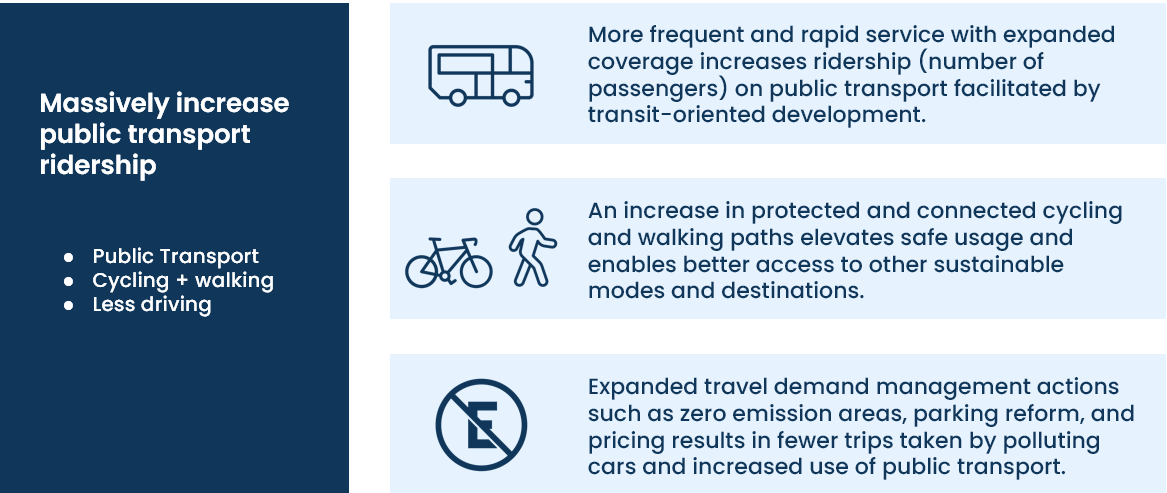
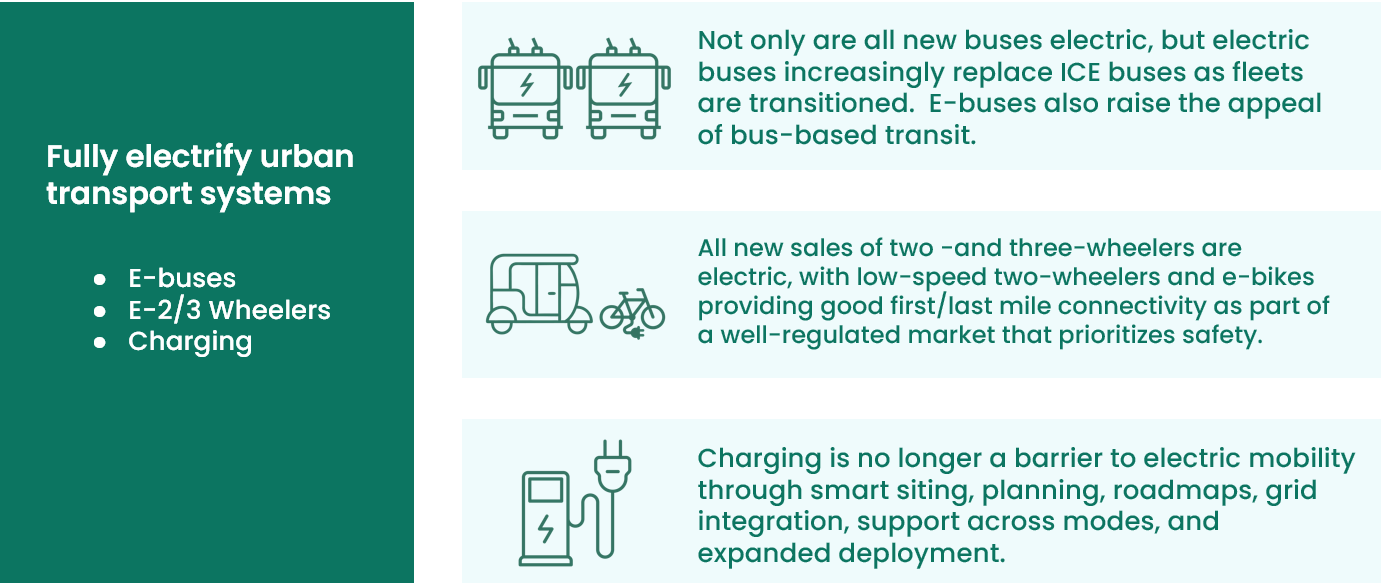
The graphics below illustrate the key components of our 2030 strategy, outlining objectives and key impacts designed to collectively deliver significant benefits, including reduced GHG emissions and pollution, as well as increased equitable access to mobility.
Since 1985, ITDP has worked in cities worldwide to implement sustainable and equitable transport projects and policies that reduce emissions and pollution while promoting social inclusion and economic opportunity. We have always worked in low- to middle-income, rapidly urbanizing, and high-emitting countries, where we can have the most significant impact by avoiding the lock-in of car-dominated patterns.
Today, ITDP is well-established in six major regions, with local teams and deep stakeholder relationships, in addition to our US-based headquarters. Our primary regional offices are in Rio de Janeiro, Brazil; Beijing and Guangzhou, China; Chennai, India; Jakarta, Indonesia; Nairobi, Kenya; and Mexico City, Mexico. This expansive geographic footprint enables ITDP to operate as a network poised to accelerate the global transfer of innovation, knowledge, and skills.
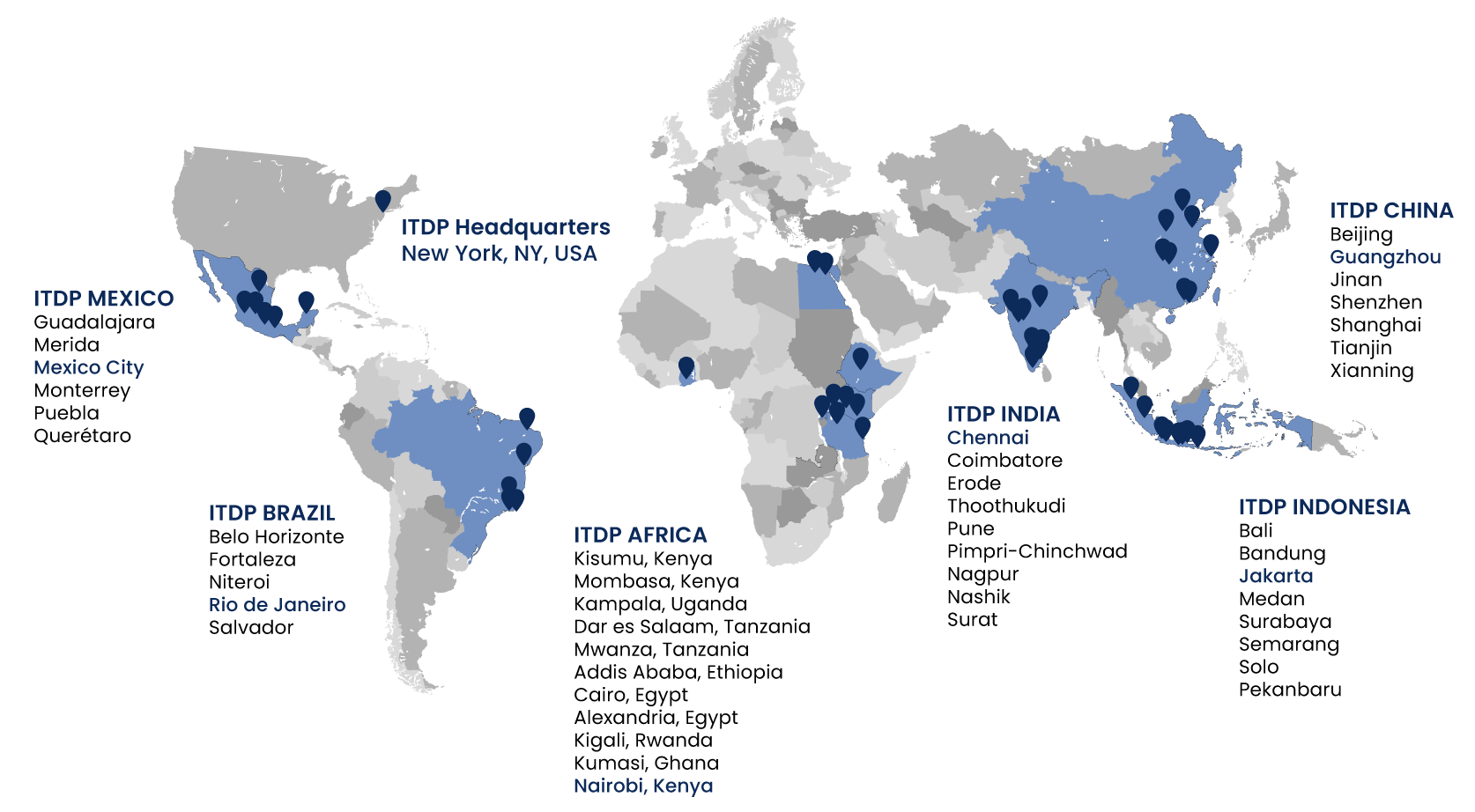
This network allows us to scale solutions across and beyond our core cities, reaching broader audiences across regions and at all levels of government, including the international level. ITDP has secured a position as a trusted technical, grounded, and global leader in the field. Over the years, ITDP has had several significant impacts, including: