
October 20, 2026
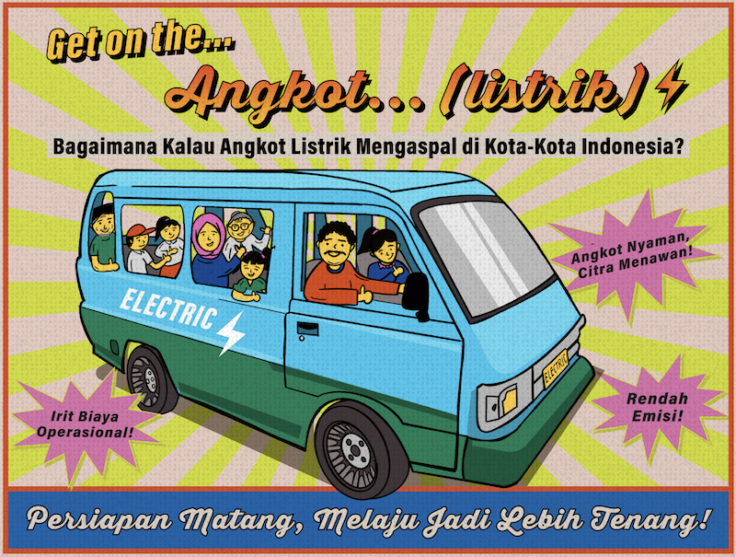
The Road Ahead is Electric for Indonesia’s ‘Angkots’
For generations, the angkot has defined urban life in Indonesia.
Read the original version of this article from ITDP Indonesia for more details.
These small public transport vehicles have connected neighborhoods, provided affordable mobility, and supported thousands of livelihoods. More than just a mode of transportation, angkot have become part of the country’s cultural identity. Yet today, this iconic service is facing an uncertain future. Across Indonesia, angkot are disappearing from city streets.
With nearly 85% of the country’s public transport fleet remaining semi-regulated and run by individual or small-scale operators, growing competition from private vehicles, ride-hailing platforms, and newer public transport systems has steadily eroded their role. The decline is particularly striking in the city of Makassar in Indonesia’s East, where locals call angkot-type vehicles pete-pete. In 2005, more than 4,100 vehicles operated across the city. Two decades later, only around 643 remained in service. Similar trends appear elsewhere, including the city of Bogor in West Java, where the number of angkot continues to shrink even as the city’s population grows.
One key reason is the aging fleet. Many vehicles have surpassed the maximum operating age established under national transport regulations. In Bogor alone, authorities had taken enforcement action against more than 1,000 angkot by September 2026, meaning nearly half of the city’s fleet was at least 20 years old. The city’s efforts to retire older vehicles are part of a broader initiative to reorganize and improve public transport services. While this transition challenges operators and local governments, it also offers an opportunity: instead of simply replacing aging vehicles, Indonesia can use this moment to modernize one of its most important modes of public transport.
Electrifying public transport systems is key to ITDP’s vision for the future.
Why Electrification Matters
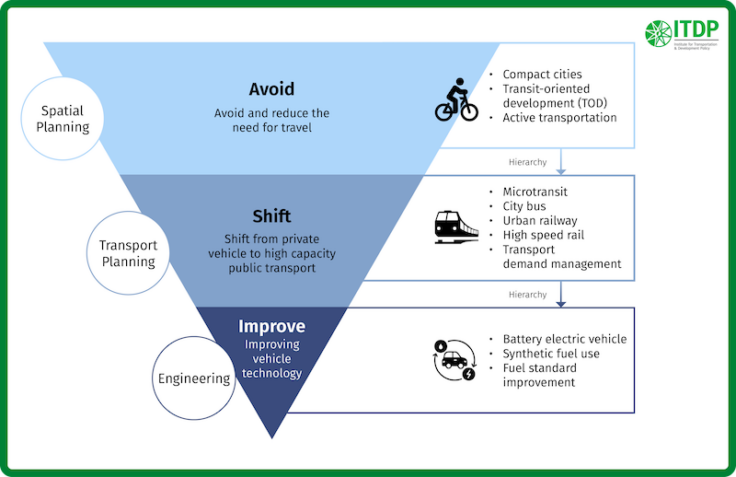
Electrification has become a central strategy for reducing transport emissions worldwide. But replacing combustion engines with electric motors alone will not create sustainable transport systems. ITDP’s research emphasizes the Avoid-Shift-Improve framework. Cities must reduce unnecessary travel through better urban planning (Avoid), encourage more people to use public and active transport (Shift), and improve vehicle technology through electrification and efficiency measures (Improve). These strategies work best when pursued together.
The transport sector currently accounts for roughly a quarter of Indonesia’s greenhouse gas emissions. At the same time, public transport usage remains relatively low, with mode shares in many major cities ranging from just 2% to 15%. This combination of high private-vehicle dependence and limited public-transport use continues to drive emissions upward. Research from ITDP Indonesia suggests that fully electrifying public transport fleets in 11 priority cities by 2030 could reduce greenhouse gas emissions by approximately 25% compared with a business-as-usual scenario. However, achieving these reductions requires looking beyond large bus systems. Feeder services, including angkot, will also play a critical role.
Why Angkot Are Well Positioned for the Transition
Unlike entirely new transport systems, angkot already have many of the building blocks needed for electrification. Routes are established. Operators already exist. Travel patterns are well understood. Their relatively small size also makes fleet conversion more manageable than building a new electric bus network from the ground up. The economic case is becoming increasingly compelling.
ITDP research finds that electric public passenger vehicles, including angkot, can cost about 28% less per kilometer to operate than comparable conventional vehicles. Although electric vehicles require higher upfront investment, these savings can accumulate over time and help offset purchase costs. Electrification therefore offers benefits beyond the environment. It also creates an opportunity to improve fleet reliability, reduce operating expenses, and replace aging vehicles with safer, more comfortable alternatives.
Early Successes Point the Way Forward
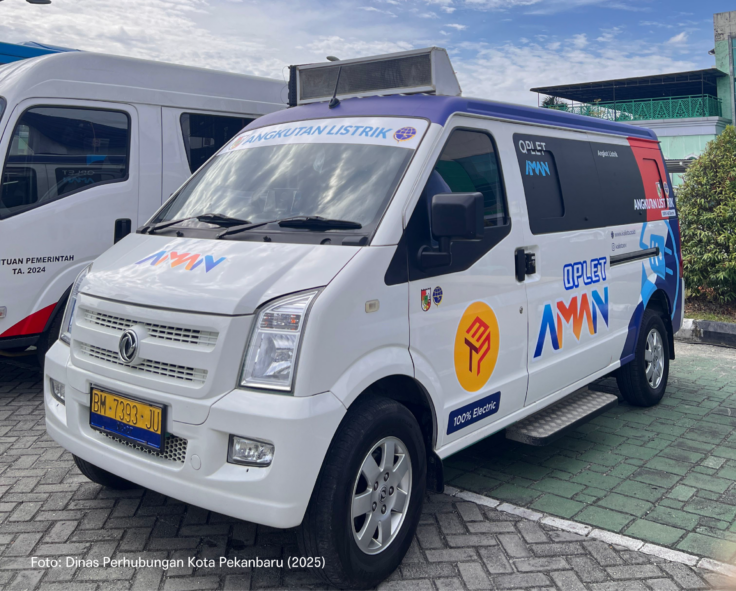
Several Indonesian cities have already begun experimenting with electric angkot, demonstrating that the transition is not only possible but increasingly practical. Bogor launched trials of electric angkot through the Alibo (Angkot Listrik Bogor) program, testing vehicles across multiple routes. Pekanbaru followed with its Oplet AMAN initiative, which later became a feeder service supporting the city’s Trans Metro Pekanbaru bus network. Jambi introduced electric angkot through the TRANS Bahagia program, marking the country’s first buy-the-service (BTS) angkot initiative. Jakarta and Bandung have also begun piloting electric angkot services.
These early projects show that technology is no longer the primary barrier. The bigger challenge is ensuring that planning, financing, operations, and infrastructure development advance together. Successful transitions require collaboration among local governments, operators, financial institutions, manufacturers, and charging infrastructure providers. They also require a clear understanding of travel demand, route design, fleet requirements, and sustainable financing mechanisms.
Learn more about ITDP’s efforts to advance bus electrification here.
More Than New Vehicles
The real promise of electric angkot extends beyond replacing old engines. A successful transition can open the door to broader public transport reform, improving everything from service quality and operational management to financing structures and institutional arrangements. In other words, electrification should not be seen as a vehicle-replacement program, but as a chance to build a stronger public transport system. The angkot is often portrayed as an outdated symbol of the past, but it doesn’t have to remain that way. With the right planning and investment, electric angkot could become a symbol of Indonesia’s mobility future: cleaner, more efficient, and better integrated with modern urban transport networks.
The next chapter of the angkot story is waiting to be written. And this time, it could be powered by electric mobility.