
September 22, 2026
The Pathways to Low Emission Zones in India’s Key Cities
As the Indian city Pune, home to over six million people, prepares to implement a Low Emission Zone (LEZ), a key question at the center of the discussion is how cities can legally regulate high-polluting vehicles while encouraging people to choose more sustainable travel.
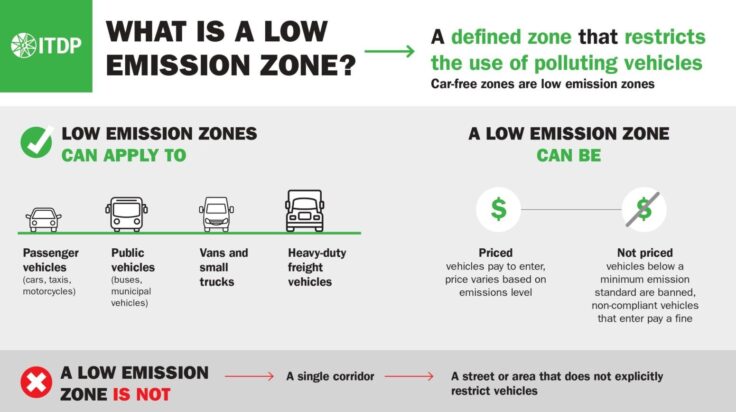
Low Emission Zones are designated areas where highly polluting vehicles are restricted or discouraged to improve air quality and protect public health. One approach is straightforward: prohibit older or more polluting vehicles from entering identified areas. Another is more strategic: use pricing to discourage polluting and unnecessary trips while generating resources to support sustainable transport.
This second approach is closely connected to travel demand management (TDM). TDM is not simply about controlling vehicles. It shapes how, when, where, and by what mode people travel. Pricing mechanisms can encourage people to shift from private vehicles to public transport, walking, cycling, shared mobility, or other lower-emission options, especially when cities invest in convenient, affordable alternatives.
ITDP India is working with Pune to explore a pricing-based approach to LEZ implementation. Rather than relying solely on bans, the approach would introduce a levy on older and more polluting vehicles entering the zone. The objective is to make cleaner, more efficient mobility the easier and more affordable choice. But choosing pricing is not only a transport policy decision. It is also a legal matter.
Learn more in ITDP’s report, “The Opportunity of LEZs,” available here.
Understanding India’s Legal Landscape for Clean Air
India currently has no single, consolidated law governing Low Emission Zones. Instead, implementation would draw on multiple laws and authorities. At the constitutional level, Article 21 recognizes the right to a clean environment, while Article 48-A requires the State to protect and improve the environment. Several laws provide a broader framework for action.
The Environment (Protection) Act, 1986 gives the Central Government wide-ranging powers to regulate activities that affect environmental quality. The Air (Prevention and Control of Pollution) Act, 1981 gives State Governments and Pollution Control Boards powers to plan and implement pollution-abatement measures and issue binding directions. The Motor Vehicles Act, 1988 allows State Governments to regulate vehicle movement in the public interest of safety and convenience.
The Maharashtra Municipal Corporations (MMC) Act, 1949 also provides municipal corporations with powers related to transport and environmental protection. However, it does not explicitly authorize cities to impose charges on vehicles specifically to address vehicular pollution. This distinction matters for Pune Municipal Corporation (PMC) and Pimpri Chinchwad Municipal Corporation (PCMC) as they consider how to implement a pricing-based LEZ.
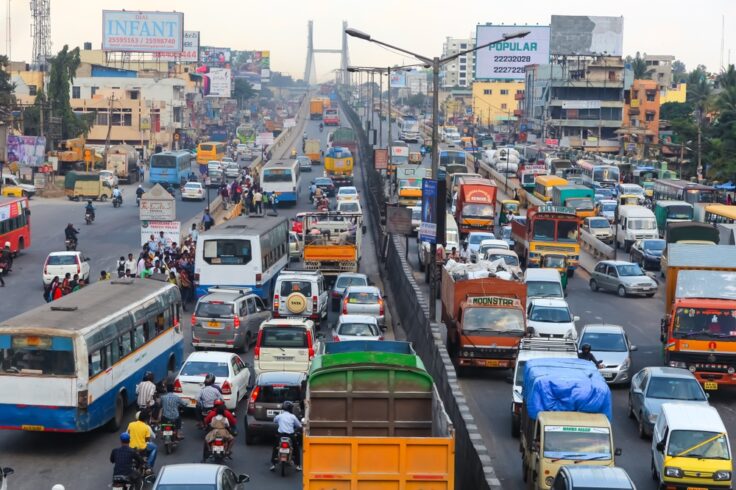
Limiting the demand for private vehicles is key to ITDP’s vision for increasing public transport ridership.
Three Potential Pathways
To examine these questions, ITDP India conducted a legal study in Pimpri Chinchwad. The study identified three potential pathways for introducing pricing within an LEZ. While the analysis focused on Pimpri Chinchwad, these options may also be relevant to other cities in states like Maharashtra, including Pune. However, they are potential pathways, not definitive legal solutions. Feasibility will depend on each city’s specific administrative and legal context.
One potential pathway is action by the Maharashtra State Government under the Air (Prevention and Control of Pollution) Act, 1981. Maharashtra has been declared an Air Pollution Control Area, giving the State Government powers to impose targeted measures to address air pollution. The Maharashtra Pollution Control Board (MPCB) can also plan and implement pollution-abatement measures, issue directions, and pursue mechanisms linked to environmental harm. These provisions could provide a legal basis for pollution pricing within an LEZ while linking the charge directly to air-quality objectives.
A second pathway would provide greater local autonomy but presents a more significant legal challenge. The MMC Act allows municipal corporations to regulate aspects of transit and impose certain special charges, subject to the Act’s requirements. However, it does not explicitly recognize vehicular pollution or environmental protection as grounds for imposing such charges. If cities are to have greater authority to implement pricing-based LEZs independently, legislative reform may be necessary. This could include strengthening Section 208 of the Act to explicitly recognize environmental protection and vehicular pollution control as grounds for regulating vehicle movement and imposing special charges. Such reform could give cities a clearer and more durable legal basis for using pricing as a TDM tool.
A third pathway would involve action by the Central Government under the Environment (Protection) Act, 1986. The Act provides broad powers to protect and improve environmental quality, including restricting activities in specific areas, issuing binding directions, and establishing environmental standards. These powers could be used to designate an area in Pune or Pimpri Chinchwad as an LEZ and impose restrictions or environmental charges on high-polluting vehicles. However, because the Central Government holds the relevant powers, this pathway gives cities less direct control.
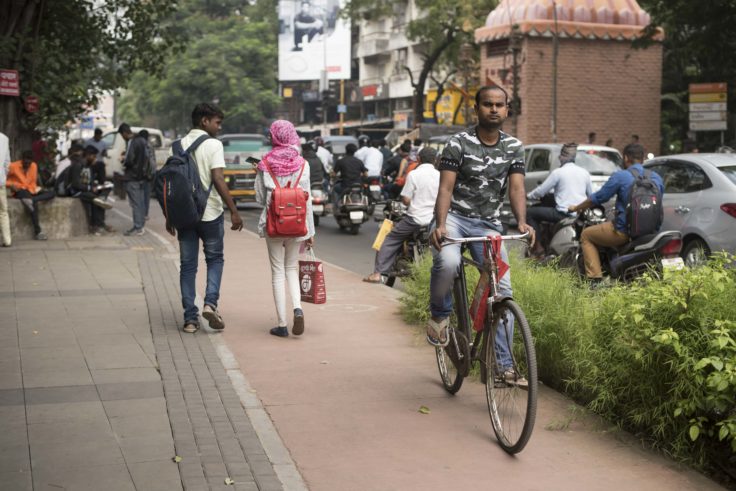
Planning LEZs That Change Travel Behavior and Demand
Even the language used to describe an LEZ levy can have legal implications. A “fee” is generally tied to a service or benefit the payer receives. An LEZ charge, however, primarily aims to reduce environmental harm and manage travel demand. The driver is not receiving a conventional service in exchange for payment. An Environmental Compensation Charge (ECC) or Special Charge, by contrast, can be framed around the environmental harm associated with polluting activities. This distinction may provide a stronger legal basis for a pricing mechanism designed to discourage high-polluting vehicle use and compensate for environmental impacts.
For Pune, the legal design of an LEZ is only one part of the larger policy challenge. If pricing is intended to influence travel behavior, it must be embedded within a broader TDM strategy. An effective LEZ should not simply make driving more expensive. It should help create conditions in which people have viable alternatives. This means improving public transport, making walking and cycling safer and more convenient, managing parking, supporting shared mobility, and ensuring revenues from environmental charges contribute to better sustainable transport options.
This is particularly important for equity. A pricing mechanism is more likely to influence travel behavior when people can realistically choose another way to reach their destination. The objective should therefore be to shift travel toward cleaner, more efficient modes, rather than simply penalizing those with limited alternatives. As Pune and Pimpri Chinchwad move toward LEZ implementation, establishing a legally resilient framework will be critical. But legal design should serve a larger purpose: helping cities manage travel demand, reduce unnecessary vehicle use, improve air quality, and accelerate the transition toward sustainable urban mobility.
For Pune and similar Indian cities, implementing LEZs can be more than a way to regulate polluting vehicles. It can become part of a broader approach to changing how everyone in the city lives, moves, and commutes.