
September 17, 2026
Why Compact, Electric Cities Reduce Fuel Dependence and Boost Energy Security
The ongoing disruption to global oil supplies caused by the start of the 2026 Iran conflict has exposed a familiar vulnerability.
Access ITDP’s “Compact Cities Electrified: Energy Outlook” report here.
As oil prices remain in flux and markets have grown more volatile, countries dependent on imported oil and gas have faced fuel shortages, inflation, power disruptions, and rising economic strain. For many low- and middle-income countries (LMICs), the impacts extended beyond energy markets, affecting schools, workplaces, public services, and household budgets.
This is not the first time the world has faced an oil shock. The energy crises of the 1970s prompted many countries to rethink their dependence on imported fossil fuels. Rather than relying solely on short-term measures, countries such as France and Japan invested in more efficient energy systems, alternative energy sources, and policies designed to reduce oil demand. Those decisions left them better prepared to withstand future supply disruptions and price spikes.
Today, governments face a critical choice. They can pursue temporary relief through fuel subsidies and emergency measures or address the underlying problem: reducing excessive dependence on oil, especially imports. In urban transport, that means accelerating both vehicle electrification and a shift toward more efficient forms of mobility.
Transport remains one of the world’s largest consumers of oil. Private passenger vehicles, including cars and two-wheelers, account for roughly 60% of transport energy use, and the vast majority still comes from fossil fuels. This continues to leave individuals, cities, and entire economies highly exposed to drastic fluctuations in global energy markets.

Assessing the Possible Scenarios
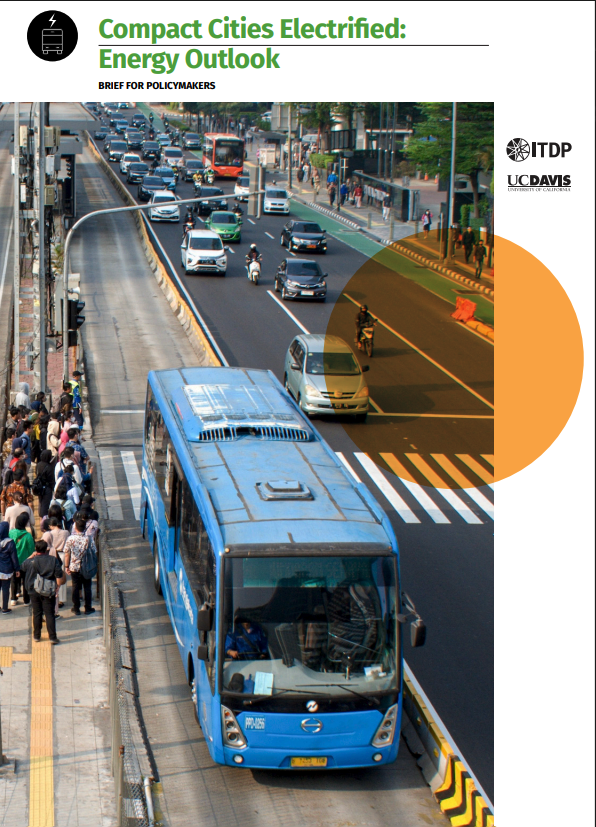 Compact Cities Electrified: Energy Outlook is a new analysis and report from ITDP and UC Davis, developed with support from the FIA Foundation, that explores the fuel and energy impacts of future scenarios for urban passenger transport. In particular, the global and country-level analyses examine Brazil, China, India, Indonesia, Mexico, and the United States, countries that represent nearly half the world’s population.
The outcomes show a critical opportunity for a future of compact, electric cities built around sustainable transport policies. In particular, the research evaluated four possible scenarios for urban passenger transport in these countries: Business-as-Usual (BAU), Electrification alone, Mode Shift alone, and a combined Electrification + Mode Shift approach.
The findings are clear. By 2050, combining Electrification + Mode Shift could reduce fuel consumption from urban passenger transport by 70% and cut liquid fuel demand by 85% across the six countries. As a result, gross oil and gas imports would fall substantially, improving resilience to future supply disruptions and insulating economies from volatile fuel prices.
The largest benefits emerge when cities tackle the root causes of oil dependence. Policy interventions that reduce fuel demand, particularly those aligned with compact urban development and transport system reform, can dramatically reduce exposure to disruptions in oil and gas imports.
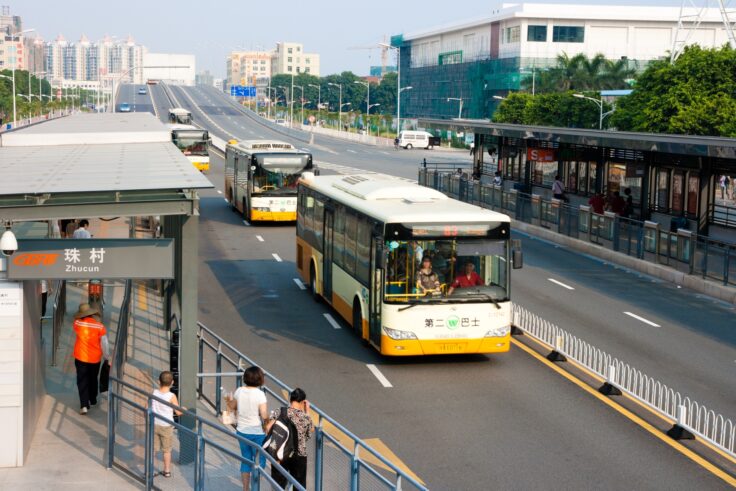
Learn more about ITDP’s vision for well-funded, well-managed public transport for all.
A Compact, Electric Urban Future
The Mode Shift scenario centers on moving people away from private car use and toward walking, cycling, and public transport. Importantly, it is not just about reducing current car travel. It is about preventing future growth in car dependence as cities expand. Achieving this shift requires coordinated action across urban planning and transportation. Compact, mixed-use neighborhoods allow residents to live closer to jobs, services, schools, and daily necessities.
High-quality walking and cycling infrastructure, including protected bicycle lanes and connected pedestrian networks, enables more trips without motorized vehicles. Fast, reliable, and affordable public transport systems provide an attractive alternative to driving, particularly when supported by stable funding and effective management. At the same time, policies such as parking reform, congestion pricing, and low-emission zones can better manage car use and prioritize more efficient travel options.
Electrification represents the second pillar of a resilient transport strategy. While electric vehicles – either cars or buses – do not reduce travel demand, they significantly reduce dependence on oil. Successful electrification policies focus on making electric vehicles cost-competitive with conventional vehicles, expanding charging infrastructure, aggregating procurement to lower costs, particularly for electric buses, and implementing regulations that steadily increase the share of low- and zero-emission vehicles sold.
What’s more, the analysis shows that neither strategy should be pursued in isolation. Electrification and mode shift work best together. Electrification reduces the fuel required for each trip, while mode shift reduces the total number and length of vehicle trips needed. Each approach also provides a safeguard against uncertainty in the other. If electric vehicle adoption occurs more slowly than expected, mode shift still delivers large reductions in fuel demand. If mode shift proves politically difficult, electrification can continue to reduce oil consumption and import dependence.

Nations Can Reduce Fuel Consumption and Demand
Several countries are already demonstrating the benefits of this approach. China has combined aggressive electric vehicle deployment with extensive investments in urban rail and metro systems, leaving it far less vulnerable to oil shocks than in previous decades. Ethiopia has taken a bold step by banning the import of internal combustion engine vehicles while investing in walking, cycling, and public transport. India has emerged as a leader in bus electrification and has significant opportunities to further reduce fuel imports through expanded investment in electric public transport.
The potential gains are especially striking in Indonesia, where urban passenger transport accounts for a large share of oil imports. The study finds that combining transport reform with electrification could cut oil and gas imports by more than half, fundamentally changing the country’s exposure to global energy market volatility.
The lesson is straightforward: urban resilience depends on reducing fossil fuel demand, not simply managing supply. Countries that continue to build car-dependent cities and subsidize fossil fuel consumption will remain vulnerable to recurring energy crises. In contrast, countries that invest in compact urban development, enable mode shift, and accelerate transport electrification can greatly reduce dependence on foreign oil imports, improve economic stability, and create healthier cities for all.
The benefits extend far beyond energy security. These investments reduce air pollution, improve road safety, expand access to jobs and opportunities, lower infrastructure costs, and help meet climate goals. Most importantly, they provide lasting protection against future oil shocks.
The most effective response to an energy crisis is not shielding people from high fuel prices. It is building transport systems that require less fuel in the first place.