
July 15, 2026
Why India’s Urban Future Depends on Healthy Streets
Every public transport journey begins and ends with a walk.
Improving streets and accessibility in our key regions is vital to ITDP’s vision for increasing public transport ridership.
Whether someone is heading to a bus stop, cycling to a metro station, or walking from transit to work, the quality of the street shapes their experience long before they board a vehicle. Yet in many Indian cities, this critical first- and last-mile remains a weak link in the mobility system. Narrow or missing footpaths, unsafe crossings, poor lighting, and uncomfortable waiting environments discourage people from choosing public transport and make everyday travel more difficult — especially as urban heat and extreme weather problems become more prevalent.
For decades, transport investment has prioritized moving vehicles rather than moving people. Roads have been widened, flyovers constructed, and intersections redesigned to prioritize traffic flow, often at the expense of pedestrians and cyclists. While these investments aimed to reduce traffic congestion, they also weakened the walking environment on which public transport depends. Today, cities across India are working to reverse that trend. A new publication from ITDP India, The Healthy Street Dividend: The Economic, Social & Environmental Case for Street Transformations, examines 10 Indian cities to show that investing in people-centered streets and infrastructure offers many economic, social, and climate benefits.
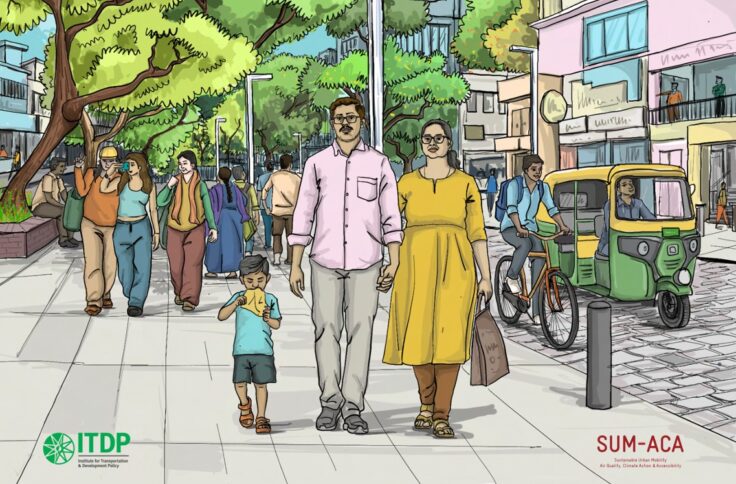
Through investments in measures like wider footpaths, safer street crossings, more trees, better lighting, organized parking, and traffic calming, cities can create truly “Healthy Streets” that make all types of public spaces safer, more comfortable, and more inviting. ITDP India found that these improvements do far more than beautify public spaces; they strengthen connections with public transport systems, support local business growth, improve road safety, and help cities vastly improve air quality.
Download ITDP India’s full “Healthy Streets” publication and brochure here.
Better Streets, Better Public Transport
The success of any public transport system depends on how easily people can reach it. When the walk to a transit stop feels unsafe or uncomfortable, many people choose not to use public transport at all. Conversely, streets that prioritize pedestrians extend the reach of transit by making walking a viable first- and last-mile option. The “Healthy Streets” publication found that such infrastructure improvements attract significantly more people of all ages and backgrounds. Compared with streets that have not been improved, they see 36% more pedestrians, including 1.5 times as many women, 1.6 times as many children, and more than twice as many older adults.
Visitors are also spending more time on these streets. More than 80% of regular users reported walking more after improvements were made, while average dwell times reached 89 minutes. These findings reinforce an important principle: improving streets is not separate from improving public transport. Safe, connected, and comfortable walking environments make transit easier to access, encourage active mobility, and help reduce dependence on private vehicles.
Watch this video from ITDP India that highlights the principles of “Healthy Streets”.
Streets Strengthen Local Economies
“Healthy Streets” also generate significant economic returns. Businesses located on improved streets reported an average increase of ₹4.37 lakh (about USD 4,500) in annual turnover, while 73% of businesses with higher pedestrian footfall also reported higher sales. Street quality is increasingly influencing commercial investment decisions. More than half of shopkeepers who relocated cited improved street conditions as the primary reason for moving, while vendors who relocated to “Healthy Streets” saw sales increase by more than 50%.
The wider business and economic environment can also benefit from better active mobility infrastructure. Business owners reported more new businesses opening, building renovations, faster deliveries, and stronger investor confidence. Commercial properties along “Healthy Streets” also recorded premiums of 10% to more than 60%, demonstrating that investments in pedestrian infrastructure create long-term economic value. For cities investing in high-quality public transport corridors, these findings are particularly important. Streets that are easier to walk along not only improve access to transit but also stimulate the local economies surrounding stations and bus corridors.
Safer, Healthier, and Cooler Cities for All
“Healthy Streets” strategies further create public spaces that work for everyone. ITDP India’s study found that 89% of women felt safer after street improvements. At the same time, traffic calming measures reduced average vehicle speeds by 5–7 km per hour — a reduction that can dramatically lower the risk of fatal pedestrian crashes. Users consistently identified continuous footpaths, shade, cleanliness, seating, and better lighting as the features that most improved their experience.
These investments encourage people to spend time outdoors, whether meeting friends, shopping locally, or simply walking as part of their daily routine. Improved streets also foster stronger civic ownership. Nearly 40% of small business owners actively contributed to maintaining “Healthy Streets”, compared with only 10% on streets that had not been upgraded. “Healthy Streets” are also helping cities respond to climate change. Across all ten cities, improved streets consistently recorded better air quality, with Air Quality Index values 27% lower than comparable streets and particulate pollution reduced by more than 20%.
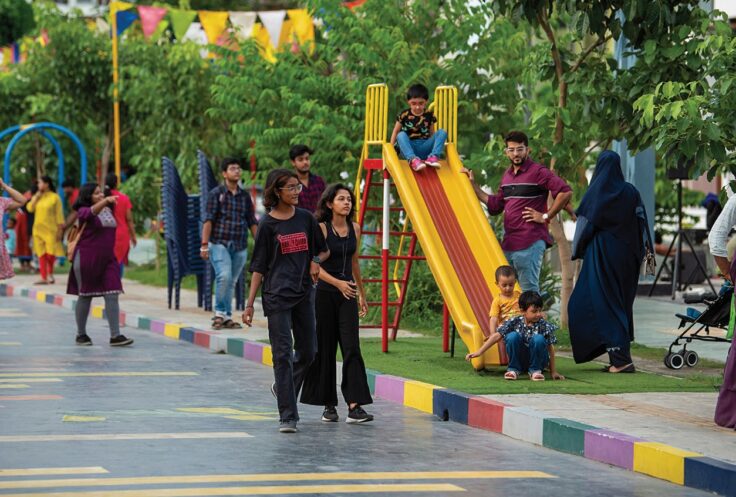
Travel behavior also changed. Forty-three percent of shopkeepers reported walking or cycling to work, while freight traffic declined during peak periods, reducing emissions and improving the overall street environment. Trees and shade played an important role as well. Shaded footpaths were found to be up to 12°C cooler, creating more comfortable walking conditions in increasingly hot urban environments. Too often, streets are viewed simply as roads for vehicles.
But streets are also the critical spaces that connect people to buses, metro stations, schools, markets, workplaces, and one another. Every investment in continuous footpaths, safe crossings, shade, seating, and traffic calming strengthens the transport network by making public transport easier to reach and more attractive to use. As Indian cities continue to expand electric bus systems, metro lines, and multimodal mobility, “Healthy Street” networks should be recognized as an essential part of this overall transport transformation — not just as complementary urban design considerations.
When Indian cities design streets that prioritize people, they increase access to public transport, strengthen economies, improve public health, and offer everyone a more inclusive future.