
May 18, 2026
Now is Moment to Electrify Brazil’s Urban Buses
A version of this article was originally published in the No. 37 issue of the Sustainable Transport Magazine.
By Clarisse Cunha Linke and Mariana Brito, ITDP Brazil
Transport electrification is no longer a distant vision around the world. It is the most mature technology available to replace polluting diesel vehicles, and electric buses are already transforming city streets in many countries. Latin America has a success story in Santiago, Chile, which today boasts the largest e-bus fleet in Latin America. Brazil cannot afford to fall behind. Buses remain the backbone of Brazil’s urban mobility — and they are responsible for an alarming 69% of greenhouse gas (GHG) emissions in the transport sector.
Following COP30 in Brazil at the end of 2025, decisive steps towards the electrification of public transport are needed to meet the country’s climate and development goals. This is a defining moment for Brazil to make progress towards the targets it has set in the 2015 Paris Agreement to reduce national GHG emissions by up to 67% by 2035. With less than ten years until this deadline, policymakers must focus more closely on the importance of bus electrification.
A 2025 analysis by ITDP Brazil, conducted in partnership with the technology firm Scipopulis and supported by Brazil’s Ministry of Cities, demonstrates that many cities across the country are primed to electrify thousands of public buses with minimal disruption. The study, Accelerating the Transition: A Strategy to Electrify the Brazilian Bus Fleet by 2030, was designed to guide the improvement of public policies for electrification across the country. It also serves as supporting evidence for Brazil’s development and investment agencies, including the National Bank for Economic and Social Development (BNDES) and Caixa Econômica Federal (CEF).
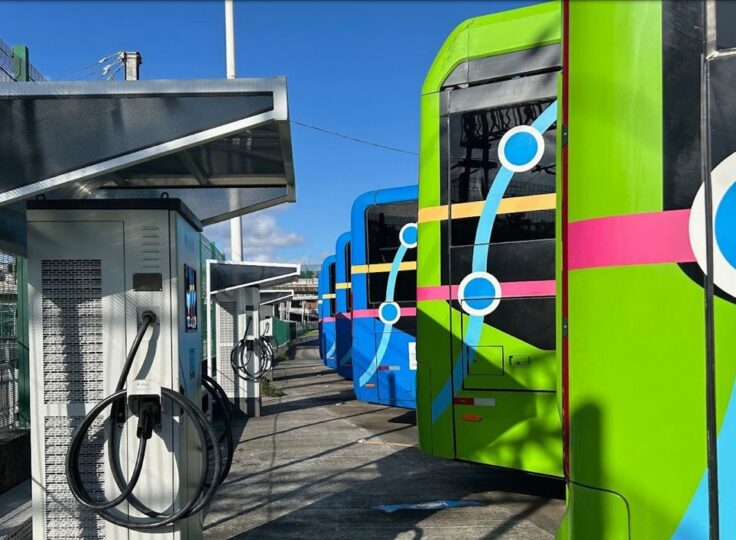
Read more about ITDP’s vision for fully electrified public transport systems worldwide.
The research revealed that more than 14,000 diesel buses across the country’s 21 largest metropolitan regions could be replaced with electric models over the next five years. This means that bus electrification is not a long-term aspiration; it is a tangible goal that can be achieved in the near-term, offering substantial climate, economic, and social benefits for Brazil. The potential positive impacts are immense — from significant GHG reductions to job creation in related industries, to improved public health.
The linkage between health and bus decarbonization is worth noting, as less polluted air in cities can reduce the risks of disease and death. According to the World Health Organization, air pollution was the leading cause of death in Brazil as recently as 2016. This pollution also disproportionately affects children, Black populations, and older people. For Brazil’s cities, reducing pollution-related illnesses means lowering related health and environmental expenses. In fact, ITDP Brazil’s research indicates possible savings of between R$54 million and R$62 million (USD$10-11 million) per year in the metropolitan regions studied.
The evidence is clear for both governments and individuals — bus electrification needs to be a priority. And it can, in fact, be implemented at scale in most of Brazil’s large cities without increasing their fleet sizes, while also aligning the federal government with broader climate policies. Electrification can also benefit 41% of the population living in the regions analyzed by ITDP Brazil, while simultaneously upgrading half of the country’s existing bus fleets. For these metropolitan areas, this also means reducing GHG emissions by an estimated 24.6% by 2030. The large cities of São Paulo, Rio de Janeiro, and Belo Horizonte alone could deploy more than 5,000 e-buses over the next five years, setting the pace for transformation for the rest of the country.
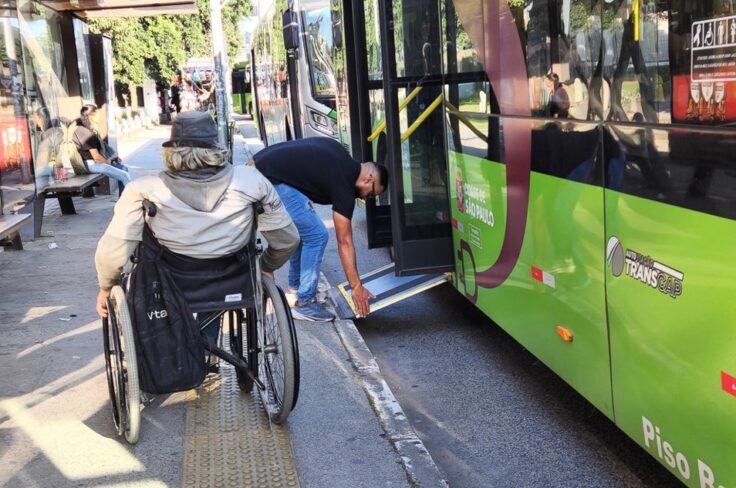
Learn more about the benefits of e-buses for cities in this ITDP report.
The Ministry of Cities, recognizing this urgency and potential for electric mobility, first commissioned ITDP Brazil’s analysis to determine how many buses could be feasibly transitioned in the short-term. The data from the findings will help guide transport and infrastructure investments under Brazil’s major Growth Acceleration Program (PAC/REFROTA). This funding program, now offering more attractive interest rates and favorable repayment terms for cities to procure e-buses, demonstrates the government’s commitment to sustainable, resilient transport systems. Brazilian cities themselves are further committing to financing e-buses in collaboration with their states and municipalities, preparing more financial mechanisms to support a rapid transition.
This is an opportune moment to transition away from the outdated, polluting, noisy, and uncomfortable bus fleets that millions of Brazilians rely on daily. E-buses will deliver quieter, cleaner, and more comfortable rides, improve commutes, and offer a mix of benefits that are urgent for a better quality of life. Beyond reducing GHG emissions, the adoption of e-buses can directly boost the economy, generate jobs in green industries, stimulate the electric vehicle market, and restore the prominence of Brazil’s heavy vehicle manufacturing industry. Strategically, bus electrification further strengthens the reliability of urban transport systems.
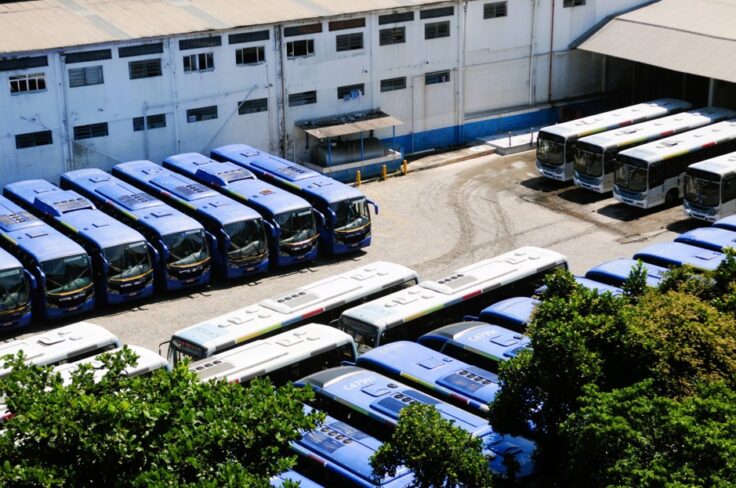
Prioritizing e-buses on exclusive bus corridors maximizes their efficiency, ensures a longer lifespan, and magnifies the return on infrastructure investments. Congested, mixed-traffic operations squander the potential of clean fleets; dedicated lanes unlock it. With better service and more efficient operations, public transport will become increasingly attractive to a wider range of people that might otherwise opt for emission-heavy and costly vehicle trips.
Brazil is now in the position to become a leader in the electric revolution, particularly considering the high share of renewable resources and clean energy already in the national energy matrix. For e-buses, the technology is proven, the financial tools are growing, and the benefits to society and the economy are already clear. What is needed now is greater policy commitments and on-the-ground action on e-bus deployment across both the federal and local levels.
This is a historic moment to transform the mobility, health, and climate outcomes for future generations of Brazilians.