
January 15, 2026
Rethinking the Future of Freight Transport for China’s Cities
As governments worldwide face looming climate targets and commitments, the road freight sector stands at a critical crossroads for decarbonization.
Read more about ITDP China’s work on sustainable mobility here.
 Trucks facilitate the movement of nearly everything that keeps modern life running — from food and clothing to construction materials and manufactured goods. Yet freight also accounts for an ever-growing share of global emissions, energy use, and air pollution. For governments to meet climate goals while sustaining economic activity, freight systems must change. This is especially true for China, where a rapidly expanding consumer economy has led to a continued surge in the freight and goods delivery industry.
According to the International Energy Agency, CO2 emissions from the sector have almost tripled over the past two decades, with road transport accounting for over 80% of total freight-related emissions. The IEA report also suggests that long-distance freight transport remains one of the most essential (but challenging) sectors for China to decarbonize over the next few decades. As the world’s second-most populous nation, China must adopt new models and technologies to mitigate the freight industry’s substantial emissions, air-quality impacts, and economic costs.
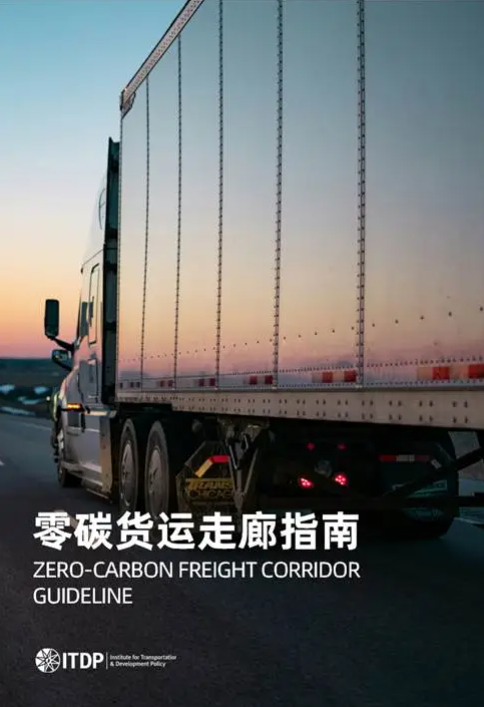
This is where the concept of a ‘zero-carbon freight corridor’ comes in: a new model that demonstrates how clean energy and economic growth can coexist. In 2025, the ITDP China team, in collaboration with leading institutions and researchers, released Guidelines for Zero-Carbon Freight Corridors — a comprehensive roadmap designed to help governments, logistics operators, and energy providers plan, finance, and operate sustainable freight systems.
The Guidelines assert that the challenge of freight decarbonization has long been a ‘circular dependence impasse.’ Logistics companies are reluctant to purchase electric trucks because charging and battery-swapping infrastructure remains limited. Meanwhile, energy providers hesitate to build those facilities without a guaranteed fleet to use them. These Guidelines propose a way to break this cycle by creating zero-carbon freight corridors — specific routes in which zero-emission fleets, energy infrastructure, and supportive policies are deployed together.
Learn more about ITDP’s strategic vision to electrify transport systems in our key regions.
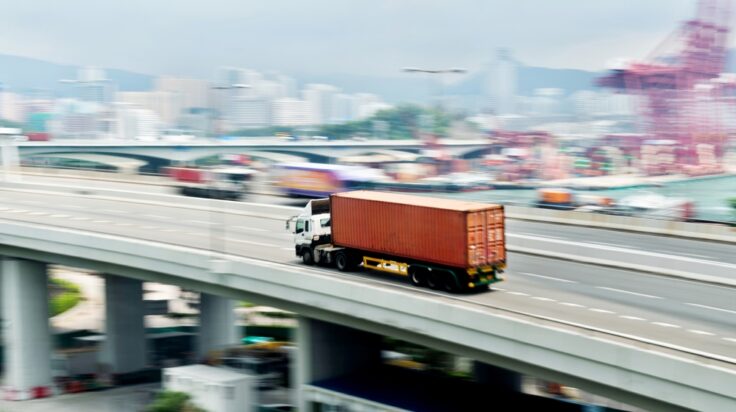
By concentrating investment and coordination along designated corridors, this model creates both demand certainty, through stable freight volumes, and supply certainty, through a dependable refueling and charging network. In doing so, it also provides a practical and scalable framework to make freight cleaner, more efficient, and more resilient. Based on a complete life-cycle analysis, ITDP China’s research demonstrates the significant impact of a zero-emission freight corridor. In a typical regional scenario with 1,000 electric heavy-duty trucks and 20 battery-swapping stations, the corridor could contribute up to 5 billion yuan (approximately USD $717 million) in GDP, create approximately 5,700 jobs, and save 31 million liters of diesel fuel annually.
It could further consume 160 million kilowatt-hours of renewable electricity annually and reduce CO2e emissions by 85,000 tons per year. Beyond the numbers, these corridors offer tangible benefits for cities and surrounding areas: cleaner air, quieter roads, and more diverse job opportunities across the energy, logistics, and technology sectors. This zero-emission corridor approach also helps freight companies and shippers meet growing international sustainability requirements. By integrating renewable energy and tracking emissions reductions, the corridors enable companies to report progress toward global logistics and trade standards, such as the EU’s Carbon Border Adjustment Mechanism. In short, the model positions decarbonization as a competitive advantage rather than an additional cost.
The Guidelines further highlight that the success of a zero-carbon freight corridor depends on collaboration. No single organization can achieve such a transformation alone. Instead, the report calls for a new type of partnership based around a Zero-Emission Freight Corridor Alliance. This Alliance could bring together logistics companies, energy providers, vehicle manufacturers, local governments, financial institutions, and research organizations. Each partner contributes a vital component: freight capacity, power supply, investment, land, or technical expertise. Together, these actors can share resources, distribute risks, and accelerate the transition to zero-emission freight.
From planning to operation, the Guidelines offer a clear roadmap for action. During the planning stage, decision-makers are encouraged to use full-life-cycle cost models to identify the most promising corridors and to ensure the project’s long-term viability. During the construction phase, innovative financing tools such as green bonds, real estate investment trusts, and “battery-as-a-service” models can reduce upfront costs and increase access to clean fleets. Once operational, advanced fleet management systems, driver training programs, and predictive maintenance can reduce costs and improve reliability. Finally, integrating renewable energy production, battery reuse, and recycling can maximize sustainability across the entire system.
Ultimately, the Guidelines are about more than technology. They represent a new way of thinking about freight as a driver of greener road transport that can also advance economies, support job growth, and reduce diesel emissions. With the release of these initial Guidelines, ITDP China and its partners aim to help operators, private companies, and public officials translate vision into action and ensure that every kilometer of freight can become more efficient and sustainable.
Read more about ITDP China’s Zero-Carbon Freight Corridor Guide and visit the team’s official WeChat page in Chinese.