
August 05, 2025
This Chinese City Is Pedaling Ahead with Its Cycling Infrastructure
Guangzhou, one of China’s largest cities and the capital of the southern province of Guangdong, is experiencing rapid growth as a major port and connector to neighboring Hong Kong.
ITDP’s bike infrastructure recommendations will help shape the future of Guangzhou’s streets.
With over 18 million people, Guangzhou has also become a local leader in urban mobility, with public transport at the core of many of its innovations. Most notably, the Guangzhou Bus Rapid Transit (BRT) system was introduced in 2010 following years of detailed planning. It quickly became one of the first BRTs in Asia to achieve metro-level ridership. Upon launch, the system also became Asia’s first, and the world’s second, Gold Standard BRT to surpass metro-level ridership (according to the BRT Standard).
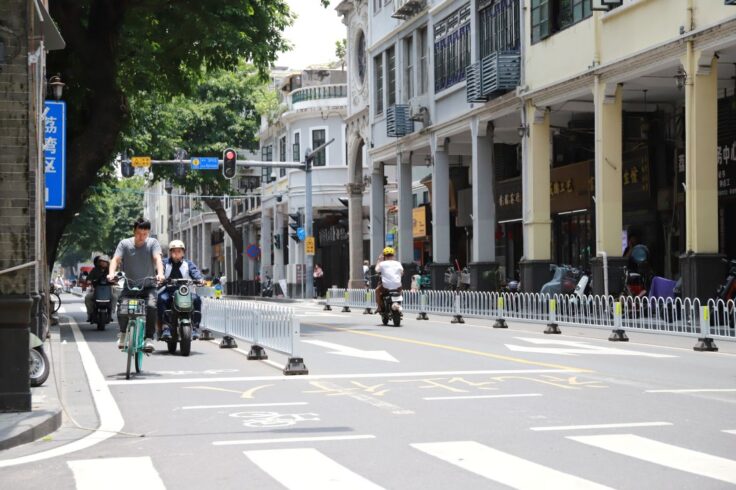
Now, Guangzhou is further distinguishing itself with its progress on active mobility projects, specifically in the piloting and planning of new cycle lanes in high-traffic areas of the city. Networks of urban cycle lanes, rather than disconnected or unprotected lanes, are a crucial factor in increasing the ridership of two-wheelers and discouraging motor vehicle use for shorter urban trips.
It is important to note that in Chinese cities, popular two-wheelers encompass not only traditional bicycles but also e-bikes and lightweight mopeds. The fleets of these types of vehicles represent a significant mode of micromobility for hundreds of millions of people across the country, and Guangzhou is one such epicenter.
From Pilot to Policy to Implementation
As non-motorized modes of transport gain popularity in Guangzhou, the need for enhanced infrastructure becomes increasingly apparent. Recognizing this, ITDP China continues to play a pivotal role in planning and assessing transport infrastructure improvements across the city’s central areas with a particular focus on cycling uptake.
The team’s recommendations, integrated into key city guidelines, will help shape the future of Guangzhou’s street designs and traffic management. These guidelines were designed to create safer, more inclusive infrastructure for all types of two-wheelers, thereby promoting sustainable urban mobility by providing equal space to non-motorized modes.
The team began its work by conducting a comprehensive analysis to understand the status of non-motorized vehicle lanes in six central districts of Guangzhou City. The team then assessed citizens’ experiences and satisfaction with the lanes to identify real-world issues and pain points and evaluate their effectiveness in meeting travel needs.
ITDP China also assisted Guangzhou’s traffic planning, management, and design departments in selecting pilot routes and provided continual technical support for pilot projects. The team then evaluated the results of the pilot projects to develop conclusions that would help inform future relevant policies and guidelines.
Collectively, this research provided a basis for the team’s recommendations on policy and planning for streets that better promote shared road space and non-motorized modes in line with the surging popularity of two-wheelers. Key recommendations made by the team include:
- Positioning non-motorized modes more strategically in citywide planning and budgeting;
- Refocusing development to prioritize functionality, safety, and connectivity of existing mobility networks;
- Strengthening governance capabilities with comprehensive design standards, management regulations, and technical support systems for two-wheelers; and
- Learning from successful domestic and international policies and procedures.
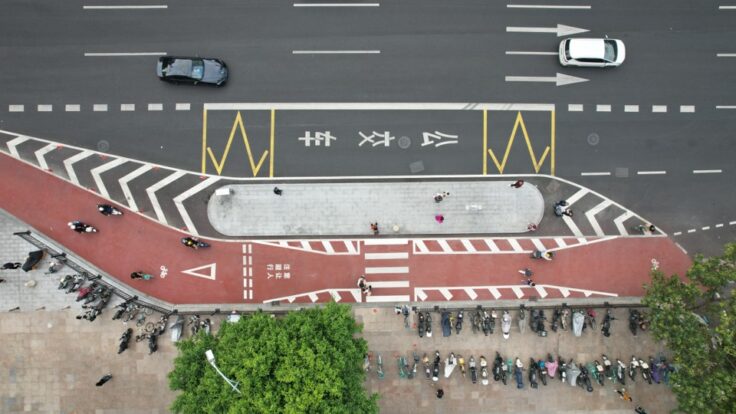
More than 2,300 on-street parking spaces were repurposed for cycle lane enhancements.
Delivering Impact
Thanks to these recent infrastructure upgrades, the non-motorized lane coverage in Guangzhou has seen a significant boost, now spanning nearly 2,966 kilometers of the city’s road network. This marks a remarkable 144% increase compared to 2020. The city’s efforts have also led to a substantial rise in bike lane coverage in Guangzhou’s most high-traffic central districts, from 56% in 2020 to a robust 82% by the end of 2024.
This expanded network offers cyclists a comprehensive and protected network to navigate populated and dense neighborhoods, underscoring a commitment to promote sustainable alternatives to car use. To optimize both road safety and the seamless flow of bike traffic, 259 new cycling-specific traffic signals have been strategically installed since 2020. These signals are engineered to streamline traffic movement for cyclists, thereby minimizing conflicts with motor vehicles and significantly improving overall safety at critical intersections for all.
This has not only made cycling easier and more attractive but has also enhanced the city’s overall traffic flow for all types of road users. A significant component of these pilot infrastructure improvements has been the reallocation of road space from private vehicles. A total of 2,373 on-street parking spaces across 76 roads have since been repurposed, thereby reshaping many streets in favor of people rather than cars.
The past few years have been very productive for Guangzhou’s mobility transformation. Beyond the physical infrastructure changes, the city’s policy integration and resource allocation to this work is significant. These initial bike lane projects, driven by a proactive research team at ITDP China and expert planning and design, have helped fundamentally improve the way in which residents travel, experience, and live throughout the city.
Sustained Investment
Going forward, the city’s commitment to enhancing cycling infrastructure persists. The city’s transport bureau and municipal agencies have outlined larger plans to optimize the road network for walking and cycling, supported by additional investments, with several objectives.
- Financial Commitment: The Guangzhou Traffic Police plans to allocate 28.95 million CNY (over USD 4 million) toward the optimization of road space in central areas. This investment is part of a long-term strategic vision for a more sustainable, cyclist-friendly environment in high-traffic districts.
- Infrastructure Renovation: Plans include the comprehensive renovation of 83 kilometers of primary and secondary roads, which will yield an additional 166 kilometers of new or upgraded non-motorized lanes. This continued expansion is poised to strengthen the city’s existing streets networks further.
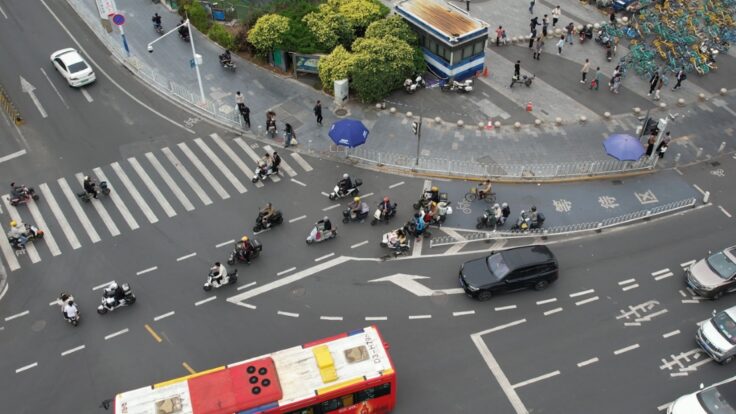
- Intersection Modernization: Recognizing the critical role of intersections for efficient traffic flow and safety, detailed designs and upgraded facilities are planned for over 500 intersections in Guangzhou. These are designed to ensure smooth and safe transitions for cyclists at key points throughout the city. The modernization will include features such as dedicated bike lanes, new traffic signals, and improved signage.
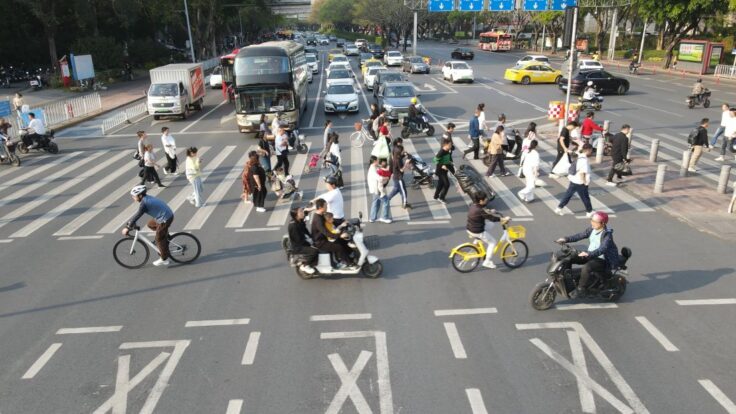
Guangzhou’s aim to establish itself as a ‘cycling city’ is moving ahead with renewed momentum. The city’s achievements over the past few years, coupled with longer-term planning and vision, demonstrate that urban decisionmakers can prioritize sustainable mobility with the right mix of willpower, policy commitments, and technical support.
These citywide street transformations will help Guangzhou improve its air quality, lower emissions, drive economic growth, and spark civic engagement for generations to come.