
August 25, 2026
How This City in Kenya is Advocating for its Cycling Infrastructure
Across Africa, cities are growing rapidly, placing increasing pressure on urban transport systems.
Learn more about ITDP Africa’s work here.
As populations expand and travel demand rises, African cities need to rethink how streets are designed and how people move. Safe cycling infrastructure can play an important role in this evolution — not necessarily as an alternative to public transport, but as a critical complement that ensures people have options for multi-modal, connected, and affordable travel. In Mombasa, Kenya, this potential was on full display during a high-profile World Bicycle Day event in June, supported by ITDP Africa.
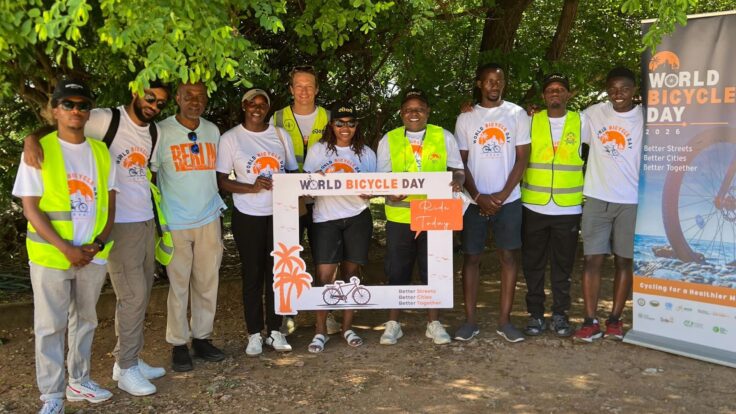
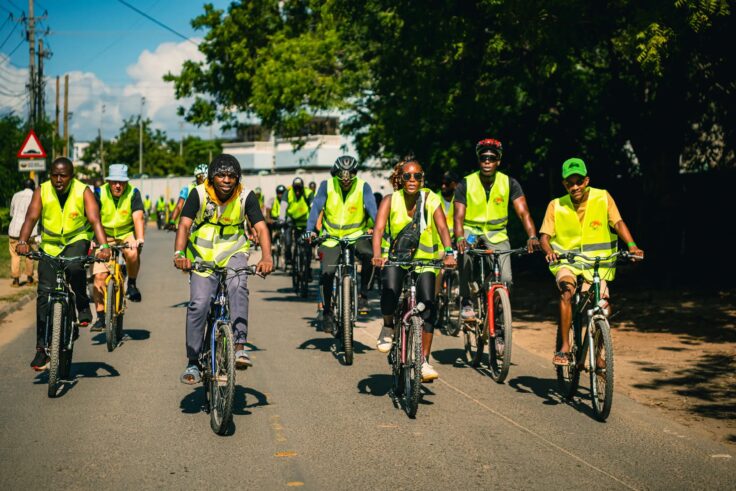
Developed through a partnership between the Mombasa County Government, Sustainable Transport Africa, P4G, eBee Africa, development partners, local cycling groups, and community stakeholders, the event brought together government officials, advocates, residents, and the media to highlight cycling as a safe, sustainable, and inclusive form of transport. The event’s centerpiece was a 10.3-kilometer bicycle ride through key corridors in the area of Nyali, led by the Deputy Governor of Mombasa County. Participants experienced existing and emerging cycling infrastructure firsthand, including the Links Road cycle track, which is being developed through a collaboration between Mombasa County and the Global Designing Cities Initiative.
Learn how active mobility supports ITDP’s vision for increasing public transport ridership.
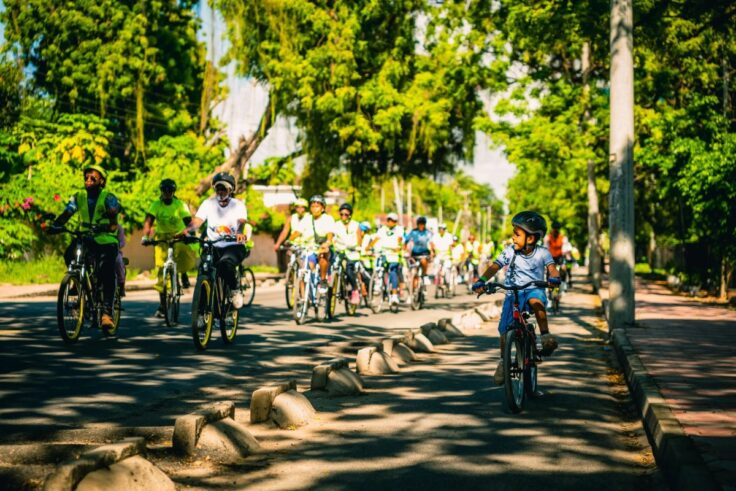
The ride offered participants much more than just a World Bicycle Day celebration. It demonstrated how well-designed cycling infrastructure can make streets safer, more accessible, and more comfortable for everyone. It also highlighted key areas for improvement and the challenges everyday cyclists face. In many African cities, cycling is already a practical part of daily mobility, providing an affordable way to reach jobs, schools, markets, and public transport, while requiring far less space and infrastructure than private automobiles. High-profile riding events like this help to engage government officials, the media, and the public in understanding the importance of investing in better streets.
Cycling As Part of the Broader Transport System
Yet, it is important to note that the people who depend on bicycles the most are the ones who face the greatest barriers to using them safely. Roads designed primarily around fast-moving vehicles can leave cyclists exposed to traffic, while disconnected infrastructure can make even short trips difficult. When cycling is treated as an afterthought, people may be discouraged from choosing a mode that is affordable, efficient, and environmentally sustainable. The experience in Mombasa highlights the need to change that approach.
ITDP Africa conducted a Public Perception Survey on Cycling and Active Mobility that found strong support for walking and cycling, with 52% of respondents identifying cycling as their primary mode of transport in cities. At the same time, respondents cited safety concerns, inadequate infrastructure, and poor network connectivity as major barriers to wider adoption. These findings underscore an important point: demand for cycling does not necessarily need to be created. In many cities, it already exists. What is needed, however, are investments and policies that create infrastructure and environments that let people cycle safely and comfortably.
Cycling should also be considered as part of a broader public transport strategy. Safe cycling routes can expand the area people can conveniently access from bus stops and stations, making public transport more useful for longer journeys. Secure bicycle parking, connected cycle networks, and safe pedestrian infrastructure can create stronger links between neighborhoods and public transport corridors. This is particularly important as African cities work to develop more sustainable public transport systems.
Investments in high-quality buses, bus rapid transit, and other forms of mass transit can move large numbers of people efficiently. Still, their effectiveness depends in large part on how easily and safely people can reach them. Cycling and walking can provide crucial first- and last-mile connections that make public transport a more attractive alternative to polluting private cars and motorcycles.
Explore the status of the cycling networks in other global cities with ITDP’s Atlas platform.
Creating A Connected Mobility Network
Developing these cycling-transit connections depends on streets designed around people, not just moving vehicles. During the Mombasa event, partners, advocates, and stakeholders emphasized the need for people-centered street design, stronger road safety measures, public awareness, infrastructure expansion, and a comprehensive guide to guide future investment. One good cycle track alone cannot transform a city’s transport system.
The greatest benefits come when safe infrastructure forms a connected network that links residential areas, workplaces, schools, commercial centers, and public transport. That means protecting existing cycling infrastructure, expanding dedicated facilities, improving pedestrian conditions, and introducing traffic-calming measures where appropriate. It also means embedding cycling into broader transport and land-use planning rather than treating it as a standalone initiative. The Mombasa World Bicycle Day event helped build momentum toward that vision locally by bringing government, communities, and development partners together around a shared, real-world experience.
As African cities confront growing congestion, air pollution, road safety challenges, and the impacts of climate change, sustainable transport solutions must provide mobility for growing populations without locking cities into increasingly car-dependent development. When cities invest in safe, connected cycling infrastructure, they do more than make space for bicycles. They create safer streets, expand access to public transport, reduce emissions, and give more people affordable ways to move around their city.
For cities like Mombasa and beyond, cycling should not be seen as a secondary mode of transport but as a foundational part of a holistic urban mobility system.