
July 27, 2026
In Jakarta, Reviving Bike-Share Is Key to Boosting Public Transport
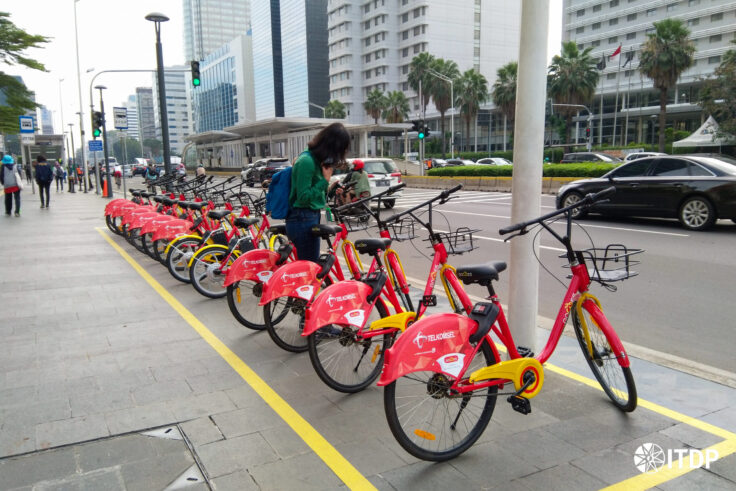
For a few years, bike-sharing offered Jakarta residents a convenient, affordable way to travel short distances and connect to public transport.
Read the original version of this article from ITDP Indonesia for more details.
As the city expanded its cycling network and invested in more sustainable mobility, shared bicycles became a promising way to navigate dense urban neighborhoods and bridge the gap between homes, workplaces, and transit stations. Yet by the end of 2022, the service had disappeared. Despite continued public demand, operators struggled to remain financially viable amid limited investment, operational challenges, and an evolving regulatory environment. The disappearance of bike-sharing should not be viewed as evidence that the concept failed.
Rather, it reveals an important lesson: successful bike-sharing systems depend on far more than just the availability of bicycles alone. They require supportive policies, reliable infrastructure, sustainable business models, and seamless integration with public transport. Today, Jakarta has an opportunity to apply those lessons. As the city continues expanding its MRT, LRT, and Transjakarta networks while pursuing more transit-oriented development, bike-sharing can return — not as a standalone service, but as a vital component of an integrated system that makes public transport overall more accessible, convenient, and attractive.
A Missing Opportunity
Cities around the world are investing in improvements to public transport to reduce congestion, enhance air quality, and lower greenhouse gas emissions. But even the best transit systems face a common challenge: how do people get to and from stations? This “first- and last-mile” problem often determines whether someone chooses public transport or a private vehicle. If reaching a station requires a long walk, an unreliable taxi, or driving a car, transit becomes less convenient and less competitive. Bike-sharing helps solve this problem.
By providing affordable bicycles at strategic locations throughout a city, bike-sharing systems extend the reach of buses and rail while offering residents greater flexibility for short trips. A bike-share system also provides an accessible option for neighborhoods that may still lack direct public transport service, reducing dependence on private vehicles while improving overall network connectivity. Rather than competing with public transport, bike-sharing strengthens it. Every convenient cycling trip to a transit station makes the broader public transport network more useful, helping cities maximize returns on investments already made in rail and bus infrastructure.
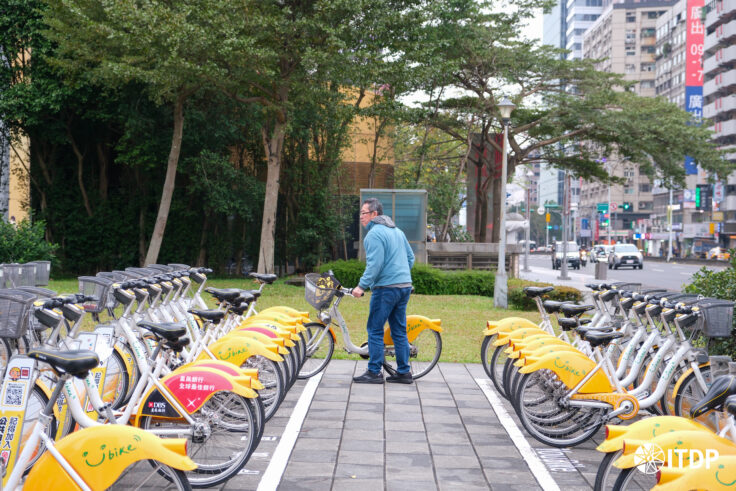
Improving conditions for urban cycling is vital to ITDP’s vision for increasing public transport ridership.
Inspiration from Other Cities
Cities across Asia, Europe, and North America have demonstrated that bike-sharing can become an indispensable part of urban mobility when paired with thoughtful planning. Taipei’s YouBike system is a leading example. Beginning as a relatively small pilot serving central districts, the program expanded through coordinated investments in protected cycling infrastructure, service improvements, public participation, and supportive fare policies.
Today, YouBike has grown into one of the world’s most successful bike-sharing systems, recording approximately 79 million trips in 2025. The lesson is clear: successful bike-sharing systems are not built overnight. They evolve through continuous investment, policy refinement, and close integration with public transport. Jakarta can follow a similar path, but only by treating bike-sharing as part of a larger mobility ecosystem rather than an isolated transport service.
Jakarta Has the Foundations for Better Mobility
Jakarta’s public transport network has changed dramatically over the past decade. New MRT and LRT lines, the continued expansion of Transjakarta, and improvements in bus service have dramatically increased access to sustainable transportation. Today, approximately 91 percent of the province lies within a five- to ten-minute walk of public transport services.
Yet public transport mode share remains only about 22 percent — far below the provincial government’s goal of reaching 60 percent by 2029. This disconnect highlights an important reality: expanding transit coverage alone is not enough. People need safe, convenient, and reliable ways to complete their entire journey. Comfortable sidewalks, protected bike lanes, and bike-sharing services all help reduce the friction of using public transport.
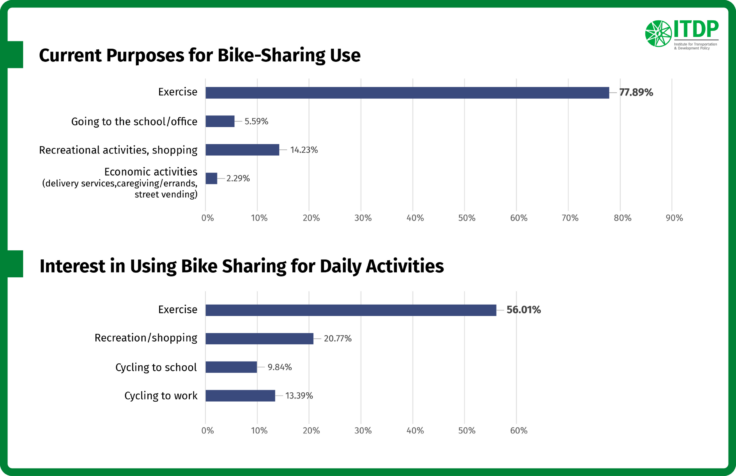
Without these complementary investments, many residents continue choosing private vehicles even when transit is nearby. Strengthening these connections will become even more important as Jakarta continues expanding its rail network and develops new Transit-Oriented Development (TOD) districts around major stations. Jakarta’s bike-sharing disappeared despite clear evidence that residents wanted the service.
An ITDP Indonesia survey conducted in 2022 found that while early users often rode for recreation, nearly half expressed interest in using bike-sharing for everyday activities such as commuting to work, reaching schools, shopping, or visiting places of worship. The findings suggest that bike-sharing has the potential to become an integral part of daily urban mobility rather than simply a recreational amenity.
Instead, the obstacles were largely systemic. Users reported problems ranging from damaged bicycles and unreliable payment systems to limited station coverage and inconsistent service quality. Operators, meanwhile, faced financial pressures and technological constraints that made long-term operations difficult. Policy development also lagged behind implementation. Jakarta’s bike-sharing regulation was finalized in August 2022, but only after operators had already ceased operations.
By the time the regulatory framework was established, there was no functioning market left to support. Cycling infrastructure also lost momentum. In several locations, protected bike lanes deteriorated as physical barriers were removed or weakened, while roadworks fragmented existing cycling routes. These changes reduced comfort and safety for cyclists and further undermined confidence in using bicycles for daily transportation.
Learn more about the conditions for urban cycling in Jakarta.
A Better Bike-Sharing Ecosystem
The conditions for reviving bike-sharing are stronger today than they were just a few years ago. Growing rail networks create greater demand for short-distance connections to stations. TOD policies encourage denser, walkable neighborhoods where shared bicycles can flourish. Cycling corridors have become increasingly connected around key local transit hubs such as Dukuh Atas, Blok M, and Cikini-Gondangdia.
However, simply bringing back bicycles will not be enough. Jakarta should begin by testing its existing bike-sharing regulations through pilot projects that allow government agencies and operators to evaluate how policies perform under current market conditions. Pilot programs can help identify necessary regulatory adjustments while accommodating technological innovation and changing user needs. Equally important is creating a business environment that encourages long-term investment.
Governments can support operators through incentives such as access to public land for docking stations, financial rewards for high-quality service, and opportunities to integrate bike-sharing with public transport fares and ticketing systems. At the same time, regulations should ensure accountability by requiring equitable service coverage, proper bicycle maintenance, transparent data reporting, and timely removal of damaged or improperly parked bicycles. Performance standards and enforcement mechanisms will help ensure that public interests remain protected while allowing operators enough flexibility to innovate.
Cycling and Public Transport for All
Jakarta’s experience offers valuable lessons not only for Indonesia but for rapidly growing cities across the Global South. Introducing a bike-sharing program is relatively straightforward. Building the ecosystem that allows it to succeed is much harder and far more important. Bike-sharing works best when governments view it as an extension of public transport rather than a separate service. Investments in cycling infrastructure, supportive regulations, integrated fare systems, sustainable business models, and high-quality transit reinforce one another.
Together, they create a transport network that gives people practical alternatives to driving. As Jakarta continues investing in quality and better public transport, revitalizing bike-sharing presents an opportunity to increase transit ridership, improve first- and last-mile connectivity, reduce congestion, and improve the quality of life for more communities.
The goal should not simply be to restore the bike-share service that once existed. It should be to create a Jakarta where cycling and public transport work together seamlessly — making sustainable mobility an easy, safe, and affordable option for all.