
March 12, 2026
Making Bus Systems Safer for Women in Brazil and Beyond
As part of International Women’s Day this month, we will be sharing perspectives from ITDP’s teams around the world on ways to ensure cities are made safer and more accessible to women and girls.
For more information on this work, visit ITDP Brazil’s website here.
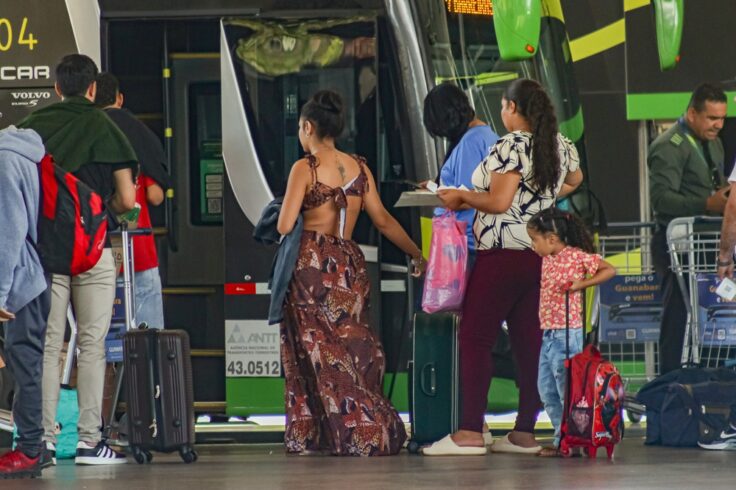
Gender-based violence on public transport remains a daily reality for many women, undermining their safety, mobility, and right to the city. Although women are among the primary users of public transport systems, data reveals the scale of the problem. A national survey by Think Olga’s Chega de Fiu Fiu (“No More Whistling”) campaign found that 99.6% of Brazilian women have experienced some form of harassment in public spaces, and 64% reported incidents occurring on buses, subways, or trains.
In Rio de Janeiro’s Maré Complex, the perception of insecurity is even more pronounced. Research from ActionAid’s Safe Cities for Women campaign found that 91.1% of women feel afraid while waiting for the bus, particularly at night or at poorly lit stops. Fear of harassment shapes how (and whether) women choose to move through their city, often undermining their fundamental right to mobility.
For Clarisse Cunha Linke, ITDP Brazil’s Executive Director, this fear has concrete impacts on women’s lives: “Many women stop using public transport as their main means of travel for fear of harassment during the trip. Among low-income women who spend longer commuting, we are seeing a growing shift toward motorcycle ride-hailing apps. It is a risk calculation that, regardless, can still expose them to other dangers, including crashes and road fatalities.”
Despite the prevalence of harassment, violence against women in transport remains significantly underreported. Complaints are often handled individually rather than systematically, and many cities lack clear protocols for documenting incidents or coordinating responses between transport operators, security agencies, and gender-focused public policies. This gap reinforces the invisibility of the issue and prevents effective action.
Ensuring safe, comfortable access to public transport for all is key to ITDP’s vision for increasing ridership worldwide.
An Opportunity to Transform Systems
Many Brazilian cities are currently preparing new procurement processes to purchase more modern, electric bus fleets in the coming years. These tenders represent a strategic opportunity to embed stronger safety measures into vehicles and operations from the outset. By requiring safety technologies in new buses and systems, cities can take a proactive step toward preventing gender-based violence and improving passengers’ sense of security.
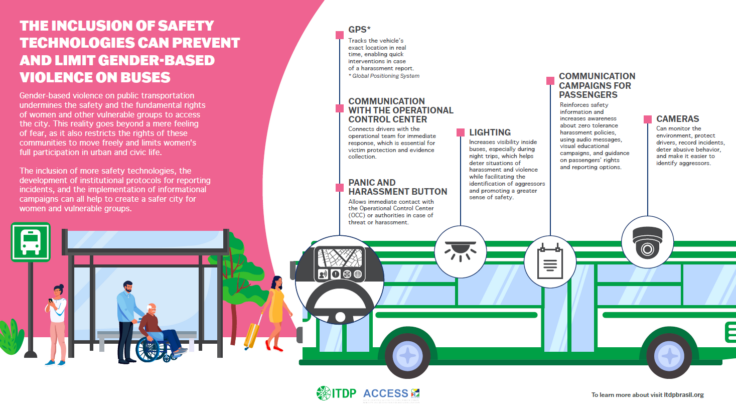
To support this effort, ITDP Brazil has mapped a set of key technologies that can be incorporated into new buses to strengthen women’s safety in public transport. These recommendations are summarized in the infographic below, available in English and Portuguese. This product is part of the ACCESS project, which aims to contribute to the development of more sustainable mobility alternatives in Brazilian cities and across Latin America.
The summarized technologies should be seen as essential components of a modern, inclusive transport system that addresses gender vulnerability and creates more welcoming and safer public environments. The recommendations also draw on documented experiences from Brazilian cities such as Belo Horizonte, Goiânia, and Fortaleza, as well as international references including Metrobús in Mexico City and TransMilenio in Bogotá. These systems demonstrate that combining modern technology with clear operational protocols and staff training can reduce incidents of harassment and strengthen all passengers’ sense of safety.
Safer Public Transport for Everyone
Creating safer public transport for women requires more than isolated solutions; it demands a systemic approach. Technology alone cannot eliminate gender-based violence, but when integrated with clear reporting mechanisms, trained staff, and coordinated institutional responses, it can become a powerful tool to prevent incidents and support victims. The current wave of fleet renewals across Brazilian cities presents a key window of opportunity to rethink safety standards in public transport.
By embedding safety technologies into buses and operations from the start, cities in Brazil and all around the world can move beyond patchwork responses and instead design systems that actively protect the most vulnerable passengers. Ensuring that women feel safe using public transport is not only a matter of security but is also fundamental to equitable access to the city. When women can travel without fear of violence, they are able to rely on public transport to access jobs, education, healthcare, and public life.
Public authorities, transport operators, and planners must seize this moment to prioritize safety in bus procurement processes and system design. By doing so, cities can take an important step toward building transport systems that are truly for everyone.