
January 22, 2026
How We Can Transform Urban Air Quality for the Better
A version of this article was originally published in the No. 37 issue of the Sustainable Transport Magazine.
By Dana Yanocha and Yutong Li (ITDP Global)
Step outside on a busy street in any major city, and the air tells a story. It carries the smell of engines, the haze of exhaust, and the invisible particles that enter our lungs with every breath. Urban passenger transport (cars, buses, motorcycles, and taxis) remains one of the most significant sources of harmful air pollutants worldwide. In dense cities, where millions live and work in close quarters, these pollutants do not just linger in the air; they enter our homes and workplaces, magnifying risks of respiratory and cardiovascular disease.
In fact, transport causes more than one-tenth of worldwide deaths from air pollution, with nearly 400,000 fatalities around the world in 2015 alone, according to the International Council on Clean Transportation. PM2.5, or fine particulate matter with a diameter of less than 2.5 micrometers, is one especially harmful type of vehicle pollutant that can cause diseases, strokes, cancers, asthma, and related illnesses. Other atmospheric pollutants from vehicles, like NOx (nitrogen oxides) and CO (carbon), further contribute to health issues. They are precursors to ‘ground-level ozone’ effects like thick smog, which aggravate breathing issues and reduce lung function.
The Polluting Impacts of Vehicles
Despite a trend of stricter emissions standards in many cities, the air quality crisis remains a significant challenge around the world. It can also disproportionately affect lower-income and Black and Brown communities everywhere. While stronger regulations and the electrification of transport are successful strategies for cutting tailpipe emissions, they cannot eliminate all forms of pollution. As vehicles evolve to become cleaner and more efficient, the power to enhance air quality lies within the hands of cities. They can make a substantial impact by addressing non-tailpipe emissions — such as brake dust, tire wear, and road surface abrasion — which are emerging as significant contributors to pollution.
Unfortunately, these sources are not regulated by most current vehicle emission standards. Unless cities focus on reducing the number of overall passenger vehicles on the road, they will continue to compromise air quality. To truly address this challenge, cities must pair electrification with a substantial mode shift towards better, more reliable, and more efficient public transport and active mobility networks. This strategic shift can offer a beacon of hope for our air and our health, as it has the potential to significantly improve quality of life in every city.
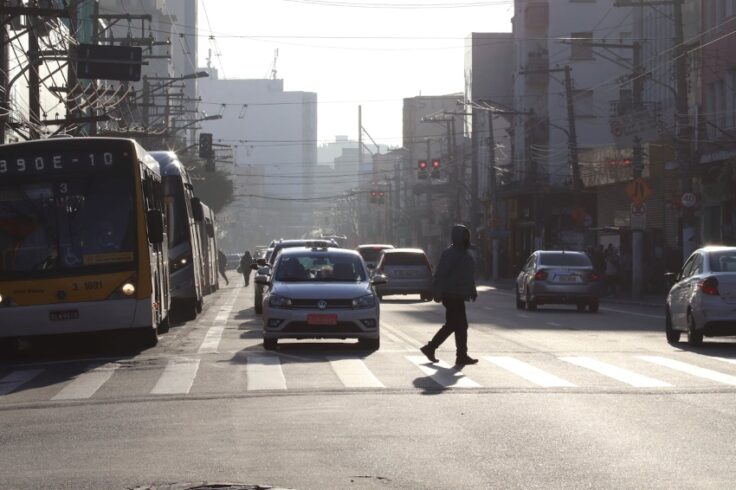
Shifting to zero-emission mobility is not just a climate solution, it is a public health imperative.
Assessing Potential Emissions Scenarios
Recognizing the gap between existing policies and the scale of the air quality crisis, ITDP recently examined air pollutant emissions from urban passenger transport across six of the world’s largest countries (the U.S., Brazil, Mexico, China, India, and Indonesia) and modeled future emissions under several scenarios: current vehicle use, high use of sustainable transport, high vehicle electrification, and high sustainable transport with high vehicle electrification. In a projected current vehicle use scenario, per-kilometer tailpipe emissions of NOx and CO are actually estimated to decline worldwide by a factor of four by 2050, primarily due to stronger vehicle emissions standards.
At the same time, however, total emissions do not decline as quickly as expected. Growing urban populations and increases in car use ultimately outweigh the incremental per-kilometer emissions improvements in several countries. By 2050, non-tailpipe emissions from vehicle brake and tire wear, road abrasion, and road dust will dominate. If the current demand for driving and vehicle use continues, three-quarters of PM2.5 emissions will still stem from non-tailpipe sources by 2050. Even in the high electrification scenarios, the share notably rises to over 90 percent.
Reducing vehicle use in general is the most effective way to tackle these PM2.5 emissions. Mode shift policies coupled with investments into walking, cycling, and public transport, when combined with compact urban planning, can significantly reduce the need for vehicles on the road and related emissions impacts. The effects of mode shift are especially pronounced in China, where bus electrification is more advanced compared to most other countries, with an estimated 69% of buses already fully electric and another 11% hybrid electric as of 2023. Shifting urban mobility away from private cars achieves larger PM2.5 reductions than electrification can alone. In the U.S., India, China, Brazil, and Mexico, mode shift reduces several times more PM2.5 than electrification would by itself.
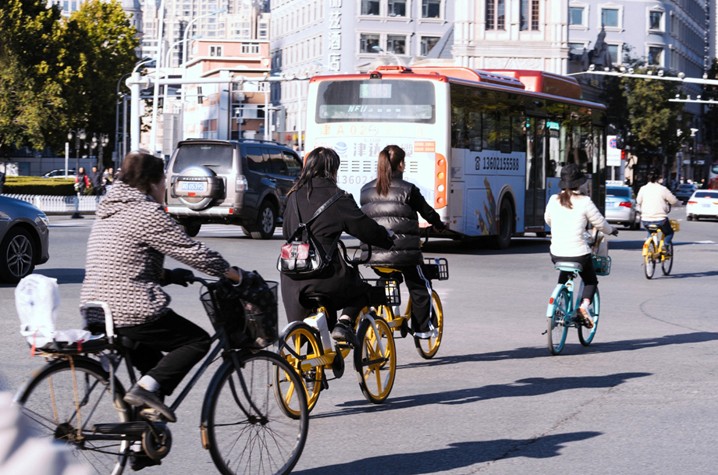
Learn more about ITDP’s strategic vision to electrify public transport systems.
Prioritizing More Compact, Electric Cities
Electrification is perhaps the most crucial strategy for reducing tailpipe emissions from transport, whether it be for passenger or high-occupancy vehicles. In countries with a high share of motorcycles and motorized two- and three-wheelers, such as Indonesia and Mexico, electrification is critical. Although these smaller vehicles have lower emissions per-kilometer than cars, their sheer number and popularity mean they contribute to a considerable share of total urban air pollution. Replacing them with electric models would sharply reduce PM2.5, especially as their demand continues to surge.
Electrification is also the most powerful tool for reducing NOx and CO. Diesel buses are notable sources of NOx. While a shift towards sustainable transport modes alone has little impact on NOx emissions rates, electrification would help to nearly eliminate them by 2050. Thus, when electrification and mode shift policies are pursued together, the benefits for air quality are quite striking. By 2050, primary PM2.5 emissions from urban passenger transport could fall by up to 80 percent. NOx and CO would decline even further.
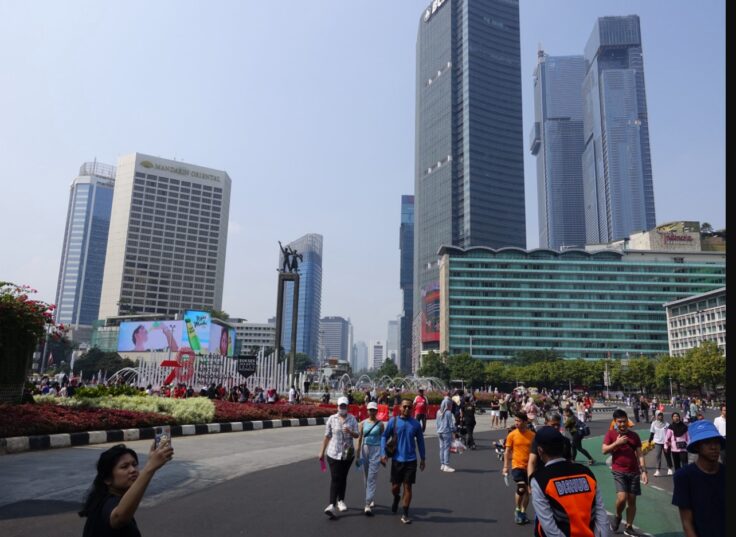
The Road to Change
Achieving such transformations for mobility and air quality requires decisive and coordinated action from policymakers. Widespread electrification of urban passenger transport depends on strong regulatory frameworks, financial incentives, and substantial infrastructure investments. Governments must set clear electrification targets, support large-scale bus electrification, expand charging infrastructure, and introduce low-emission zones that encourage cleaner mobility. At the same time, reducing people’s reliance on private cars is just as important. More compact land-use planning, better cycling and walking infrastructure, and high-quality public transport — especially bus systems — are key to lowering overall vehicle activity. Driving demand management measures such as parking reforms and congestion pricing can further reinforce this transition.
The complete electrification of public transport sits at the intersection of both of these strategies. It simultaneously cuts emissions at their source while strengthening the sustainable mobility options that people need. This future is within reach, but only if cities embrace both halves of the solution. Reducing our dependence on private cars with better policies and investments, and simultaneously electrifying all remaining vehicles, is the primary path to delivering cleaner air on a global scale. The stakes are as high as the air in our cities is thick. A transition to clean, electric transport is not merely a technological upgrade; it is an urgent need for our climate and our public health.
The one truly sustainable strategy for better air lies in comprehensive transport reform: fewer, smaller, and cleaner vehicles serving cities designed for people.