
December 29, 2025
How Ready Are Brazil’s Cities for Climate Change?
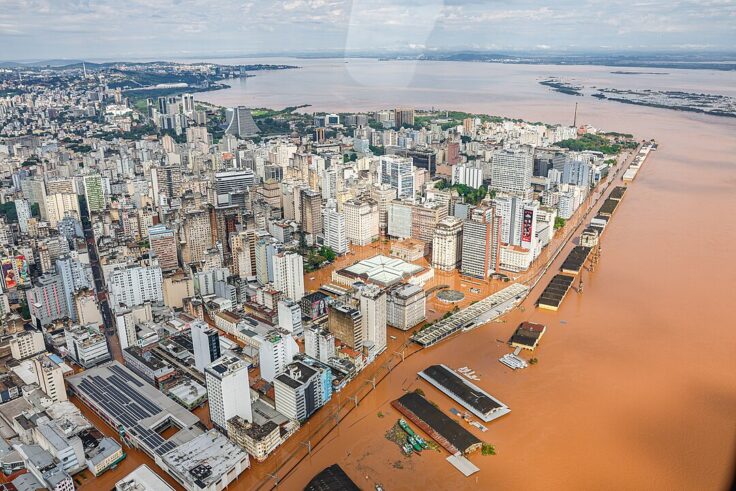
Extreme heat, torrential rains, and flash floods are becoming part of daily life in many of Brazil’s cities.
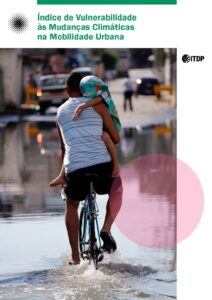 Each storm that floods a bus terminal, or a heat wave that makes walking and cycling a challenge, demonstrates that climate change is fundamentally affecting how people move. And the communities who depend most on public transport, walking, and cycling are the ones who face the most significant health and safety risks.
Recognizing the ever-changing nature of this issue, ITDP Brazil has released the 2025 edition of its Climate Change Vulnerability Index for Urban Mobility (IVMU), a tool that the team first released in 2018. This updated study provides a comprehensive and comparable picture of how prepared or exposed various Brazilian cities are to the impacts of climate change and extreme weather on their mobility infrastructure.
Read more about ITDP’s participation and messages during COP30.
This new edition arrives at a crucial moment. As Brazil hosted COP30 in Belém in November, global attention has turned toward the country’s leadership in climate action. The IVMU offers decision-makers a transparent, data-driven framework to help prioritize adaptation investments and to strengthen resilience at the national, state, and municipal levels. By quantifying vulnerability, the IVMU helps cities understand where to act first — whether by modernizing transport infrastructure, building institutional capacity, or protecting communities most at risk.
The IVMU looks at two key dimensions: sensitivity and adaptive capacity. Sensitivity measures the extent to which urban mobility is affected by climate events. Cities where large shares of the population live in unstable housing, commute long distances, or depend on limited transport options tend to experience greater disruption. Vulnerable groups — especially Black and Indigenous women, children, the elderly, and people with disabilities — face even more risks when transport systems break down during floods or heat waves. Poor walking conditions, sprawling development, and settlements in flood- or landslide-prone areas all heighten exposure to mobility failures.
Adaptive capacity, on the other hand, reflects how well cities can respond. Municipalities with stronger economies, dedicated transport authorities, and risk management plans tend to recover faster and are able to build longer-term resilience measures. In short, where good governance and public finance tools are strong, the impacts of climate hazards on mobility can be contained and mitigated for the well-being of all communities.
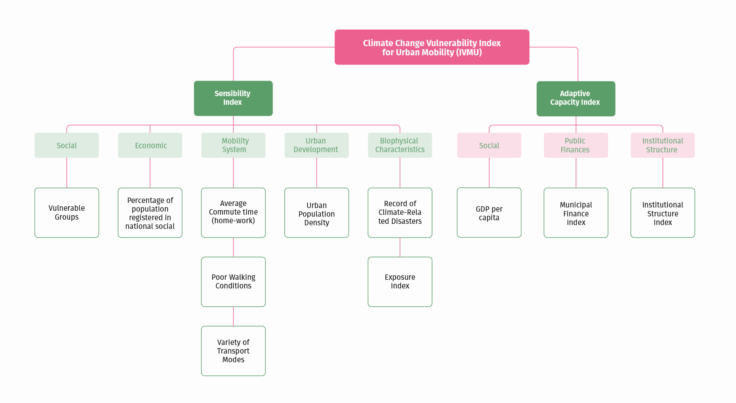
Access the full IVMU report in Portuguese here.
The 2025 IVMU analyzed 320 municipalities with populations over 100,000, representing more than 115 million people. The results reveal a number of regional inequalities.
- North and Northeast regions concentrate the highest shares of highly vulnerable cities, where lower density, dangerous infrastructure, and social sensitivity converge.
- South and Southeast regions show more mixed profiles, with many municipalities at intermediate or lower vulnerability levels.
- The states with the most critical vulnerabilities include Rio de Janeiro, Pernambuco, Pará, Minas Gerais, Maranhão, Ceará, Amazonas, Sergipe, Amapá, and Bahia.
- In contrast, metropolitan areas like São Paulo, Paraná, Mato Grosso do Sul, and Goiás perform relatively better, with stronger adaptive capacities.
Interestingly, medium-sized cities (100,000–300,000 inhabitants) emerged as the most vulnerable types, often lacking both infrastructure and institutional resources. Larger areas, while better equipped administratively, still face long travel times and high exposure to extreme events across their transport networks. Even within urban regions themselves, inequalities are apparent, as central areas are generally more resilient while peripheral neighborhoods bear the brunt of climate events.
The findings of the IVMU point toward a clear message: climate adaptation must become a cornerstone of transport, economic, and urban policy. The report outlines several recommendations for all levels of government to take more actions.
At the national level:
- Establish minimum standards for mobility and risk reduction plans.
- Guarantee continuous access to public and private climate financing, including national Climate Funds and green credit instruments.
At the state and metropolitan levels:
- Integrate climate risk into transport and metropolitan planning.
- Define clear roles and emergency protocols for extreme events.
- Prioritize green-blue infrastructure and watershed-based urban planning.
- Provide technical assistance to medium-sized cities and incorporate adaptation requirements into public transport contracts.
As climate change accelerates, so must the transformation of urban mobility. The IVMU 2025 serves as more than a study; it is a call to action for cities to plan, invest, and protect all vulnerable communities.
With more data collection, institutional collaboration, and sustained political will, Brazil has the potential to improve its urban mobility systems in the face of worsening climate impacts.