
November 25, 2025
ITDP Brazil Elevates Well-Funded, Equitable, and Electric Transport at COP30

At COP30 in Belém, Brazil, ITDP and our partners placed a spotlight on sustainable transport as a central pillar of climate action, emphasizing its links to energy, equity, and urban policy.
Read more details about our program during COP30 here (Portuguese version).
Throughout a series of events and partnerships in the lead-up to and during COP30, ITDP Brazil underscored that decarbonizing transport is not just a technical challenge but also a social and economic one — requiring inclusive planning, broader financing, and integration across sectors. ITDP CEO Heather Thompson, ITDP Brazil Director Clarisse Cunha Linke, and the ITDP Brazil team actively participated in COP30 sessions that highlighted the role of transit-oriented cities and zero-emission transport for cleaner air, greater accessibility, and long-term resilience.
A recurring theme this year was the importance of scalable finance and cross-sector governance in enabling the electric transition. Discussions on leveraging climate funding for cleaner buses, expanding subnational and city-level action, and aligning public–private partnerships helped to emphasize the need for sustained institutional and government collaboration. Ahead of the first-ever UN Decade of Sustainable Transport (2026–2035), reinforcing the work of transport NGOs and civil society organizations in forums like COP30 continues to be key to global collaboration and progress on climate.
Read a summary of the event in Rio de Janeiro from ITDP Brazil here.
Event Highlight: The Intersection of Sustainable Transport, Finance, and Climate Justice
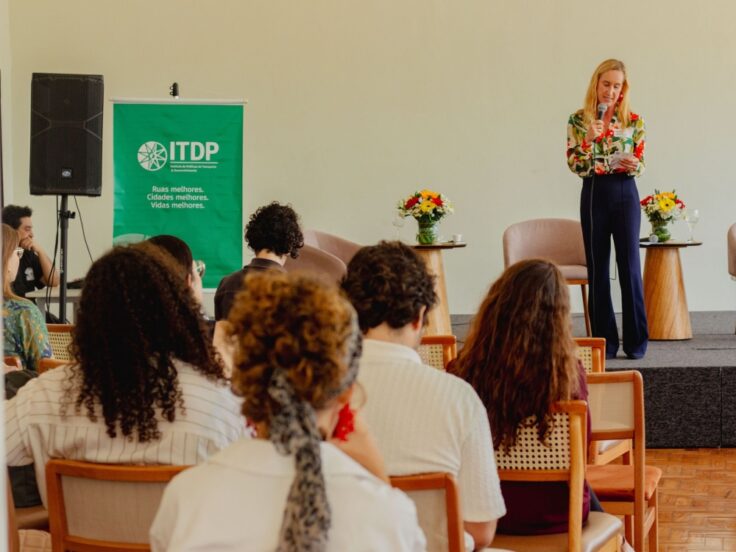
As part of a collective effort, ITDP Brazil co-hosted the Decarbonizing Public Transport event in Rio de Janeiro in the lead-up to COP30, bringing together leading regional experts from the transport and energy sectors. Supported by the Crux Alliance, the event’s panels highlighted the urgency of leveraging climate finance for a just transition, combining electrification with compact cities to ensure that social benefits reach everyone, especially the most vulnerable. The event was part of the Local Dialogues program, organized by the City of Rio de Janeiro through the Municipal Secretariat for the Environment and Climate, to strengthen the climate agenda at the COP30 Local Leaders Forum. The main objective of the event was to enhance dialogues on climate finance, social equity, and the decarbonization of public transport from a local level to a global scale.
Following Heather’s opening remarks, the first panel featured Magdala Satt Arioli (WRI Brasil), Felipe Borin (Brazilian Development Bank – BNDES), and Victoria Santos (Instituto Clima e Sociedade). During her moderation, Clarisse emphasized the urgency of moving from climate negotiations to the practical implementation of solutions, positioning electric transport as a central element for a just transition. She pointed out that, although electrification is crucial, it is not enough to achieve Brazil’s climate goals alone; it is necessary to combine the adoption of electric vehicles with compact planning and well-funded transportation overall.
The panels highlighted the scale of investment needed to advance decarbonization, with estimates of around R$600 billion (~$115 billion USD) by 2054 to modernize mobility infrastructure in the country’s main metropolitan areas. To enable this transition on a large scale, the speakers reached a consensus on the need for building innovative financial models that can mitigate initial costs, such as aggregating demand through joint e-bus purchasing among municipalities to lower prices and attract investors.
Beyond financing mechanisms, the second panel further emphasized that decarbonizing public transport is, above all, a matter of social and territorial justice. This implies ensuring that economic and social benefits — from the creation of skilled jobs in the local production chain, to issues of universal accessibility — can effectively reach most of the urban population, especially low-income and marginalized communities. The roles of philanthropy and civil society were mentioned as key to building a multisectoral dialogue, incubating pilot models, and ensuring that equity and community rights guide the processes of transport planning. It started from the observation that the ‘right to the city’ and to dignified mobility is determined by social markers such as race, class, and gender, which historically concentrate the worst transport services in the peripheries and racially segregated territories.
Finally, the discussion emphasized the need for intersectional, participatory governance to ensure that infrastructure investments effectively reach the people and regions that need them most. The structuring of national programs that prioritize cities with high vulnerability to climate change and disasters should be guided by diverse management committees that include representatives from across various sectors and groups. This approach is essential to ensuring that projects not only mitigate emissions, but also address urgent urban challenges, such as heat islands, and promote nature-positive solutions that benefit everyone.
Read more about the fund proposal from Bloomberg Philanthropies here.
A Major Fund Announcement
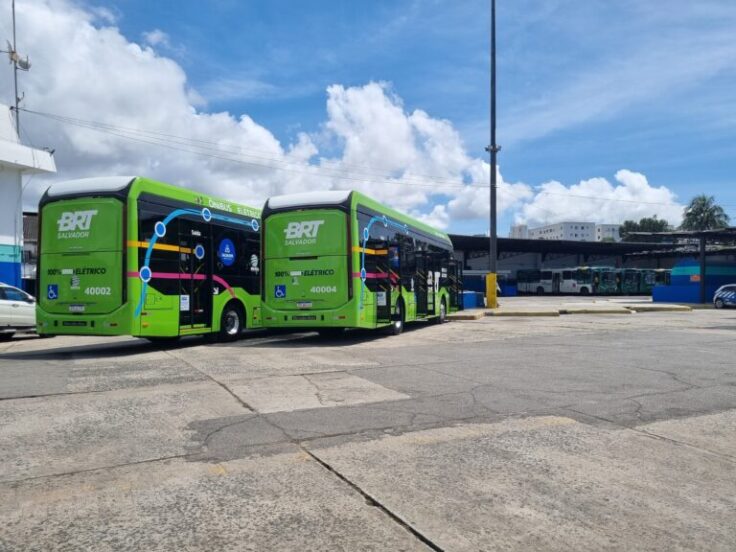
COP30 and the Local Leaders Forum also featured a significant announcement from ITDP Brazil and high-profile partners at WRI Brazil and BRT Pactual. Together, this collective is working to structure a new credit fund that aims to finance the acquisition of more than 1,700 electric buses for public transport operators across Brazil. The initiative, part of the project Electric Buses and Industrial Transformation in Brazil: Accelerating the Just and Green Transition, is being developed for submission to the Mitigation Action Facility. Designed to strengthen national industry and improve public transport services, the initiative seeks to generate long-term social and climate benefits while helping Brazil achieve carbon neutrality by 2050. Implemented in partnership with Brazilian ministries and organizations, including the Catalytic Finance Foundation and C40 Cities, this investment could help reduce 2.7 million tons of CO₂ emissions, while promoting a more just and inclusive energy transition.
BTG Pactual has pledged €24 million toward the fund’s €80 million goal, and the Mitigation Action Facility plans to contribute €16 million to cover initial risks and encourage additional investment. The Brazilian cities of Belo Horizonte, Curitiba, Rio de Janeiro, and Salvador are expected to be the first cities to access the fund, which combines financing with technical assistance, policy promotion, and industrial development. Beyond accelerating fleet electrification, the project emphasizes the role of gender equity and social inclusion to ensure the transition benefits workers, communities, and passengers alike.

In Belém, during the official COP30 weeks, Heather and Clarisse Cunha continued to participate in nearly a dozen events with high-profile organizations focused on topics ranging from bus electrification, to subnational policy, to public-private partnerships. One highlight was a collaboration with the Crux Alliance and the Brazilian media company Folha de S.Paulo, which brought together a high-level panel discussion on the ways in which countries and cities can accelerate vehicle electrification, starting with public buses, and why efficiency and flexibility are cost-effective strategies for advancing affordable clean energy. Key Brazilian policymakers, Marcos Daniel de Souza of Brazil’s Ministry of Cities and Henrique Paiva of ANEEL of Brazil’s power regulator, also joined Crux Alliance members for these important conversations.
Watch ITDP’s Heather Thompson discuss the role of public transport on the COP30 agenda.
View this post on Instagram
ITDP’s engagement at COP30 this year helped strengthen partnerships, foster dialogues, and position sustainable mobility as a linchpin of global decarbonization and economic development.
Now, what we need is to sustain this action and put forth bolder transport policies, financing mechanisms, and community solutions that put people and the planet at the center.