
August 11, 2025
Brazil is Primed to Electrify a Huge Number of Public Buses By 2030

Ahead of COP30 in Belém, Brazil, at the end of 2025, it is essential to elevate the discussion on clean energy transitions and advocate for concrete policies and changes for Brazil’s cities. To meet the local and global climate agendas, a focus on decarbonizing public transport is imperative.
Read a version of this article in Portuguese at ITDPBrasil.org.
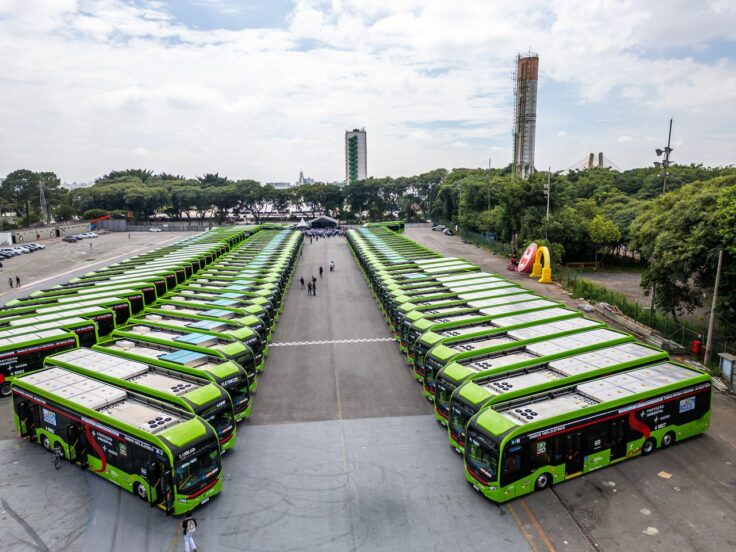
 The electrification of the country’s public bus fleet is one of the most effective strategies for reducing greenhouse gas (GHG) emissions and improving air quality across all cities. In addition to the environmental benefits, the adoption of electric buses (or e-buses) yields direct health benefits, stimulates economies, and significantly enhances the quality of urban life. E-buses also offer an opportunity to make urban transport more efficient, attractive, and sustainable, encouraging higher ridership, promoting active mobility, and reducing the reliance on private vehicles.
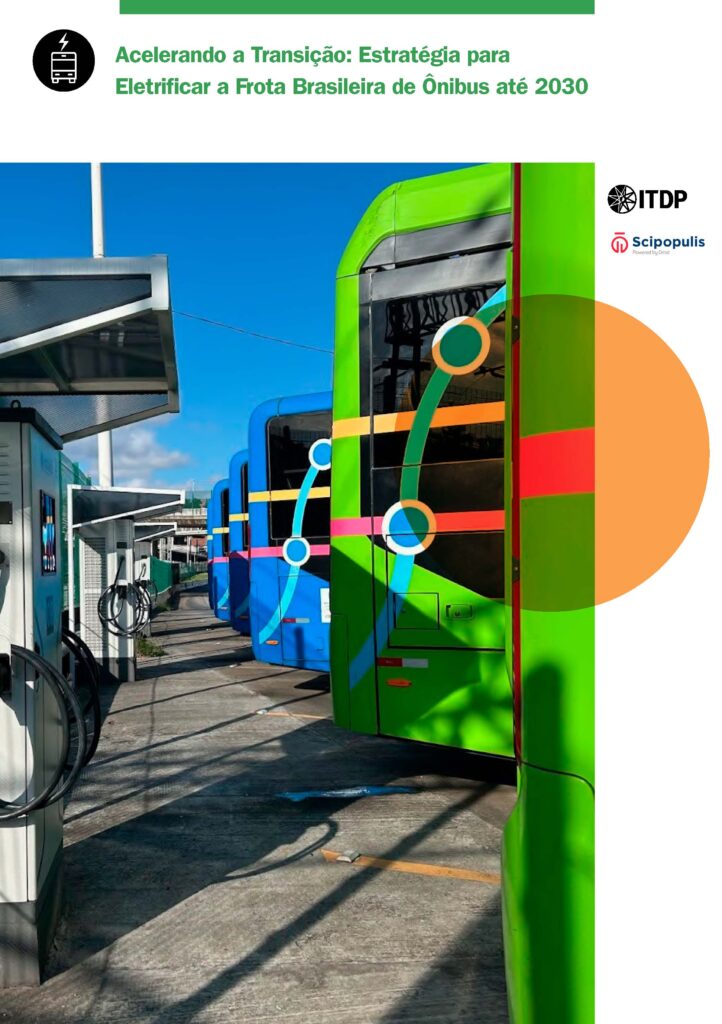
Despite the benefits being clear, a myth persists that electrification remains a distant or inaccessible reality for many cities in Brazil. However, the latest study from ITDP Brazil, developed in partnership with Scipopulis and supported by the nation’s Ministry of Cities, provides evidence to dispel this myth. The study, Accelerating the Transition: A Strategy to Electrify the Brazilian Bus Fleet by 2030, determines that across the country’s largest metropolitan regions, more than 14,000 diesel buses could be replaced by e-buses without a substantial impact on existing transit operations. This replacement can occur through a strategy that focuses existing public investments and prioritizes the renewal of older buses to reduce their emissions impacts and modernize their operations. The project was primarily divided into three stages:
- The presentation of manufacturers, typologies, and models of electric buses available in the Brazilian market, aiming to establish a public transport electrification strategy that considers the market offer of buses.
- An analysis of operational data from 18 public transport systems to assess the operation of each vehicle, to determine its consumption, and its potential to be replaced by electric buses.
- Estimate of emissions reduction and respective economic impact with the replacement of proposed fleets.
Download a summary of the “Accelerating the Transition” report in English here.
14,000 Public Buses Ready for Electrification
The initial objective of the research was to analyze the 52 transport systems of the 21 largest metropolitan regions in the country. However, due to the unreliability or unavailability of necessary information, only 18 transport systems, ranging from municipal to intermunicipal, had the required data structure for thorough study. Out of the total 46,236 vehicles identified in these systems, 37,395 are currently in operation.
Based on the analysis of travel patterns of operational buses, 14,146 of these diesel buses are poised to be replaced by e-buses, as they have energy consumption that is compatible with the models of e-buses currently available in the domestic market. This replacement would not require an increase in fleet size, restructuring of lines, or profound changes in operation, making the scenario feasible from an operational and practical perspective. This approach focuses on replacing vehicles that are more than five years old and that utilize obsolete technologies, such as those meeting Euro III through Euro V emissions standards. In particular, the public bus systems in key cities like São Paulo, Rio de Janeiro, Goiânia, and Belo Horizonte have the most significant potential to electrify their fleets.
Potential Climate and Economic Impacts
The theoretical replacement of these 14,000+ vehicles, according to the research, can help avoid emissions of 437.7 kt of CO₂eq per year, representing a 24.6% reduction in the current GHG emissions of these systems. This significant reduction is a promising sign for the possible environmental benefits of such targeted e-bus strategies. It is estimated that, for every 1% of the fleet replaced, emissions can decrease by 1.37%. This can generate an estimated annual savings of between R$54.4 and R$62.1 million (USD $10-12 million), considering only the Social Cost of Carbon, which enhances the economic viability of bus electrification for the long term.
This transformation has further potential to impact 41% of the Brazilian population and improve 50% of the urban bus fleets in operation across the country’s most significant 21 metropolitan regions, based on the targeting and prioritization proposed by the study. Such a sizable shift would be crucial for increasing the nation’s public transport efficiency, reducing road congestion, improving air quality, and promoting sustainable growth across the board.
Learn more about transport electrification in our “Advancing E-Buses” webinar.
Recommendations for Policy Action
The study’s results provide concrete recommendations for strengthening public policies to decarbonize Brazil’s transport sector, with a focus on enhancing public investment and achieving socio-environmental benefits in the medium and long term. The challenges faced during the research and data collection process can also, in turn, provide inputs for improving the study and evaluation of the country’s electromobility landscape going forward. More broadly, this will be crucial to helping the public and private sectors build more transparent and efficient management systems. These proposals include:
- Data management and governance: Enhance the regulation and technical structure of municipalities to ensure access to, and the qualified use of, transport operational data.
- Adequate charging infrastructure: Adopt charging strategies that are compatible with the real operating patterns of vehicles, thereby avoiding over costs or underutilized investments.
- Coordinated public procurement: Promote coordination between the Union, states, and municipalities to provide scale and predictability to the acquisition of electric vehicles, thereby optimizing costs and stimulating the national industry.
The study provides a strategic perspective and can lay the foundation for the various transport decarbonization policies that are already underway in Brazil, such as the Urban Public Transport Fleet Renewal Program (REFROTA), a government initiative aimed at renewing and modernizing the country’s urban bus fleet, within the scope of the New Growth Acceleration Program (New PAC). By identifying the number of diesel buses that can be converted in each of these systems, this study highlights some important paths forward for the federal government to finance the acquisition of e-buses at scale, build supporting infrastructure, and commit necessary resources. In addition, this research proves particularly relevant in the context of COP30 by helping center Brazil in the global climate conversation while reinforcing the country’s commitment to low-carbon mobility.
Brazil must prioritize the electrification of its transport systems if it is to become a leader in sustainable growth and economic development. Transitioning Brazil’s cities to e-buses is an urgent climate strategy — and we now have more evidence that this transformation is possible.