

Between 2031 and 2050, the urban transport sector is expected to have the greatest need for climate financing, with the requirement increasing to over USD $2.7 trillion annually by 2050. Addressing this funding gap is essential to demonstrate that increased investment is a necessary step to overcome systemic barriers and deliver transformative urban mobility solutions. Under this objective, we prioritize three areas within ITDP geographies:
Scaling sustainable transport, which relies on public funding, will require significant political support and financial backing. Public investment is crucial for developing and maintaining transport infrastructure, which often lacks profitability for private investors but yields substantial benefits in terms of public health, social welfare, and environmental sustainability.
However, a considerable investment gap persists across all sustainable urban mobility projects, posing a persistent barrier to achieving equitable, low-emission, and efficient transportation systems. Sustainable mobility initiatives are consistently underfunded compared to car-centric infrastructure. To address this, we need to ensure that policy and financing commitments are expanded and aligned across all transport stakeholders.
The urgency of bank financing is apparent, as sustainable transport projects frequently face funding gaps. Finance in this context is often defined as loans. ITDP works to increase financing from influential international institutions, including multilateral development banks (MDBs), regional development banks, national development banks, and private banks, to finance sustainable transportation. MDBs are especially catalytic as they attract other financing, including from the private sector.
Multilateral and other development banks funded over USD $230 billion globally across all topics, including transportation, in 2022. For decades, ITDP has been committed to directing resources from these influential players toward sustainable mobility. By leveraging these resources, ITDP not only helps increase the available capital for transformative projects but also builds local capacity to manage and sustain these efforts.
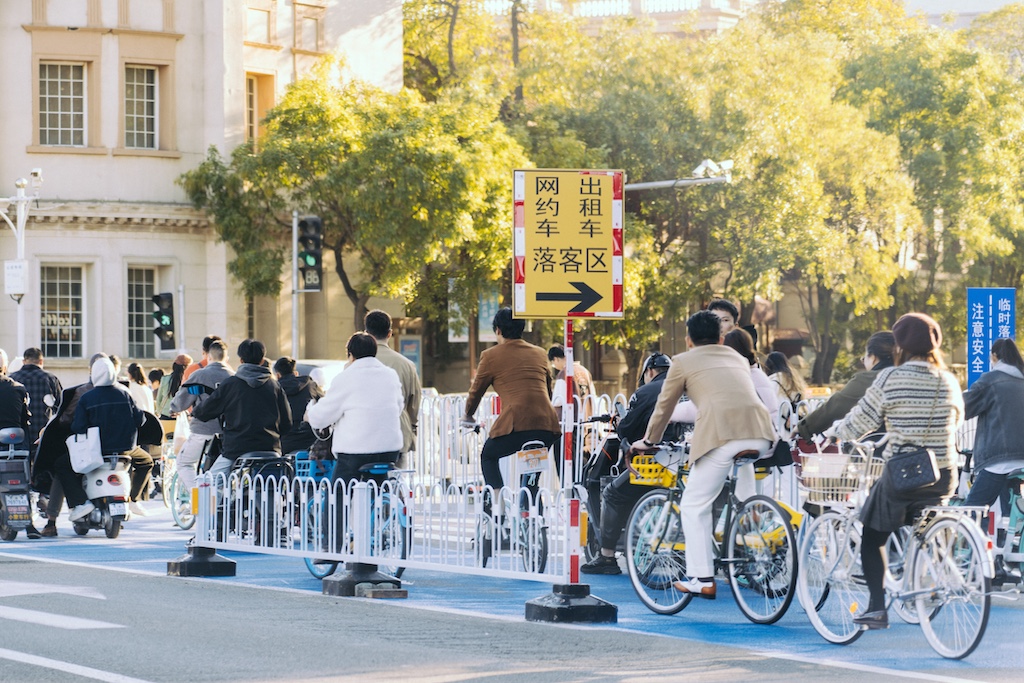
In 2015, the Tianjin Urban Transport Improvement Project was launched to transform the Chinese megacity’s streets and mobility infrastructure, prioritizing walking, cycling, and public transit. With a USD $144 million investment from the World Bank and the national government, the project is the Bank’s largest commitment to date to enhancing non-motorized transport infrastructure.
Between 2015 and 2022, with support from ITDP China, Tianjin successfully implemented various street improvements, including the construction of 126 kilometers of improved cycle lanes, 38 parks and public squares, the redevelopment of 96 metro stations, a central bus terminal, and the upgrade of over 850 public streetlights.
By working with development partners to leverage innovative climate financing mechanisms, such as green bonds, the project also reduced risk factors and increased the confidence of other financiers. The return on this investment from Tianjin’s transformation became evident by 2022, as the city reported that the modal share of walking, cycling, and transit trips grew to more than 70%. Notably, this achievement earned the city the 2024 Sustainable Transport Award.
Government funding plays a vital role in advancing sustainable mobility, as most funding for transport projects and ongoing operations comes from national and subnational budgets allocated annually or through dedicated programs. Funding in this context often refers to government budget allocations. These public funds serve as a foundation for infrastructure investments, supporting capital projects that include public transport systems, cycling networks, and pedestrian roads.
ITDP advocates for increased government funding allocation toward public and active transport systems, emphasizing the economic, environmental, and social benefits of these investments. ITDP also encourages national governments to prioritize funding for sustainable transport, rather than supporting private cars.
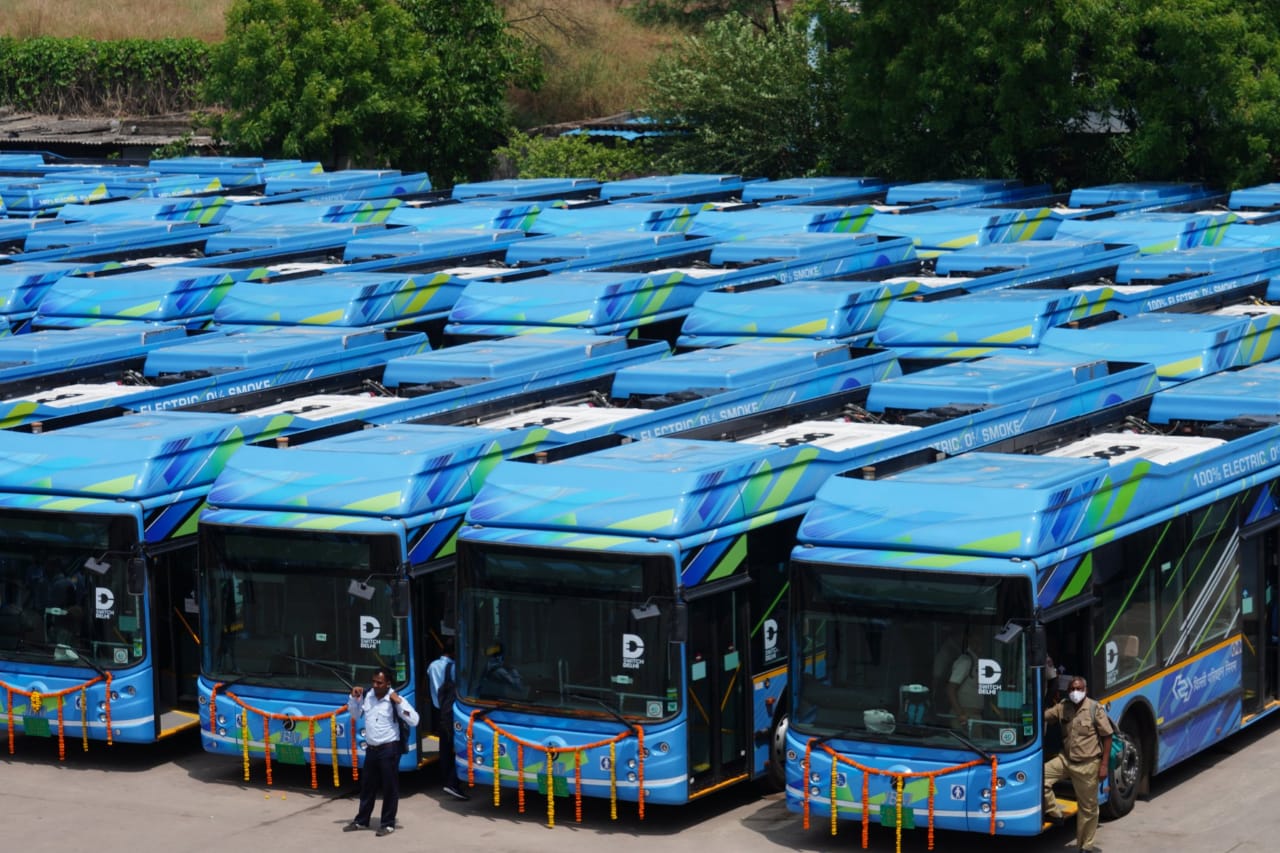
Debuted in 2023, India’s national PM E-Bus Sewa program is allocating nearly USD $2.4 billion to help procure 10,000 e-buses across 169 Indian cities through a mix of public-private partnerships and capacity support. ITDP India has been working with major cities in India, from Chennai to Delhi, to provide technical assistance in planning, procurement, and operation of urban e-buses, leveraging the government’s ongoing electrification commitments.
The nation’s Union Budget 2025-26 further included a two-fold increase in funding allocations to PM E-Bus Sewa, supporting the procurement of 14,000 new e-buses, as well as related initiatives to expand the fleets of e-rickshaws, e-trucks, and more. PM E-Bus Sewa builds upon previous national transport funding policies, to which ITDP helped advocate for improvements and extensions. India’s investments in public transport electrification, as well as promoting more walking, cycling, and transit-oriented policies, are crucial to meeting its GHG emissions reduction and air quality goals as the world’s most populous country.
National and subnational policies establish the frameworks and funding priorities that shape urban mobility systems. National governments often provide overarching visions, policies, targets, and programs that allocate resources for public transport, cycling infrastructure, and green freight projects. Subnational governments, in turn, adapt these policies to local contexts, apply for program funding, or are responsible for complying with targets and policies.
ITDP’s work across regions emphasizes the importance of aligning national and sub-national policies to ensure cohesive planning, efficient resource allocation, and integration of sustainable transport into development goals. For example, ITDP has worked closely with governments on Sustainable and Urban Mobility Plans (S/UMPs) to devise region-specific strategies and frameworks for shifting away from the traditional approaches towards sustainable and people-oriented planning. S/UMPs are key planning tools and policy instruments to guide the development of sustainable transport projects in countries seeking to reduce their emissions and improve access.
In addition, each country’s Nationally Determined Contributions (NDCs), outlined in the Paris Climate Agreement, encompass broader policies that require ongoing evaluation for investments and commitments to sustainable transport modes. There is a need to build more capacity and support, particularly in LMICs, for non-motorized transport and active mobility measures that fully embrace the role of public transport in meeting national climate goals.
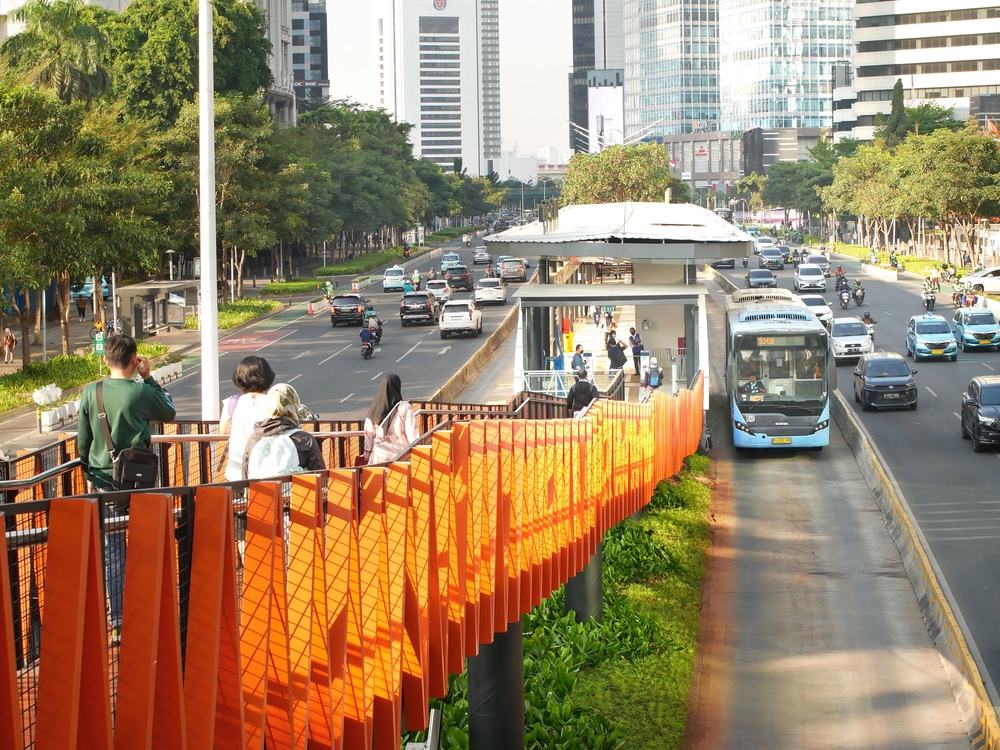
To address challenges and opportunities for increasing public transport ridership across Indonesia, ITDP Indonesia worked with regional partners to develop a National Roadmap and Incentive Program for Road-Based Public Transport Electrification in 2024. The Roadmap draws on an analysis of 11 priority metropolitan areas across Indonesia to provide a comprehensive framework for transport electrification, with a focus on bus systems and integration with other zero-emission mobility modes.
The study’s recommendations were accepted by the Republic of Indonesia’s Minister of Transportation as the national government developed its 2025-2029 RPJMN (National Medium-Term Development Plan), with the hopes of informing future strategies and budget allocations for larger electric mobility programs. Notably, the Roadmap recommends that the Ministry of Transportation adopt 6,600 e-buses across its priority cities, which has the potential to reduce emissions by nearly 25% annually.