
August 07, 2026
India’s ‘Right to Walk’ Reform Must Lead to Real Change
Pedestrians are quickly becoming the most vulnerable road users in India.
Read more about the ‘right to walk’ and actions cities need to take in this original ITDP India article.
A bus stop that cannot be safely reached, a metro station surrounded by fast-moving traffic, or an obstructed footpath can make even the best public transport networks in India inaccessible and hazardous. In practice, the success of any urban mobility system depends not just on what happens on rails and roads, but on what happens at the start of most people’s journeys on foot. In a key legal milestone, Maniyar Iliyaz v. P. Ayyappan (June 2026), the Supreme Court of India recognized that walking on safe, well-demarcated footpaths is a fundamental right under Articles 19(1)(d) and 21 of the Constitution. This decision now informs how cities need to think about mobility in the world’s most populous country. People on the street must be prioritized over vehicles. This recognition must also move beyond the courtroom to advance actual investments into tangible infrastructure that centers walking, cycling, and public transport for all.
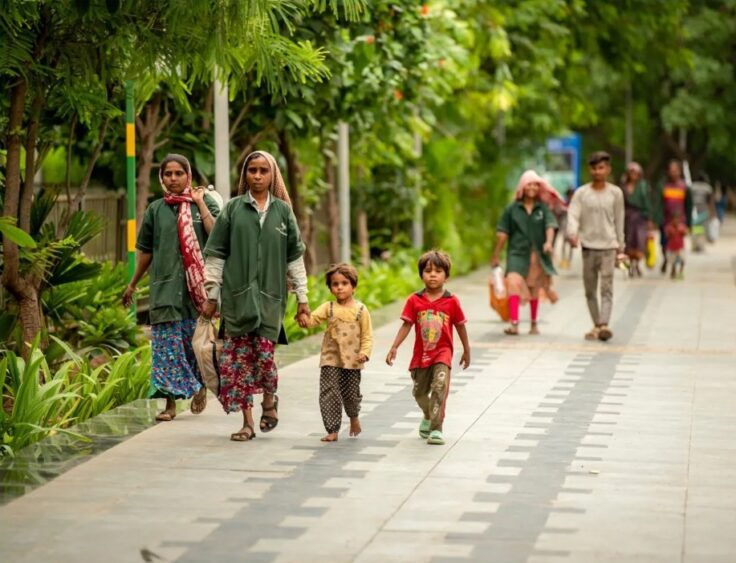
Learn more about ITDP’s vision to increase public transport ridership by improving conditions for walking and cycling.
Walking is the Foundation of Urban Mobility
For decades, Indian cities have measured mobility success by how quickly vehicles move. The result has been wider roads, more flyovers, and growing dependence on private vehicles, while the street infrastructure that serves the majority of daily trips has been left behind. But walking and public transport are inseparable modes. Even the fastest metro system or most extensive bus network cannot attract riders if getting to a station means navigating missing footpaths, dangerous intersections, or encroached sidewalks.
Poor walking conditions create a barrier to transit use, especially for women, older adults, children, and people with disabilities. If India wants more people to choose public transport over private vehicles, improving service alone is not enough. Cities must also invest in the streets that connect people to it. The country’s Supreme Court has now addressed an important constitutional issue by acknowledging people have the basic right to walk safely. The practical question is how cities deliver on that promise. Across India, examples of well-designed streets already exist, demonstrating that safer, more accessible public spaces are achievable. Yet these projects remain isolated because the policies and funding needed to deliver them consistently are lacking.
Many cities do not have long-term plans for connected walking networks. Existing guidelines are often advisory rather than mandatory, meaning pedestrian infrastructure is frequently omitted from road projects. Funding continues to prioritize infrastructure for motor vehicles, while walking receives only a fraction of transport budgets. Frequent leadership changes, fragmented institutional responsibilities, and limited technical capacity — particularly in small and mid-sized cities — make sustained implementation even more difficult. Public perception also remains a challenge. Street improvements are often viewed as taking space away from vehicles rather than improving mobility for everyone. Yet streets that prioritize people do not reduce mobility; rather, they expand it by making walking, cycling, and public transport more affordable and practical choices for everyone.
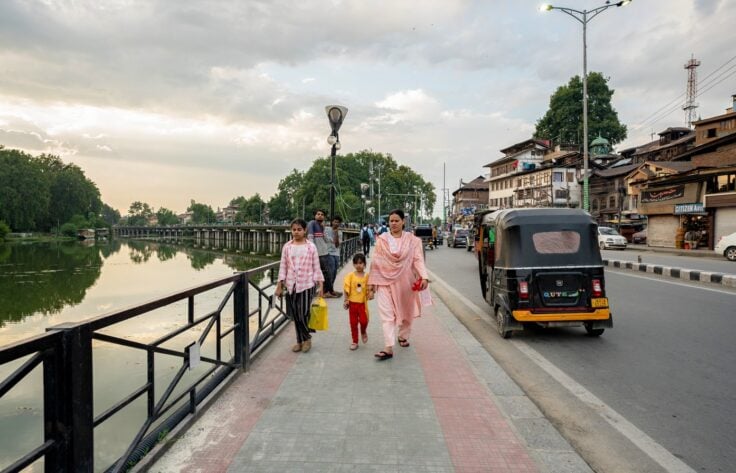
A Roadmap for Healthier Streets
The Prime Minister’s “Bharat Janpath Yojana” — a proposed national mission recommended by ITDP India to prioritize pedestrian safety and infrastructure — provides a core framework for turning the Supreme Court’s decision into everyday reality. The Yojana brings together three key elements:
- A legislative framework to protect the right to walk and make safe pedestrian infrastructure a mandatory part of every road project.
- A National Streets Program capable of delivering change on a larger scale. Rather than funding isolated demonstration projects, the program proposes creating 10,000 kilometers of Healthy Streets across 100 cities. These networks would include continuous footpaths, protected cycling infrastructure, safe crossings, traffic-calmed streets, shade, lighting, and universal accessibility. Importantly, they would connect homes with schools, healthcare, workplaces, markets, and public transport stations.
- An enabling ecosystem that provides dedicated funding, strengthens state and city institutions, builds technical capacity, and establishes monitoring and accountability mechanisms is all essential to ensure Healthy Streets become standard practice rather than one-off successes.
Watch this video from ITDP India on the value of improving street infrastructure.
Benefits That Go Far Beyond Walking
The strongest argument for investing in better streets will always be that they save lives. But their benefits extend much further. Research from ITDP India’s publication The Healthy Street Divided, a multi-city assessment prepared alongside the Ministry of Housing and Urban Affairs and GIZ India, demonstrates that people-first streets generate social, environmental, and economic returns. Women are significantly more likely to walk on healthy streets, with nearly nine in ten reporting that they feel safer after dark. Older adults and children also use these streets more frequently, improving independent access to education, employment, and essential services. Healthy streets also improve environmental quality by reducing exposure to harmful air pollution while increasing shade that helps cities cope with rising temperatures.
The economic benefits of active mobility are equally compelling. Safer, more walkable streets attract customers, increasing sales for local businesses while raising neighborhood property values. Perhaps most importantly for transport planners, these investments maximize the value of public transport. Every rupee invested in buses, metro systems, or suburban rail depends on people being able to safely reach those services. Better streets extend the reach of transit without adding new routes, helping existing systems attract more riders and deliver greater returns on public investment.
India has a rare opportunity. Now that the Supreme Court has enshrined this constitutional right, the political and social momentum exists for better streets. In tandem, India’s governments are working towards more sustainable, electric transport options that reduce dependence on expensive fossil fuels, lower traffic congestion, and combat rising GHG emissions. These two ambitions reinforce one another. Healthy streets are not simply about creating better sidewalks; they are about ensuring essential infrastructure is consistent for safer cities, stronger local economies, healthier communities, and better urban mobility across the board.
Every journey begins on foot. If India’s decision-makers want to ensure safer, more affordable, and more livable urban communities, the way forward is to start putting the ‘right to walk’ into practice.