
November 04, 2025
Showcasing the 2026 Sustainable Transport Award Finalist Cities
Each year, the Sustainable Transport Award (STA) honors cities that are redefining their streets and mobility systems to prioritize sustainability, inclusivity, and equity.
Learn more about previous recipients of the STA through the years.
Since 2005, ITDP and the STA Committee have recognized small and large cities around the world for implementing ambitious transport strategies that reduce emissions, expand access, and promote more resilient and prosperous communities. Beyond celebrating select achievements in policy and infrastructure, the STA continues to serve as a vital platform for knowledge exchange, peer-to-peer learning, and inspiration for scalable best practices. Chosen from a pool of nearly two dozen applicants, these top five 2026 STA finalists represent cities across South Asia, South America, and the Middle East that are tackling the most pressing mobility challenges in today’s world.
By implementing policies and transport projects that improve integration, reduce congestion, increase accessibility, and spur economies, these cities are demonstrating to us all the transformative power of investing in public infrastructure. Their efforts reaffirm a shared principle: sustainable urban mobility is vital to advancing the world’s economic, environmental, and social objectives. As we look ahead to the winner’s announcement in January 2026, learn more about the finalists below.
Amman, Jordan
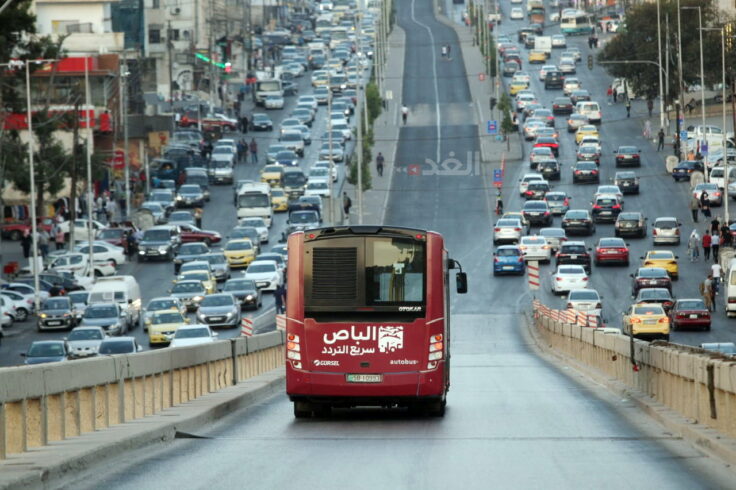
Amman has emerged as a regional leader through the successful rollout of its Bus Rapid Transit (BRT) system. This ambitious, multi-year project began operations with its first corridor in 2021 and has expanded substantially through 2024. Selected as the most cost-effective mass transit solution compared to light rail, the 25-kilometer BRT is estimated to serve 315,000 passengers daily with a fleet of 140 articulated buses. As the new backbone of a multimodal and integrated network, Amman’s BRT operates along dedicated lanes with grade-separated intersections, major terminals, and full integration with feeder bus services.
Accessibility features such as tactile paving at stations enhance inclusivity for passengers with disabilities. Operational management under the Greater Amman Municipality has also strengthened institutional efficiency and service reliability. Beyond improving travel times and passenger experience, Amman’s BRT is expected to reduce 48,000 tonnes of CO2e annually, supporting the city’s broader ambition of achieving carbon neutrality and positioning it as a model of zero-emission mobility in the Middle East.
Bhubaneswar, India
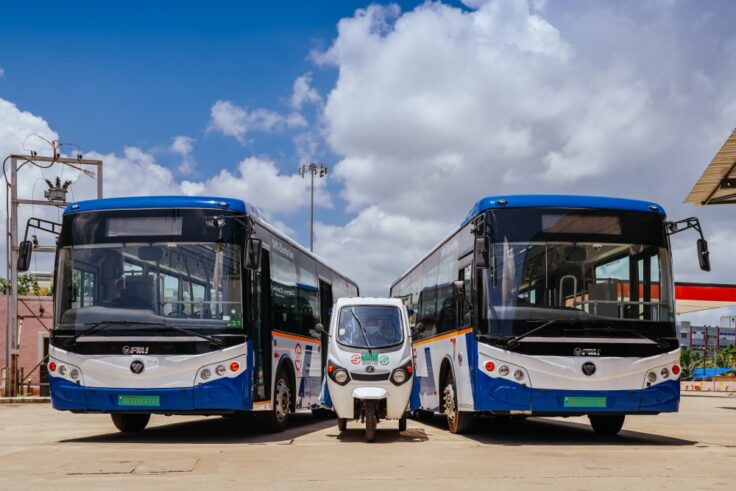
Previously an STA Honorable Mention in 2023, the city of Bhubaneswar is continuing to enhance local urban mobility through a significant expansion of its Mo Bus service that has become known for its innovative approach to gender inclusion, workforce development, and improved access for marginalized communities. Under India’s national PM e-Bus Sewa scheme, the state of Odisha will also add 400 new electric buses across five cities, with Bhubaneswar receiving 100 of these vehicles. To further support the growth of electric mobility, the city is developing new bus depots and charging infrastructure to ensure dependable operations across the metropolitan area.
The PM e-Bus Sewa scheme, in particular, is implemented under a Gross Cost Contract (GCC) model, in which private operators are compensated per kilometer, irrespective of fare revenue, to reduce financial risk. To further support viability, the Government of India is helping up to 60% of the civil infrastructure costs and 100% of the behind-the-meter electrical infrastructure for the charging depots. This vital public-private partnership promotes efficient service delivery, risk-sharing, and long-term sustainability of the electric bus network.
Kochi, India
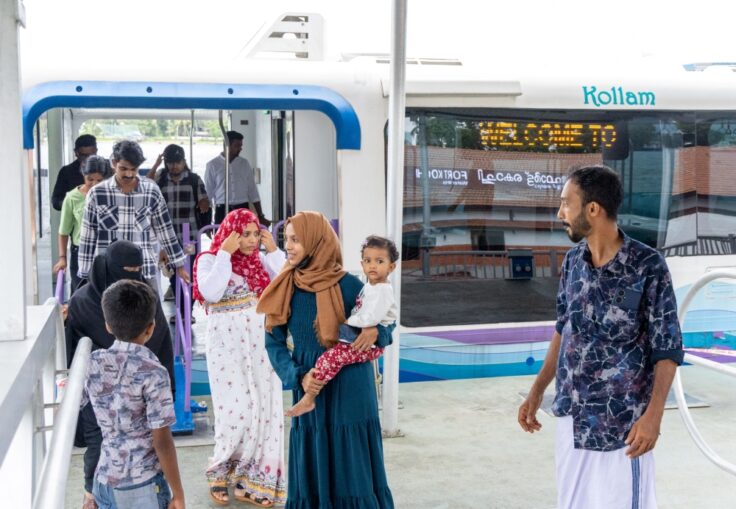
Kochi has drawn international attention with the launch of the Kochi Water Metro, a pioneering public transport initiative in India, inaugurated in 2023. This first-of-its-kind system connects 10 inhabited islands through a network of 19 hybrid-electric catamarans spanning 76 kilometers of routes, providing residents and visitors with an affordable, efficient, and low-emission alternative to road-based travel across this port city. Accessibility and integration were also central to the Water Metro’s station designs, featuring wheelchair-friendly ramps, priority seating, and seamless connections with Kochi’s metro and bus systems.
Notably, capital costs for this project were much lower than for road-based or metro rail public transport, mainly because no land or construction was required for its development. Beyond enhanced urban mobility, the Water Metro has generated significant social and economic benefits for Kochi residents. The Metro is helping create more jobs for women through partnerships with civil organizations and is further strengthening livelihoods and access to services across the island communities. Expansion of the Metro is expected to connect even more terminals and boats in the future, establishing Kochi as a model for creative transport solutions in unique geographies.
Salvador, Brazil
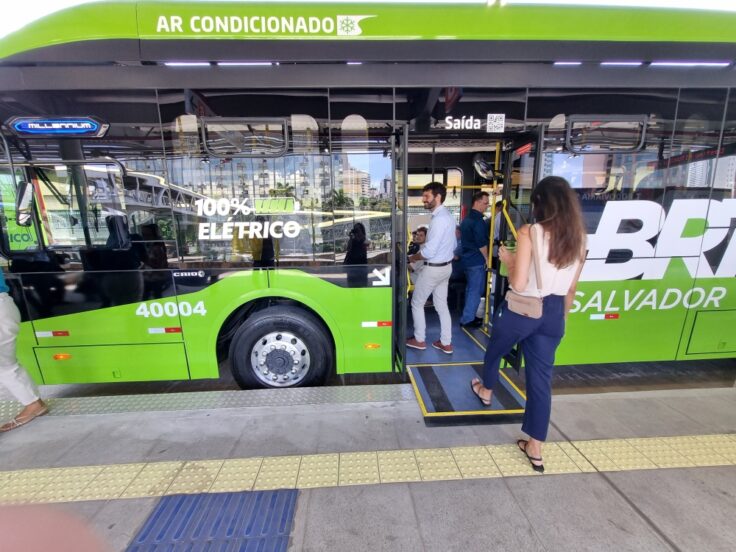
Salvador is advancing sustainable mobility with the launch of a 7-kilometer exclusive BRT corridor integrating eight high-efficiency stations, overtaking lanes, and new complementary cycling infrastructure. The project also incorporates road-safety enhancements and drainage improvements in flood-prone areas, aligning transport upgrades with broader climate-resilience strategies. The city’s BRT system, as a whole, serves about 30,000 passengers daily, with 40 buses operating across three lines and 20 stations. Early assessments of the BRT’s impact indicate significant improvements in travel time, passenger satisfaction, and resilience to rainfall and other weather events for transit users.
Notably, the BRT system has helped promote transport inclusivity, with targeted actions to prioritize gender balance in local operations and the workforce. Salvador is also aiming for the electrification of nearly 40% of its total public bus fleet by 2032 across both its BRT and regular bus services. Salvador’s progress demonstrates how targeted, medium-scale infrastructure investments can yield measurable impacts and help build a solid foundation for future policies and investments.
Santiago, Chile
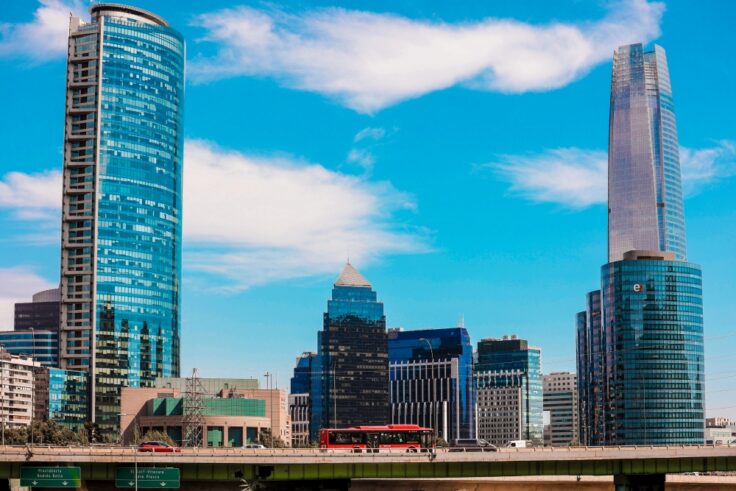
Santiago continues to set a regional standard for electric, bus-based public transport. By 2026, the city is projected to operate 4,400 electric buses, representing nearly 70% of its fleet and making it one of the largest fleets in the world outside China. The city has already developed a comprehensive network of 41 electric bus terminals distributed across 14 municipalities, meeting high environmental, safety, and design standards. Robust local and national policy commitments, ambitious climate targets, long-term financial mechanisms, and a strong legal and institutional framework for investors and operators uniquely enable this large-scale electric transition.
The positive impacts from the city’s 2,550 e-buses already in circulation are evident: noise levels along major corridors have fallen by nearly 44%, while new employment opportunities in vehicle maintenance and operations are reshaping the workforce. Santiago’s commitment to gender inclusion is also embedded in its operational model, with operator contracts requiring women to constitute up to 18% of drivers over the next few years. The entire newly incorporated electric fleet meets universal accessibility standards for people of all abilities with lowered platforms, wheelchair spaces, visible signage, and onboard information systems. Santiago is exemplifying how coordinated policy, financing, and regulation can align to achieve systemic transport transformation.
Stay Tuned for the 2026 Announcement
From Amman’s BRT corridors to Santiago’s electric fleet, the 2026 STA finalists illustrate how cities with diverse geographies, resources, and capacities can all deliver transformative transport solutions. Their work reaffirms that equitable, low-carbon mobility is not a single intervention but the outcome of innovations that integrate good design, finance, policy, and governance. Every year, our applicants and finalists demonstrate to the world what is possible for the future of urban mobility.
Following the announcements of the 2026 honorees, nominations for the 2027 program will open in February 2026 and close in April 2026. Semifinalists will be notified in June 2026 with a request to submit additional information. The winner and honorable mentions will then be notified internally in August 2026, with the public announcement in January 2027. Please check STAward.org for the latest updates.
The 2026 winner and honorable mention(s) will be announced in January, with the Sustainable Transport Award Ceremony taking place in February.
In addition, stay connected with ITDP for more webinars, case studies, and city-to-city dialogues celebrating the STA program throughout the upcoming year.