
September 28, 2025
In Brazil, This Project is Improving Public Transport with Data and Technology
The impacts of urban passenger transport are not just a growing concern in Brazil, but an increasingly problematic source of GHG emissions, responsible for nearly half of all energy-related emissions.
Read more about this work from ITDP Brazil here.
The rapid growth of passenger transport, particularly in Brazil’s many large cities, has exacerbated the impacts of traffic congestion, pollution, and inequitable access to public transportation. These challenges, coupled with the ongoing struggle to provide reliable and sustainable public transit, have been further complicated by the effects of the 2020 COVID-19 pandemic, which persist even several years later. Data shortages, limited municipal capacity, and outdated infrastructure persist as significant barriers to achieving meaningful reductions in emissions.
Despite these challenges, Brazil has also been laying the necessary groundwork for change. The National Urban Mobility Policy and the Brazilian Charter for Smart Cities set a strong vision for modernizing urban mobility systems through digitalization and sustainability. Building on this foundation, the ACCESS Project offers a unique opportunity to accelerate transformation. Led by ITDP Brazil and coordinated regionally by UNEP, ACCESS is supported by the German Climate Protection Initiative (IKI). It brings together a consortium of organizations across six Latin American countries.
Over five years, the initiative will harness digital technologies and data-driven planning tools to reduce GHG emissions, strengthen resilience, and make cities more inclusive. In Brazil, the project aims to bridge critical data and technology gaps that have long hindered sustainable transportation planning. At the national level, ACCESS will support the development of guidelines and protocols for integrating urban mobility data into the National Mobility Information System (SIMU), a platform the federal government has prioritized but struggled to implement due to uneven data quality across municipalities.
Watch the video above to learn more about ACCESS.
By conducting a Digitalization Readiness Assessment, providing technical protocols, and offering training in data science for both public officials and transport operators, the project will enable more informed planning and decision-making. It will also create national guidelines for designing and implementing Low Emission Zones (LEZs), integrating clean public transport and active modes such as walking and cycling. Together, these efforts represent a significant step toward integrating efficiency and digitalization into Brazil’s sustainable mobility policies.
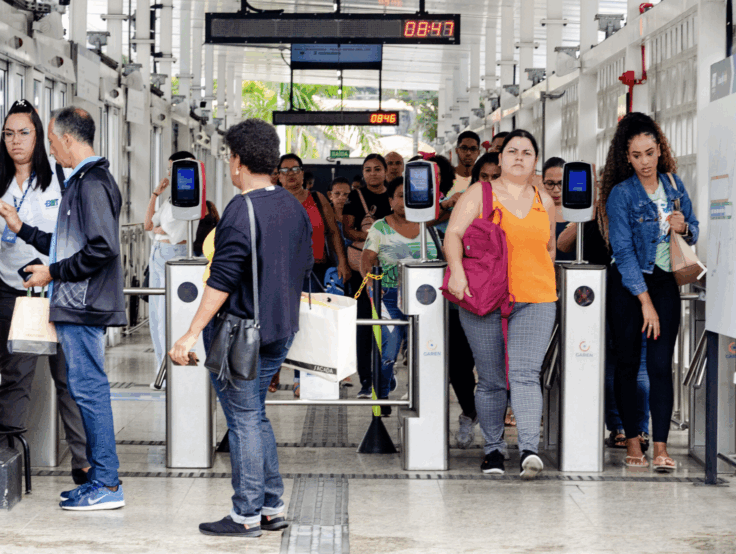
At the city level, ACCESS is piloting projects in Belo Horizonte and Rio de Janeiro, two metropolitan areas that illustrate both the challenges and opportunities of digital transformation in urban mobility. Belo Horizonte has already invested in its Intelligent Transportation System, known as SITBus, which connects to the city’s Operations Center. This system uses advanced management tools, upgraded traffic signals, and innovative bus technologies to gather real-time data on passenger travel patterns. The information is not just numbers on a screen; it provides actionable insights to make public transport more efficient and user-centered.
ACCESS will build on this foundation by testing new approaches such as Mobility-as-a-Service (MaaS) solutions, which integrate data collection and digital payment systems across bus networks. Other planned initiatives include enhancing passenger information systems with real-time updates and harassment reporting tools, creating a monitoring program for active transport, and piloting new digital methods for origin-destination surveys. The city will also receive support in developing a clean mobility plan for its LEZ, designed to complement bus integration with first- and last-mile connections.
Visit the UN Environment Programme for more details on ACCESS’s work across Latin America.
Rio de Janeiro provides another example of innovation. Its Operations Center has been a regional benchmark in utilizing GPS data to enhance the responsiveness of public transportation. Recent investments in electronic ticketing and digital monitoring of bus concessions are strengthening transparency and accountability in the system. Competitive tenders have introduced zero-emission technologies and intelligent solutions, signaling a shift toward cleaner, more resilient mobility. Through ACCESS, Rio will expand these efforts, with pilots focusing on MaaS integration, improved information and reporting systems for public transport users, active mobility data programs, and plans to implement intelligent LEZs.
Both cities demonstrate how digitalization can address multiple challenges simultaneously. Beyond improving efficiency, these tools enable authorities to anticipate the impacts of extreme weather events, ensure safer experiences for women and vulnerable groups, and design policies that prioritize clean, multimodal transportation. They also serve as living laboratories whose lessons can be scaled up nationally and shared with other cities in the region.
While ACCESS is advancing concrete solutions in Brazil, it is part of a broader regional effort. The project also includes Argentina, Peru, Colombia, Ecuador, and Mexico (with support from ITDP Mexico), where partners are working with governments, innovators, and communities to apply digitalization for low-carbon transport. By creating spaces for knowledge exchange, including a Community of Practice on transport digitalization, ACCESS ensures that progress in one city or country contributes to a larger pool of shared strategies and tools, thereby enhancing the overall progress of the sector.
“The project will also facilitate knowledge sharing in Brazil and Latin America through various initiatives, including the implementation of a Community of Practice on the digitalization of transport,” explains Clarisse Cunha Linke, Executive Director of ITDP Brazil.
This emphasis on collaboration is key to ensuring that digital innovation does not remain isolated in a few pilot projects. Instead, it becomes a cornerstone of urban mobility planning across the region. Brazil’s leadership role is not only significant but also promising. With forward-thinking regulations and a growing set of innovative city-level initiatives, the country is not only positioned but also destined to become a model for integrating digitalization with decarbonization in urban transportation. By addressing regulatory, technical, and infrastructure barriers, ACCESS provides the support needed to translate vision into practice for modern urban mobility networks.
The stakes are high, but the potential benefits are even higher. The transportation sector, accounting for nearly half of Brazil’s energy-related emissions, is a critical area for decarbonization. However, the potential benefits of this transformation extend far beyond emissions reduction. Cleaner, data-driven, and more inclusive transport systems have the power to reshape urban life, making it easier, safer, and more efficient for millions of people to move around their cities every day.
By combining technological innovation with robust policy frameworks and a commitment to equity, Brazil can ensure that digitalization and decarbonization are integrated into every city’s transportation system.