
July 11, 2025
Digitalization in Public Transport: Lessons from Mexico’s Cities
The digitalization of public transport is transforming urban mobility in cities across Mexico.
Read a version of the post in Spanish from ITDP Mexico.
A recent study by ITDP Mexico, supported by the Inter-American Development Bank (IDB), highlights how four major cities — Mexico City, Guadalajara, Mérida, and Monterrey — are adopting digital tools to modernize and integrate their transport systems to the benefit of both operators and users. Drawing from extensive research and interviews, the study outlines several key lessons, challenges, and policy recommendations to support cities in building more efficient, sustainable, and forward-thinking mobility systems.
The Role of Digitalization
Digitalization in public transport (DTP) refers to the use of technologies across the entire value chain of mobility, from planning and operations to user engagement. It enables better data collection, improved delivery service, and more informed decision-making. In the context of Mexico, where transportation generates around 25% of the country’s national greenhouse gas (GHG) emissions, digitalization also plays a crucial role in reducing environmental impacts and advancing sustainable development.
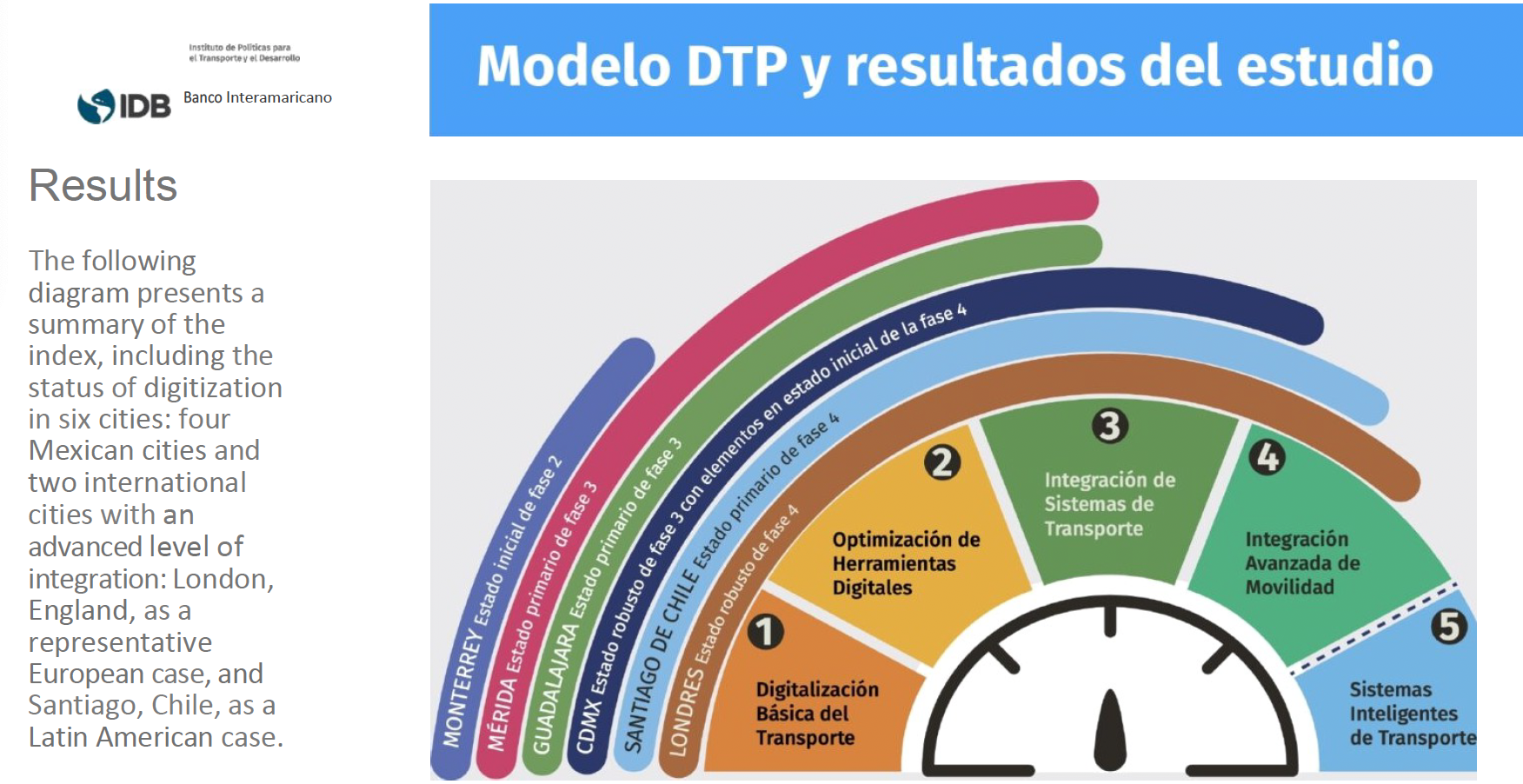
The study defines a five-phase DTP model (see below) for enhancing digitalization practices in urban transport, adapted from international best practices and tailored to Latin American cities. These phases range from basic digital adoption efforts, to more advanced technology integration, to the use of emerging tools like artificial intelligence. Most Mexican cities fall within the second and third phases, with some continued progress toward full integration.
Learning from Mexico’s Cities
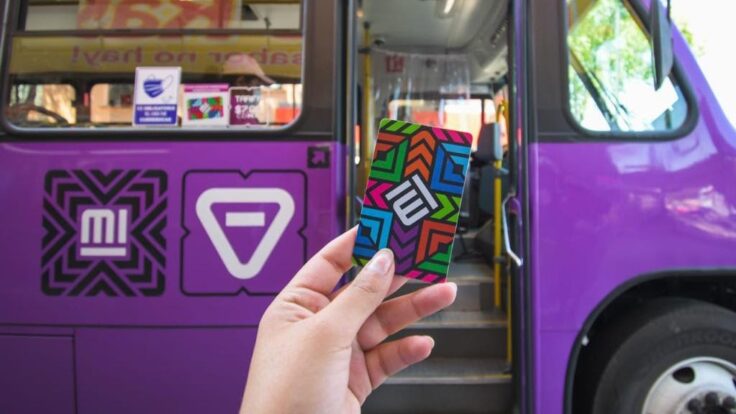
Mexico City has made significant strides in digital integration. The city’s implementation of the Tarjeta MI for unified fare payment across modes, consolidation of control centers, and establishment of open data standards is a key model for progress. Notably, during the modernization of the city’s Metro Line 1, data analysis enabled buses to maintain regular service while reducing operational kilometers by 40%, a demonstration of the possibilities of leveraging technology to streamline operations while maintaining user service.
Guadalajara has adopted a more regional approach through its Mi Movilidad initiative. A unified payment system, a route–company model, and subsidy programs like Mi Pasaje Amarillo and Verde have increased digital fare adoption and improved equity. However, interoperability between agencies, which refers to the ability of different systems to work together seamlessly, remains a significant challenge in the cities in this region of Jalisco.
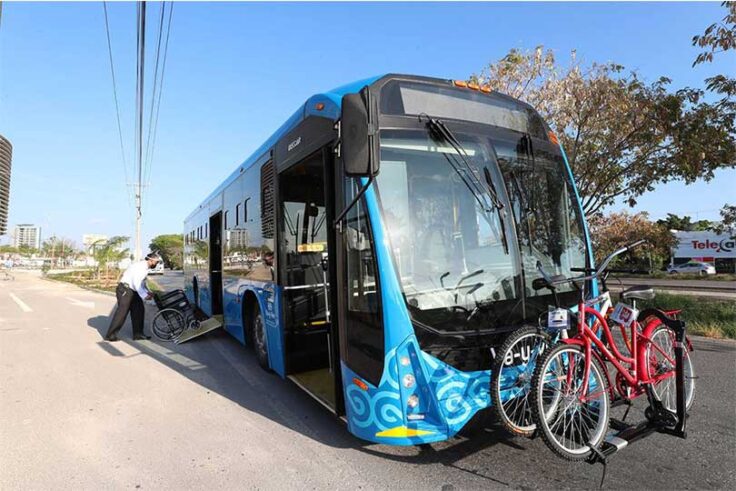
Mérida has a comprehensive DTP strategy, implemented through the Va y Ven system, and is a promising model for other cities. All public transport units are digitally equipped, and payment is centralized under a kilometer-based compensation model. The city utilizes real-time information gathered through a mobile app and a WhatsApp chatbot, while its dynamic GTFS data facilitates better public communication. A significant decrease in GHG emissions per passenger, by nearly 29.3%, and the substantial growth in transit ridership, by almost 19%, are encouraging signs for the future of public transport in Mérida, enabled by technology improvements.
Monterrey is in the early stages of digital optimization for its transit systems. Although a Mobility Management Center has been established and digital fare options, such as QR codes, have been introduced, coordination between agencies is still in development. However, recent policy reforms such as the city’s 2020 Sustainable Mobility Law include specific provisions for public transport improvements that are helping establish a framework for long-term digital integrations.
Key Lessons
The study ultimately identifies four core elements for successful DTP implementation: Governance, Data, Operations, and Service Quality. Each of these elements plays a crucial role in the digitalization of public transport in Mexico, and the study provides further recommendations for each area:
- Governance: Strong regulatory frameworks and centralized planning are critical. Cities should unify their transport governance to support integration, streamline data use, and establish a single electronic payment system.
- Data: Developing centralized data hubs and open data portals, including both static and dynamic GTFS, can improve transparency and foster innovation.
- Operations: Cities should adopt interoperable fare systems, activate transfer fares, and transition to digital compensation models. Providing digital credentialing for fare subsidies ensures access for vulnerable groups.
- Service Quality: Utilizing digital tools to monitor user satisfaction and service performance is essential for ongoing improvement. Public engagement platforms and real-time tracking can significantly enhance the rider’s experience, demonstrating a strong commitment to providing quality service.
Watch this webinar hosted by ITDP Mexico and IDB here.
Towards Better Mobility for All
Sustainability is a guiding principle of DTP. Electrification efforts in Mexico City, Guadalajara, and Mérida are already leading to reduced emissions, although challenges remain in financing and charging infrastructure. The study recommends further research into innovative funding models and deeper analysis of DTP’s social, economic, and environmental impacts. The path to digital transformation is complex, but the experiences of these cities provide valuable insights for policymakers and planners. With the proper governance, infrastructure, and inclusive strategies, digitalization can elevate public transport as a pillar of sustainable urban and economic development.
Continued research is needed to evaluate the full impacts of transport digitalization in these cities and to develop a framework for modernizing transport systems in all of Mexico and beyond.