
July 02, 2026
How Jakarta and Dakar Are Inspiring Dar es Salaam’s Public Transport Future
Dar es Salaam, Tanzania, is entering a defining phase in its public transport transformation.
As ITDP aims to increase ridership on public transport, facilitating knowledge exchange between global cities is crucial.
Tanzania has already proven it can build world-class Bus Rapid Transit (BRT) infrastructure, with Dar es Salaam’s first two phases serving passengers and new corridors under development. The progress achieved so far offers the city a strong foundation. As the system expands, attention is increasingly turning to the institutions, business models, and management structures that will sustain its long-term success. Delivering high-quality infrastructure is a critical milestone, but lasting impact comes from stronger governance, effective operations, and sustained funding. To support this next phase, ITDP Africa, with support from the World Bank through the Dar es Salaam Urban Transport Improvement Project (DUTP), organized a study tour for representatives from Dar es Salaam Rapid Transit (DART).
The delegation also included representatives from the regional Ministry of Finance, the PPP Center, LATRA, the Attorney General’s Office, PMO-RALG, and public transport operators. The group visited Jakarta, Indonesia, and Dakar, Senegal, both global cities that offer valuable lessons for Dar es Salaam’s future mobility. Jakarta demonstrates how a BRT system can evolve and improve over more than two decades, while Dakar shows how ambitious reforms can rapidly transform urban mobility with innovative strategies. In rapidly urbanizing regions such as East Africa and Southeast Asia, there is a key opportunity to reduce car dependency by building and investing in better bus infrastructure today.
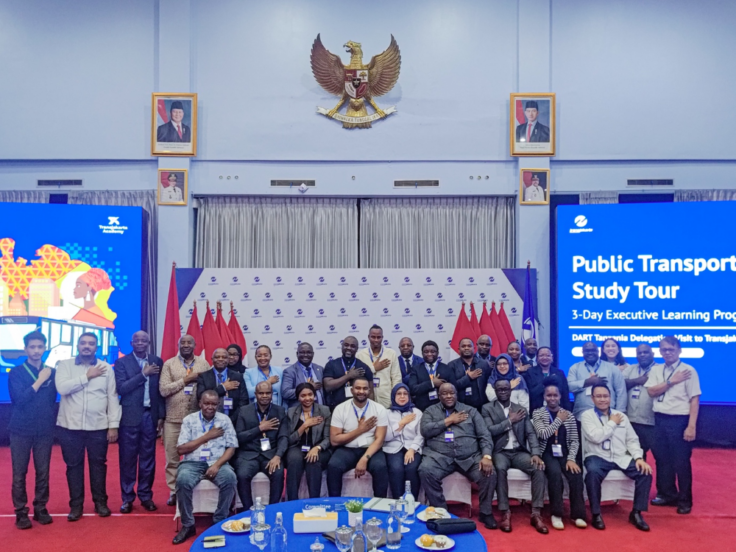
Strong Institutions Are A Foundation for Successful Bus Systems
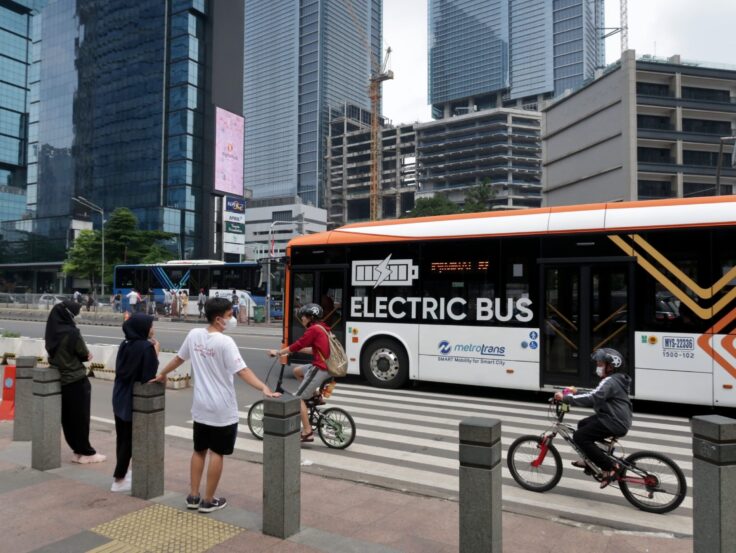
In Jakarta, the delegation saw firsthand how strong institutions can transition from a single BRT corridor into a citywide mobility system. Over the past two decades, TransJakarta has evolved into one of the world’s largest integrated public transport networks by pairing infrastructure investment with clear governance systems. The Jakarta Provincial Government provides policy direction and funding, while TransJakarta serves as the central coordinating institution managing infrastructure, overseeing fare integration, planning services, and operations across the network. Private operators deliver services through performance-based contracts, creating a system in which responsibilities are clearly defined and aligned with the delivery of high-quality service to passengers.
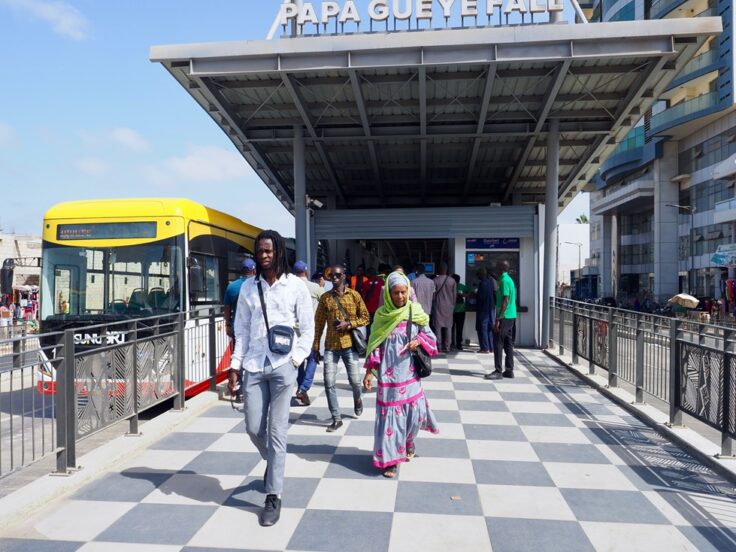
In Dakar, one of the strongest lessons is the importance of having a dedicated transport authority. This authority, CETUD, provided the coordination and oversight needed to turn an ambitious vision into the first electric BRT system on the continent. By bringing together government agencies, managing concession agreements, coordinating with Dakar Mobilité and operators, and overseeing the broader restructuring of the network, CETUD has created an institutional foundation that allows long-term partnerships to succeed. The delegation observed how clear allocation of responsibilities, strong contract management, and sustained stakeholder coordination can build trust between public and private partners while ensuring that investments translate into reliable, quality service for riders.
Jakarta’s Transjakarta (left) and Dakar’s Sunu BRT (right)
Affordable Fares Require Sustainable Financing
Maintaining affordable fares while ensuring long-term operational sustainability remains a challenge for public transport systems worldwide. Both Jakarta and Dakar demonstrated that affordability should be treated as a public policy objective rather than solely as a commercial consideration. Jakarta has maintained its base fare at IDR 3,500 (around USD 0.21) for nearly two decades despite significant network expansion and rising operating costs. This has been made possible through a Public Service Obligation (PSO) framework, under which government subsidies bridge the gap between fare revenue and actual operating costs.
The approach prioritizes accessibility and ridership while ensuring operators continue to receive contracted payments for service delivery. Dakar has adopted a different approach through a zonal fare structure combined with integrated pricing arrangements between BRT and feeder services. Revenue-sharing mechanisms and targeted social tariffs help balance affordability with financial sustainability, while annual fare adjustments linked to inflation provide a more predictable framework for long-term financial planning. These examples reinforce the importance of establishing transparent subsidy frameworks, predictable fare policies, and sustainable funding mechanisms that support service quality while keeping public transport accessible to all users.
Learn more about Transjakarta’s focus on inclusion and accessibility in this video.
Contracting Models Shape Service Quality
The study tour further highlighted the critical role that contracting structures play in determining operational performance and service reliability. In Jakarta, private operators are contracted under gross-cost agreements and are paid based on kilometers operated and performance indicators, rather than passenger volumes. This approach removes incentives for operators to compete for passengers on the road, improves service reliability, and allows TransJakarta to maintain centralized control over routes, schedules, fares, and customer service standards. Service Level Agreements (SLAs) and performance monitoring systems ensure operators remain accountable for safety, punctuality, fleet reliability, and customer experience.
Dakar’s BRT operates under a Public Service Delegation (DSP) concession model implemented through Dakar Mobilité, a Special Purpose Vehicle that combines international expertise with participation from local transport operators. The concession framework clearly allocates responsibilities, risks, and performance obligations between public and private actors while preserving public oversight of strategic transport objectives. Despite the differences between the two cities’ models, both demonstrated that successful public transport systems demand clear contracts, robust oversight mechanisms, and performance-based accountability.
Learn more about Dakar’s e-BRT in this 2025 STA Ceremony video.
Integration Creates A Network, Not Just A Corridor
Another key takeaway was that the value of a BRT system extends beyond individual corridors. Public transport becomes significantly more useful when different modes operate as part of a coordinated network. Jakarta has built one of the most integrated urban transport systems in the region through the JakLingko platform, which connects BRT, MRT, LRT, commuter rail, feeder buses, and neighborhood services under a unified fare and payment ecosystem. Passengers can transfer seamlessly between modes with integrated ticketing and coordinated infrastructure, minimizing transfer times and improving the overall travel experience.
Similarly, Dakar’s BRT forms part of a broader metropolitan mobility vision that includes TER commuter rail services, feeder networks, multimodal hubs, and future transit corridors. The delegation observed how integrated planning can support greater accessibility, improve connectivity between transport modes, and create a more coherent urban mobility system. As Dar es Salaam’s BRT network continues to grow, integrating feeder services, upcoming mass transit projects, and non-motorized transport infrastructure will be essential to optimize the system’s benefits.
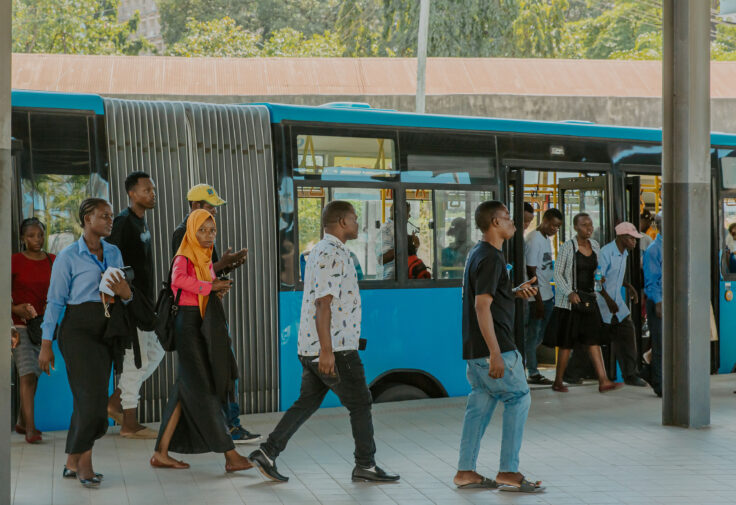
Transitioning Informal Operators Through Inclusion
One of the most relevant lessons for Tanzania came from the approaches both cities use to reform and integrate existing transport operators. Jakarta’s Mikrotrans program demonstrates how former informal operators can be incorporated into the formal transport system through structured contracts, service standards, and performance monitoring. Rather than displacing operators, the city created pathways for participation within the integrated network. Dakar’s experience offered a similar lesson.
Beginning in the mid-2000s, Senegal implemented a phased fleet renewal program that replaced aging informal vehicles while supporting operators through financing mechanisms, revolving funds, and institutional reforms. Over time, operators were organized into more formal structures capable of accessing finance, participating in concessions, and operating within a regulated environment. The inclusion of local operators within Dakar Mobilité’s ownership structure further helped reduce resistance and build support for the transition. These experiences demonstrated that successful transport reform depends not only on infrastructure and regulation but also on creating opportunities for incumbent operators to participate in the future system.
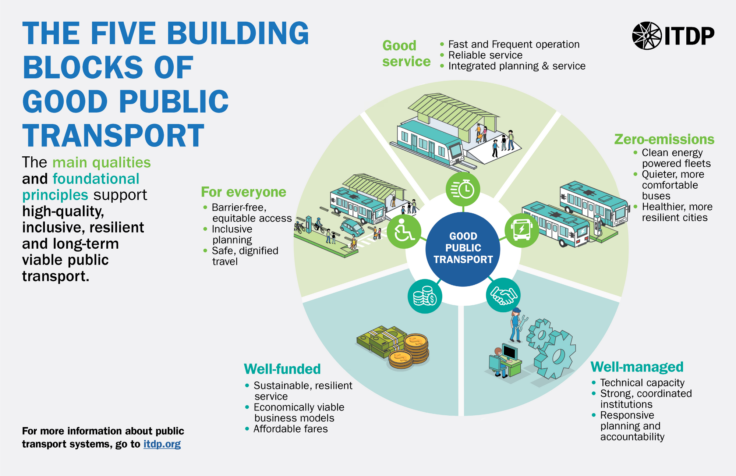
Learn more about ITDP’s principles of high-quality public transport here.
Preparing For An Electric Future
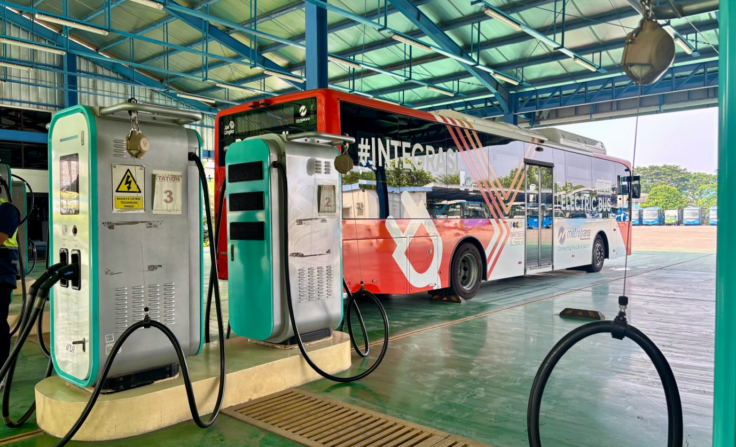
The transition to electric mobility was another major theme across both study tour destinations. In Jakarta, the delegation visited the expanded DAMRI electric bus depot to observe charging operations, battery management systems, maintenance procedures, and fleet dispatch processes. Discussions highlighted the importance of operational planning, depot design, and coordination between operators, vehicle manufacturers, and charging providers to ensure reliable service delivery.
Dakar offered a unique opportunity to examine Africa’s first fully electric BRT system. Participants visited Dakar Mobilité’s depot facilities and learned how charging infrastructure, preventive maintenance systems, operational control centers, and fleet management practices support daily operations. The experience demonstrated both the opportunities and operational requirements associated with large-scale electric bus deployment. As Tanzania explores the future role of electric buses within its public transport system, these lessons will be increasingly valuable for planning and development.
While Jakarta and Dakar differ significantly in scale, maturity, and institutional context, both cities demonstrate that successful BRT systems depend on more than infrastructure investment alone. Strong governance, sustainable financing, effective contracting, multimodal integration, operator inclusion, and long-term institutional commitment are all essential components of a high-performing public transport network. For Dar es Salaam, the study tour provided an opportunity not only to observe international best practices but also to reflect on how these lessons can be adapted to Tanzania’s context.
As the DART network seeks to expand into one of Africa’s largest BRT systems, lessons from Jakarta and Dakar offer valuable insights for building a mobility system that is efficient, financially sustainable, inclusive, and capable of meeting the mobility needs of a rapidly growing city. Ultimately, facilitating and funding more cross-city exchange in low- and middle-income countries like these can offer significant value to each as their policymakers share key challenges, from rapid urbanization to limited budgets to high demand for affordable mobility. Exploring practical, tested solutions such as e-BRT models, informal transit integration, and digital fare systems enables such cities to adopt more proven strategies already used in comparable economic and social contexts.
Peer learning amongst cities and governments helps to accelerate innovation, reduce costly trial-and-error, and lead to more inclusive, efficient, and sustainable systems that better serve all types of populations.