
February 24, 2026
Nature-Based Solutions Are the Future of Brazil’s Urban Mobility
As climate impacts intensify across Brazil, cities must rethink how they design streets, public spaces, and transport systems.
A recent study by ITDP Brazil, Urban Mobility and Nature-Based Solutions: Integrating Adaptation Strategies for Brazilian Cities (available in Portuguese), shows how Nature-Based Solutions (NBS) can make urban mobility more resilient, equitable, and accessible for all. Integrating NBS into urban mobility offers a strategic path to transform how cities are planned and built in the face of the growing climate emergency. Far from isolated measures, NBS — such as tree-lined bus corridors, shaded cycling paths, and permeable sidewalks — are part of a systemic approach that combines green-blue infrastructure with high-quality public transport networks.
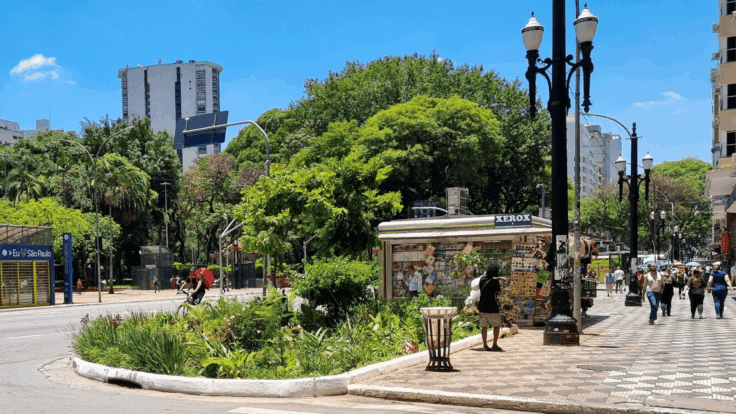
By reducing heat effects, improving air quality, and managing stormwater, nature-based urban interventions make walking, cycling, and accessing public transport more comfortable, safe, and reliable for everyone. This, in turn, can help spur improvements in public transport ridership and civic inclusion, especially for transit-dependent people living in underserved and peripheral areas. The objective of the ITDP Brazil study is to better inform and engage public officials with NBS strategies across the municipal, state, and federal levels. It is particularly relevant for stakeholders involved in the planning and implementation of urban infrastructure policies and investments. For this reason, the study offers several actionable tools and frameworks to help inform decision-making around projects aimed at improving streetscapes, parks, and waterways in Brazil’s cities. While tailored to a Brazilian context, these lessons are universal to the many cities looking to better adapt to climate risks while also improving quality of life.
Nature and Mobility, Working Together
The publication identifies the main climate threats present in Brazil’s cities and explores opportunities for integration between NBS and transport infrastructure at the regional, municipal, and local levels:
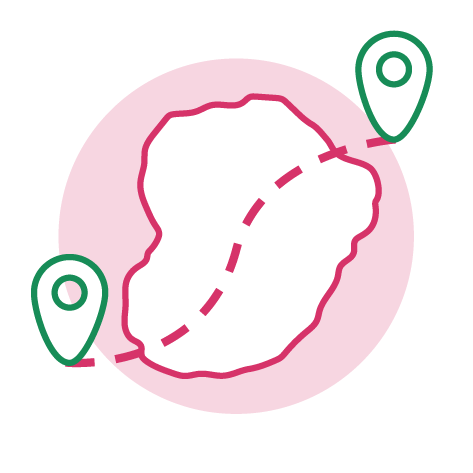
Regional: Connecting municipalities through high-capacity systems (highways, railways, waterway transport), which must also be integrated with ecological corridors, reforestation of basins, and restoration of floodplains that protect infrastructure from extreme events.
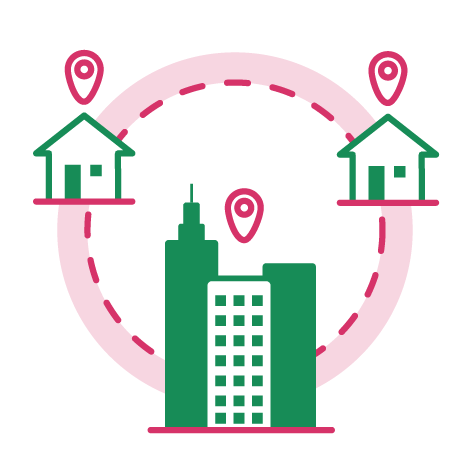
Municipal: Structuring municipal green corridors that integrate public transport, cycling, and pedestrian networks with green-blue infrastructure is vital. This includes planning for large-scale urban afforestation; linear floodable parks;
infiltration basins that contribute to the reduction of flooding; and the improvement of water and air quality systems.
 Local: Promoting safe intersections and neighborhood sidewalks that accommodate afforestation and sustainable drainage devices, such as rainwater beds; bioditches; rain gardens; shaded bus stops and bike racks; and bus and train stations with natural ventilation, passive cooling, and green roofs.
Cohesive NBS planning at these levels — from planting trees along neighborhood bike paths, to installing green roofs across municipal bus depots — can strengthen both climate mitigation and adaptation to create connections that make urban spaces more resilient and comfortable. In the face of increasing weather disasters, Brazil’s cities and municipalities must pursue new and natural strategies that promote high-quality mobility to serve the most people.
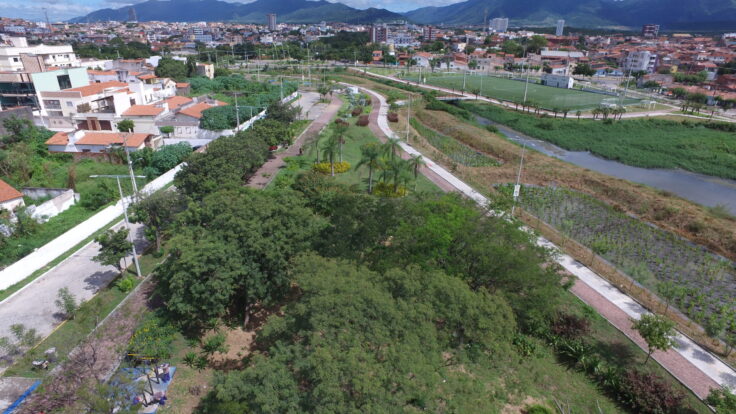
Some inspirational regional models of these approaches in action include the city of Sobral, Brazil’s filtering gardens along the Pajeú River that redirect rain and floodwaters, and Medellín, Colombia’s Green Corridors program that connects newly-greened road verges, vertical gardens, streams, parks, and hills. These examples show that cities can leverage mobility projects as catalysts for large-scale climate adaptation and investment into green-blue strategies that complement existing infrastructure.
In 2025, ITDP Brazil held a training for public managers and officials to highlight the concepts presented in the NBS study, inviting representatives from the cities of Sobral and Campinas in Brazil and Medellín in Colombia. Watch the recording of the session above in Portuguese. Ultimately, nature-based solutions do not just protect and bolster a city’s physical infrastructure — they help create safer, more inclusive, and more dignified spaces for all people in a city.
NBS helps to drastically reduce risks from heat and flooding, encourages more walking and cycling, and makes public transport stations and routes more pleasant to use. In doing so, cities and communities can foster social inclusion and better access to services and opportunities, particularly in areas with limited mobility options and with residents vulnerable to extreme weather. NBS strategies don’t just support the reduction and absorption of harmful GHG emissions, but also enhances the overall public health and mental health of a city and its people.
ITDP Brazil’s study advocates for decision-makers and financing institutions to prioritize nature-based solutions and make it core to their mobility and climate strategies at all levels. This is the only way to ensure all cities are made sustainable, resilient, and connected by design for the long-term.