
October 16, 2025
A Turning Point for Mexico’s Vehicle Standards — and Its Climate
Every day, millions of Mexicans depend on vehicles to get to work, school, or home.
Read the original press release in Spanish via ITDP Mexico.
Yet most of these vehicles consume much more fuel — and release many more greenhouse gas emissions — than they need to. Of course, moving Mexican cities towards sustainable mobility built around electric transport, walking, and cycling is the most beneficial way to improve the environment, the economy, and society. However, as long as fuel-burning vehicles remain a constant, policymakers must focus on minimizing their impact on the air and on communities. While neighboring nations like Canada have moved ahead with cleaner, more efficient vehicle options, Mexico still lags behind. Now, there is an opportunity to make change in Mexico as well.
Three leading civil society organizations — ITDP Mexico, the Mexican Center for Environmental Law (CEMDA), and El Poder del Consumidor (EPC) — recently joined together to urge the national Ministry of Environment and Natural Resources (SEMARNAT) to take a bold step forward as it updates the NOM-163, the country’s main policy and regulation overseeing vehicle emissions and fuel efficiency. The three organizations say this update is a once-in-a-decade opportunity to enshrine protections for the climate, save households more money, and reduce national dependence on imported fuels — if, and only if, the process remains transparent and free from interference from the automotive industry.
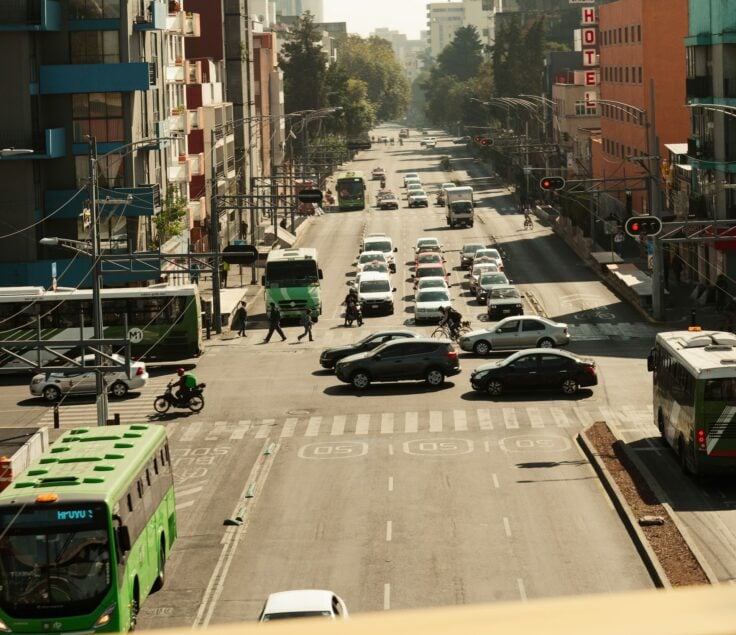
Setting the Standard
Known formally as NOM-163-SEMARNAT-SCFI-2023, the policy sets limits on vehicle CO2 emissions and establishes energy efficiency standards for light vehicles sold across Mexico. Though it may seem like just a technical piece of legislation, its impact directly shapes what kind of cars are made available on the Mexican market, how much fuel they consume, and how much pollution they produce. Stronger standards in NOM-163 could mean better air quality, lower fuel consumption, and greater energy security for the country. When coupled with more investments in sustainable mobility policies and projects, this stricter oversight of the vehicle market is crucial to helping Mexico meets its emissions and development goals.
Current President Claudia Sheinbaum’s 100-Point National Plan calls for modernizing environmental and energy regulations to accelerate Mexico’s transition to a low-carbon economy. Updating NOM-163 should be a cornerstone of that effort. However, as has happened in the past, some stakeholders within the corporate automotive industry may push to weaken the rule with loopholes and ‘flexibility mechanisms’ that make it appear ambitious while still allowing high emissions to continue.
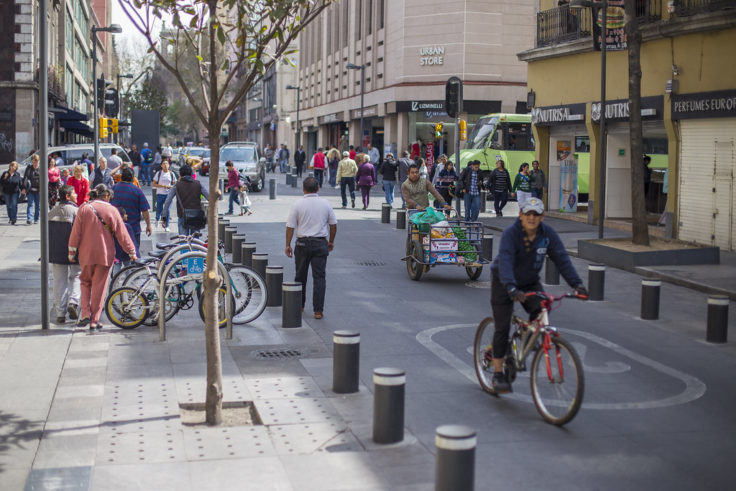
Learning from Past Mistakes
Previous versions of NOM-163 were compromised by corporate influence. Instead of cutting emissions, the regulation was diluted with exceptions and credits that rewarded manufacturers for actions that did not result in real reductions. As a result, Mexico’s most important vehicle emissions policy failed to deliver its promise. This time, civil society organizations like ITDP Mexico are advocating for SEMARNAT to not repeat these actions. Instead, the government needs to:
- Set more ambitious goals aligned with the Glasgow Climate Pact (adopted at COP26 in 2021) and Mexico’s plans for vehicle electrification by 2030 and 2035;
- Eliminate loopholes and false credits that allow companies to meet targets without actual improvements in efficiency;
- Ensure transparency, by requiring open, digital data formats and standardized vehicle information so that citizens, researchers, and institutions can monitor compliance.
For Anaid Velasco of CEMDA, NOM-163 is not just a technical issue; it’s about fundamental mobility and environmental rights for Mexican communities. “NOM-163 must become a true climate and environmental tool,” Velasco said. “Human rights such as a healthy environment and physical health should not be conditioned by purely economic criteria. Mexico cannot waste the opportunity to fulfill its international commitments and protect fundamental human rights.”
A stricter and more ambitious standard could also bring relief to individual families. Low-income households are often the most affected by high fuel prices and poor air quality. More efficient vehicle fleets on the road reduces household transport spending, improves air quality, and strengthens energy independence across the board. Improvement in vehicle fuel performance means less reliance on fuel sources from abroad, making the country more adaptable to global market fluctuations that are continuing to cost both individuals and governments.

A Moment for Change
For over a decade, Mexico has aimed to align its vehicle standards with those of its neighbors in the U.S. and Canada as part of regional trade commitments. But progress has been slow. By 2027, new cars in Mexico will still be allowed to consume about 3% more gasoline than even those in the U.S. In addition, Mexico’s standards are up to two times as flexible, allowing manufacturers to pollute more while still seeming to comply. This disparity undermines both market competitiveness and consumer trust.
“Mexico has all the commercial and technological conditions to adopt ambitious efficiency standards,” said Bernardo Baranda, Director of ITDP Mexico. “The international market already demands these levels, and our plants export to countries with stricter standards, which is shameful. There is no excuse for continuing with weak regulations.”
Mexico’s ability to meet its Nationally Determined Contributions (NDCs) under the international Paris Agreement will depend heavily on the strength of NOM-163. The transport sector remains one of the country’s largest sources of emissions, and this regulation is a primary tool for reducing them. A strategic update to NOM-163 is the last call to put consumers and the environment at the center of new national policy designs.
The coming months will be crucial for determining whether Mexico continues down a path of weak standards and missed opportunities, or if it takes a decisive step toward a cleaner and fairer future. For the civil organizations pushing for reform, the choice is clear. A stronger NOM-163 means a more resilient Mexico for all.
This is not just about advocating for a technical change in regulation; it is a tangible commitment to the future of Mexico’s climate, cites, and people.