
September 16, 2025
A More Walkable, Cyclable, and Accessible Future for Addis Ababa
The city of Addis Ababa is at a turning point for its mobility.
Learn more about ITDP Africa’s work here.
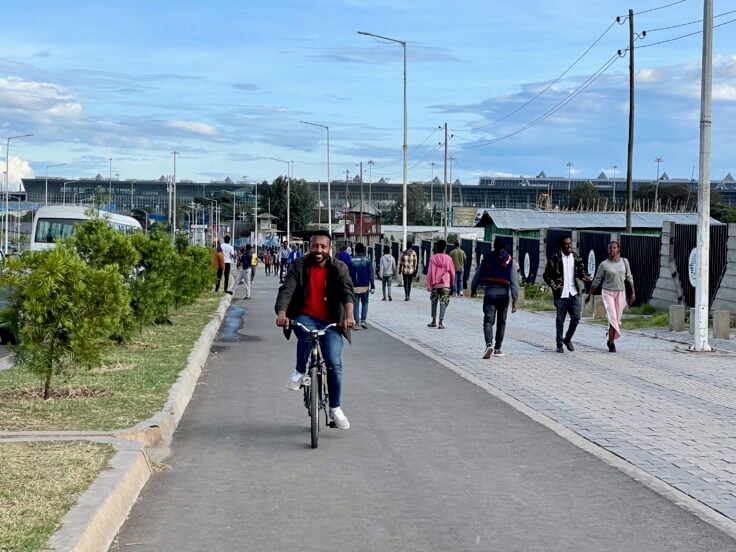
As Ethiopia’s capital and largest city experiences rapid growth, the need for safe, efficient, and sustainable transport systems has never been greater for its more than five million residents. With more than half of all daily trips made on foot, and an additional 31% of residents walking at the start and end of their public transport journeys, walking and cycling already form the backbone of the city’s mobility. Yet, the infrastructure supporting these essential trips has long lagged behind.
To address this gap, the Addis Ababa Transport Bureau (AATB) launched the Non-Motorized Transport (NMT) Strategy 2019–2028 with the support of ITDP Africa, offering a bold roadmap for building high-quality pedestrian and cycling facilities across the city. Now, as the first phase of the strategy ends, AATB and ITDP Africa are finalizing a NMT Implementation Plan 2024–2028 — the next step in transforming the city’s transport infrastructure for the better. This is especially critical as the city commits to a milestone policy of halting the import of all combustion-powered vehicles and doubles down on a future of zero-emission mobility.
A Vision for the Decade
The Addis Ababa NMT Strategy was initially developed by AATB with technical assistance from ITDP and support from UN-Habitat and the UN Environment Program. Available in both Amharic and English, the Strategy underscores the city’s commitment to accessibility, sustainability, and innovation in mobility with a focus on reducing emissions, improving access, and enhancing quality-of-life. The NMT Strategy is rooted in the city’s Transport Policy and Ethiopia’s broader Climate Resilient Transport Sector Strategy, aligning sustainable transport with national goals of resilience, equity, and economic development. Over its ten-year horizon, the strategy envisions, among other targets:
- 600 kilometers of new footpaths and 200 kilometers of cycle tracks across the city
- A modern, IT-enabled bicycle-sharing system with bikes available at a network of closely spaced stations
- Safer access to public transport through traffic-calmed pedestrian crossings and improved connections
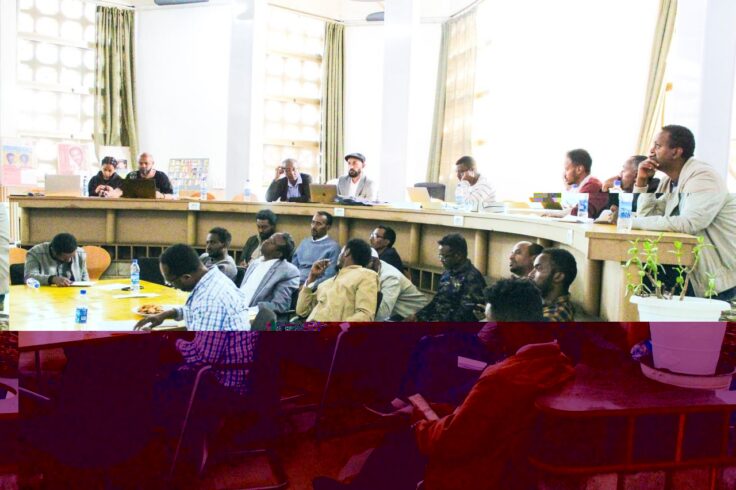
Earlier in 2025, ITDP Africa joined the AATB for a stakeholder workshop held alongside government agencies, planners, and community partners. This group came together to review progress on the city’s walking and cycling initiatives for this next phase and final 2024-2028 Implementation Plan. Participants assessed the current state of walkways and cycle tracks; shared lessons learned from recent corridor projects; and identified key gaps in design and construction. These insights helped shape the new Implementation Plan, which will in turn guide investment and policy over the next few years to ensure that Addis Ababa’s growing NMT network achieves its mobility goals.
A Focus on Cycling Integration
In conjunction with the NMT Strategy, the AATB, ITDP Africa, and partners are also highlighting the importance of integrated cycling infrastructure for enabling short- to medium-distance trips that can reduce private vehicle use. To encourage more people to cycle and address larger inequities in access, particularly for women, Addis Ababa needs to identify and implement a network of coherent, continuous, safe, and comfortable cycling facilities to achieves its NMT targets. Thus, the Addis Ababa Cycle Network Plan 2023-2032 study was developed as a guiding framework to address these needs.
The report and its key recommendations examine the existing cycling environment in Addis Ababa and proposes a phased implementation plan to build out a high-quality cycle network over the short, medium, and long terms. The guidance is aligned with the NMT Strategy’s aim of expanding 200 kilometers of cycle lanes over the next few years, with a focus on building low-stress bikeways that welcome users of all sexes, ages, and abilities.
Learn more about the importance of financing walking and cycling projects in this webinar.
Why NMT Matters
We know that investing in walking and cycling brings a wide range of benefits for modern cities. Better access to jobs, schools, and services helps expand opportunities for residents across all income levels and communities. Safer and more comfortable NMT infrastructure reduces the risks of traffic crashes, while encouraging active lifestyles that improve public health. On a citywide scale, shifting more trips to NMT modes cuts down on harmful emissions, contributing to cleaner air and a more resilient future for all.
It is clear that the return on investment for bicycle infrastructure networks is high — both in terms of the network effects from supporting broader public transport investments and the related climate, health, and economic rewards. The same goes for improved pedestrian infrastructure and footpaths, and more and more evidence now exists that improving streets for walking is a highly cost-effective means to reduce emissions, save economies money, and promote accessibility.
Due to chronic under-valuing and under-investment in cycling and walking, few cities outside of high-income nations have truly robust NMT infrastructure networks or the dedicated funding needed to scale their plans. Addis Ababa, however, has great potential to position itself as a leader in NMT-oriented growth and mobility innovation, both regionally and globally. By putting people — rather than cars — at the center of its transport planning, the city is laying the foundation for forward-thinking sustainable development. With its 2024–2028 Implementation Plan on the horizon, the city’s measures are not only about moving people efficiently, but they are also about reshaping the built environment into a better place to live for everyone.
The future of the city depends on its infrastructure — and the groundwork has been laid for Addis Ababa to become a replicable NMT model for all of Africa.