
July 24, 2025
How Chennai, India is Jump-Starting its Transition to E-Buses
The city of Chennai, the capital of the Indian State of Tamil Nadu, is on the brink of a clean mobility revolution for its over six million residents.
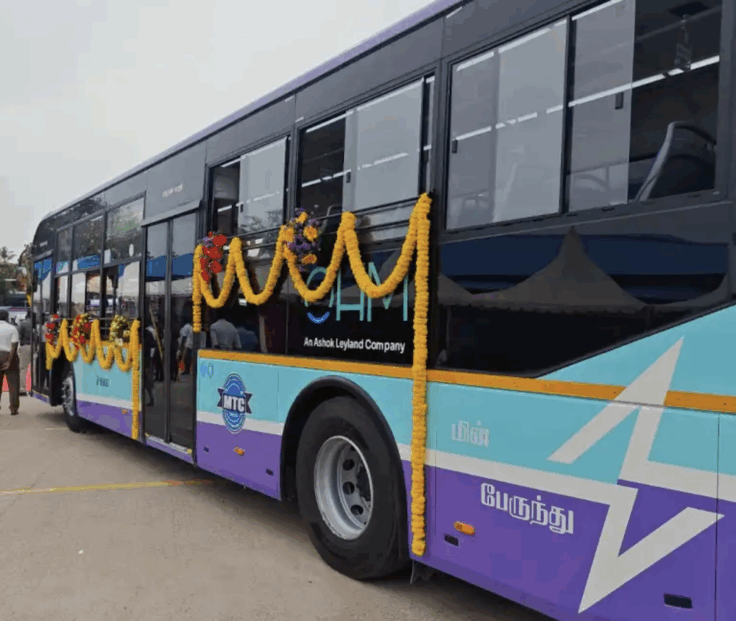
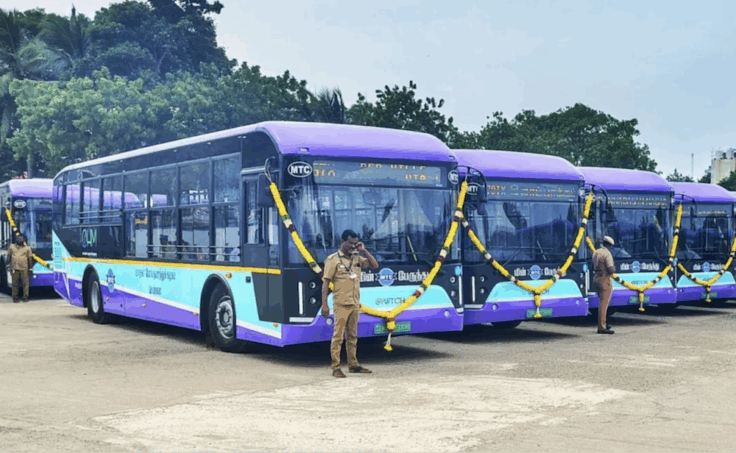
In June, Tamil Nadu Chief Minister MK Stalin inaugurated over 120 electric buses (e-buses), marking the city’s first significant deployment of zero-emission vehicles of this kind. This will be the first time that the city bus operator, Metropolitan Transport Corporation (MTC), will operate e-buses in the region. These vehicles have been rolled out as part of a larger plan to electrify the entire MTC fleet, with a total of 625 buses expected to be introduced later this year in the first phase. In the next phase, scheduled for 2026, an additional 600 vehicles are expected, bringing the total to 1,250 e-buses.
For a metropolis that facilitates the daily movement of millions of people, this is not just a fleet upgrade; it is a powerful signal that Chennai and Tamil Nadu are committed to decarbonising transport and building climate resilience for the benefit of India and the world. The introduction of e-buses is a significant step towards a future of compact, electric cities that will reduce emissions, enhance air quality, and provide affordable and accessible public transport for all Indians.
Transport as a Key Lever for Tamil Nadu’s Climate Plans
One of the key reasons why electrification is a milestone for the state is that transport is one of the primary contributors to emissions in the rapidly urbanizing region. According to data from a recent report (Tamil Nadu’s Greenhouse Gas Inventory and Pathways for Net-Zero Transition), greenhouse gas emissions from the transport sector in the state almost tripled between 2005 and 2019, increasing from 10 million tons of carbon dioxide equivalent (Mt CO2eq) to nearly 27 Mt CO2eq. The report also found that the local transport sector’s share of overall GHG emissions increased from 12% to 19% over the same period.
The situation is unlikely to have improved since 2019, as data from the official Vahan dashboard shows that EV adoption is still in its early stages in most parts of the state. This slow uptake makes electrifying state-operated public transport fleets a significant and high-return opportunity. With direct control over these fleets, the government is beginning to lead by example, not only by transitioning to e-buses but also by creating demand for charging infrastructure, maintenance networks, and more local manufacturing.
This recent move has also enabled the broader EV ecosystem to scale up beyond public buses, as private operators and manufacturers are witnessing the government’s commitment and now starting to invest in related infrastructure and technology. The impact of electrification on economic growth, job creation, and expanded access to mobility will continue to grow if more sectors adopt this approach.
Charging Forward
MTC currently operates a total of 3,420 buses in the Chennai Metropolitan Region. According to estimates from other Indian cities, each bus running on diesel emits approximately 755 grams of tailpipe carbon emissions per kilometer. While public buses still generate lower emissions per passenger-kilometer compared to private vehicles (like cars and two-wheelers), the absolute emissions from diesel buses remain majorly harmful, especially considering their daily operations of thousands of kilometers traveled.
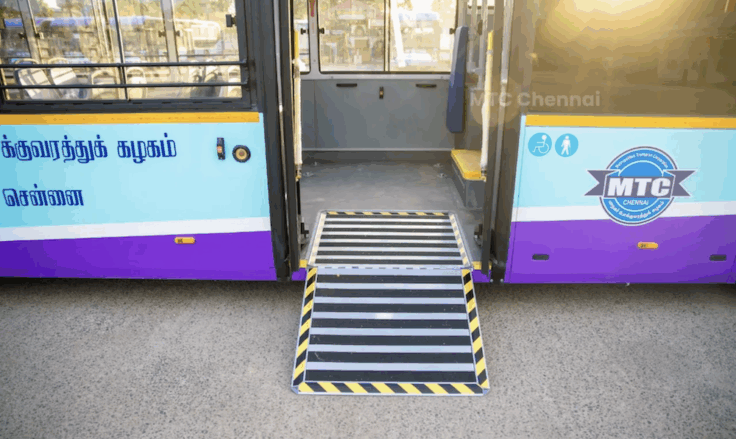
Per MTC’s current plans, the incoming e-buses will be introduced in phases. Initially, these buses will be new additions to the fleet and will not replace existing diesel buses. This will help expand the MTC’s service to more parts of the city. By doing so, MTC aims to encourage more people to opt for public transport over private vehicles. This shift will not only help reduce emissions from private car use but also alleviate the everyday issues of traffic congestion and road crashes as a result. In fact, a single bus that carries about 50 passengers can, on average, replace nearly 30 vehicles on the road.
In addition, buses occupy less than 2% of the total road length but serve over 30–40% of all urban commuters. Every new bus added to the fleet not only cleans up the air—it also frees up more road space, making the city’s streets better for pedestrians and cyclists and improving air quality. MTC is also exploring plans to retrofit older diesel buses with Compressed Natural Gas (CNG) technology, building on other potential innovations.
This parallel move will further lower tailpipe emissions from the remaining conventional fleet, ensuring that even non-electric buses contribute to a cleaner urban environment. In subsequent phases, these electric buses will begin replacing ageing diesel buses, leading to a gradual but sustained reduction in the GHG emissions intensity of Chennai’s public transport system overall. This strategy strikes a stark balance between immediate service expansion and long-term decarbonization efforts.
From Policy to Practice
In 2023, Tamil Nadu launched its updated EV policy, setting a clear goal to make at least 30% of all buses run by State Transport Undertakings (STUs) electric by 2030. The policy states: ‘The STUs run a large share of public buses in Tamil Nadu. The government will transition to electric buses in a phased manner, aiming to make 30% of the fleet electric by 2030.’ The current rollout of e-buses is a direct reflection of this commitment, turning policy into action.
With a total fleet of 20,508 buses across eight STUs—including MTC, the State Express Transport Corporation (SETC), and Tamil Nadu State Transport Corporation (TNSTC) divisions in areas like Coimbatore, Madurai, Tirunelveli and others—the state would need to procure over 6,100 e-buses in the next five years to meet this goal. While this target is ambitious, the state is already making decisive moves. Tamil Nadu has begun the procurement of a total of 2,500 e-buses through World Bank-supported Gross Cost Contract (GCC) models and funding from the Geman investment bank KfW.
Officials have also indicated that, based on lessons learned from this initial phase, the state plans to continue expanding the fleet by 500 to 750 buses annually. This steady, phased approach enables them to scale up capacity for e-bus operations while building on operational experience. Beyond its state goals, this effort also makes a meaningful contribution to India’s national EV30@30 ambitions, which aim to electrify 30% of all buses countrywide by 2030.
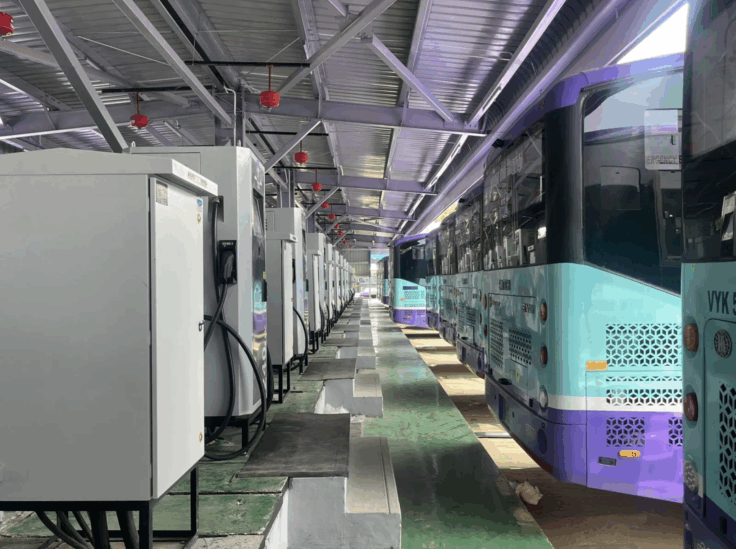
However, in 2024–25, only 3% of all new buses sold in the country were electric. That’s just 3,400 e-buses, compared to over 100,000 diesel buses. In light of this, every action on the local level, including that of Tamil Nadu, is a step forward in the right direction for electrification. Along with purchasing new buses, the state is also investing in expanding depots and charging stations that will be critical for long-term operations. This early investment ensures the fleets are ready and able to meet demand and service needs.
ITDP India continues to provide key support to regions like Tamil Nadu, helping to shape e-bus procurement plans, training programs, and policy frameworks.
With the proper investment and leadership, both the city and state are building scalable models that can inspire all of India to commit to well-funded, well-operated electric public transport.